CLICK HERE FOR THOUSANDS OF FREE BLOGGER TEMPLATES »
Showing posts with label Decline. Show all posts

Friday, September 16, 2022

5G Cell Towers Cause Massive Insect Decline on the Greek island of Samos Part 1

5G Cell Towers Cause Massive Insect Decline on the Greek island of Samos Part 1

Without insects, there will be no life on earth. I realize that many if not most people don’t particularly like insects—the word conjures up images of mosquitoes, spiders, flies, or cockroaches rather than butterflies, fireflies, bees or damselflies. In 2018 Bloomberg News ran an article: “Google’s Parent Has a Plan to Eliminate Mosquitoes Worldwide. Bite. Breed. Die.” which about summed up many people’s attitudes to insects: they’re horrible, they bite or sting, they may be poisonous or spread diseases, and we don’t need them.

The trouble is, we do need insects, even mosquitoes. Life is a chain, and many creatures higher up the chain rely on the mosquito (or some other insect) for food, or eat the creatures that eat the mosquito, to be eaten themselves in turn by other creatures. We break the chain of life at our peril, because we are part of it.

In writing this paper it occurred to me: 5G has been going in around the world for some time now, but I have read hardly anything about it affecting insects, or soil, or bird migration, or animals. Hasn’t anyone else noticed? Is Greece the first country to have put 5G all over rural areas? Or are people simply not connecting the dots and continuing to blame pesticides and climate change for everything that goes wrong in nature? Because I don’t believe for a second that what’s happening here isn’t happening in other places. Something caused the bumblebee to become extinct in nine U.S. states. And birdwatcher friends are telling me that they too are seriously concerned about migration.

A big part of the problem is that no one is looking. Every day we take our dogs for a walk and see other people out walking or running, but are they looking around them? Virtually every person we see is carrying a smartphone, and more often than not they are looking at it as they go along. They might notice an elephant if it got in their way, but a bee? Or a lack of bees? They are too involved with “staying connected” to stay connected with the world in front of their eyes. If you don’t look you won’t see. If you live your life in what NY Times columnist Roger Cohen dubbed “device-distracted apathy” the world around you might as well not exist.

I’m tired of hearing, “Wireless communications are here to stay; we can’t do without them; we can’t go back to the Stone Age.” What we cannot do without—really can’t do without— is nature. A planet with dead seas and dead land will not support us; we will die of oxygen deprivation or starve to death. Who will you call then?

Now that 5G has arrived, time is running out fast. I don’t think it’s too late to change things, but I don’t think we have much time left to do it. So I ask you—if this paper has meant anything at all to you, think seriously about giving up your wireless devices. There are other ways to communicate. Contact NGOs and ask them to add RF radiation to their list of major threats to the planet, to stop promoting smartphone apps which identify bugs or birds, and to stop tracking animals, birds and insects using wireless devices. Contact government representatives and ask them to support alternatives to wireless technology.

If you don’t care, who will? 

5G Cell Towers Cause Massive Insect Decline on the Greek island of Samos

Diana Kordas
Ed.M, M.A.
Samos, Greece diana.kordas@protonmail.com

February 22, 2022

Abstract

In 2017, a major German study found that flying insects had decreased over 75% in protected areas over the previous 27 years while ruling out climate change and pesticides. In 2021, the bumblebee was declared extinct in nine U.S. states. Insects, including pollinators, are diminishing rapidly worldwide, yet governments, NGOs, the mainstream media and even many scientists are refusing to consider the effects of Radiofrequency (RF) radiation despite an enormous body of independent scientific studies showing harm.

During recent decades, environmental pollution from RF radiation has increased substantially. Currently the fifth generation, 5G, is being rolled out worldwide. Appeals for a moratorium on 5G till proper studies are done to assess potential risks have all failed.

Besides risks to people, such as cancer, neurological disease and sterility, hazards to the environment, especially birds and insects, are a major concern. On our 31⁄2 acre piece of land on the island of Samos, we have seen a dramatic decrease of insects between 2012 and 2021. Some species of insects may be extinct and several species appear to be suffering from DNA damage.

The area where we live had little wireless radiation until 2016, when 4G/LTE networks were installed on Samos and many new cell towers were built, from which time insects and birds began to decline noticeably. A tipping-point was reached in the summer of 2021, after the installation of a new 5G cell tower directly opposite the land. This cell tower is part of a new 5G network on Samos.

Since July 2021, when the 5G network on Samos went live, insects on our land have declined between 80-90% depending on species. All orders of insects are affected. The cause of these insect declines can only be RF radiation from the cell towers. No pesticides are used in this area and nothing else can account for the sudden, severe drop in the number of insects in this place since July 2021. Small mammals, especially rodents, are also declining rapidly.

The consequences of these declines will be far-reaching: this will affect wild plant diversity, agriculture and beekeeping. Worse, they may lead to crop

failures and mass bee colony collapse respectively. Insect-eating birds will decline dramatically and may go extinct.

Frequency (i.e., wavelength) appears to be a more important factor than signal strength (power) in insect declines. Greece is using the 0.7 GHz, 3,5 GHz and 22.5 GHz bandwidths; the last of which is often classed as millimeter waves. Wherever 5G signals are present, insects have declined, whether these areas are near to or far from cell towers. Samos is rapidly losing most of its insects including its pollinators.

5G frequencies appear to be the main cause of the most recent insect declines, which are happening all over the island. 

It is no longer possible to contact Ms. Kordas at protonmail, Permission to translate or repost 5G Cell Towers Cause Massive Insect Decline on Samos” and the Update is freely given.

Source:  https://safetechinternational.org/5g-cell-towers-cause-massive-insect-decline-on-the-greek-island-of-samos/

Be the first to Comment.

Blogger's note:  subterrnews.blogspot.com does not send cookies, or collect any information on those using the blog.  However, the blogspot is on google, and google may collect information, and send cookies.  Many of the links that  we connect to do not send out cookies or collect information, but some do.  You are keying in to this blog, and you have agreed to this.

The views of the author do not necessarily represent the opinions of this blog.  They are the views, and opinions of the author(s) of the article.


Saturday, June 27, 2020

The Corona Crisis Could Bring a New Era of Decline for American Core Cities

06/25/2020
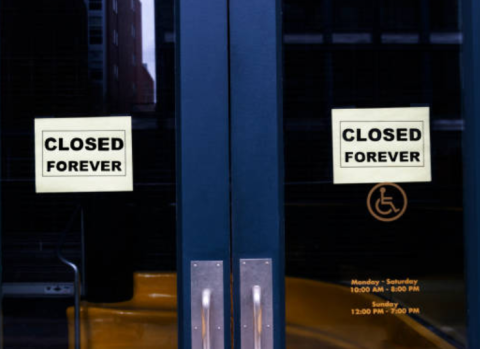
Manufacturing company 7-Sigma made headlines when it decided to leave Minneapolis as a result of the company's plant being burned by rioters. "They don’t care about my business,” 7-Sigma owner Kris Wyrobek old the Star-Tribune. After more than thirty years in the city, the company isn't staying, nor are any of the company's fifty jobs.
But the costs of being victimized in protests is just one of many reasons homeowners and businesses may be realizing life and business in central cities has lost its luster. The ongoing threat of more business lockdowns, more riots, higher taxes, and failing schools may induce many Americans to flee, once again, to the suburbs as their parents or grandparents did.
This goes well beyond the fear of the disease many journalists have assumed is behind the observed beginnings of an exodus from cities. Yes, many in the upper classes have fled the cities for their mountain homes and yachts for "health reasons." But these people are relatively few in number and their thinking quixotic. They can afford to drop everything and leave cities overnight.
But the larger impacts are likely to be felt as middle class homeowners and business owners conclude they'd simply rather avoid the edicts and neglect of mayors and city councils in central cities who think nothing of issuing job-destroying "stay-at-home" orders while allowing rioters and vandals free rein.
The real cost to cities is likely to emerge over time. It will come in the form of families and shop owners who decide it's best to move their businesses ten miles down the road to a neighboring city that will actually do something about rioters. It will come in the form of families which decide their next home will be just a little bit farther from the urban dictator-mayors who have the heaviest hands in enforcing lockdowns and business closures. It will come in the form of potential new business owners and homeowners will be decide to never purchase property to start a business in central cities in the first place.

The Decline of Cities at Mid-Century

We may be seeing something reminiscent of what happened in America's large central cities during the 1970s and 1980s. Many Americans concluded these cities had become unlivable and crime infested. Many concluded these were places that were quite inhospitable to doing business. So they left. (Forced busing for "integration" purposes was a factor as well.)
In some cases, there were dramatic events that illustrated the trend. The late sixties in New York saw several strikes by city workers. Transit and sanitation in the city became a disaster. The 1977 blackout in New York City ended in widespread riots that induced many businesses to pack up and never return. Many households followed.
But for the most part, cities saw an exodus that took many years and slowly hollowed out the finances and tax revenues of big cities. Areas of Detroit fell into ruin. By the mid-seventies, New York City was lurching from one fiscal crisis to another.
"Nearly half of large cities shrank by at least 10 percent" during the 1970s, according to the Kansas City Fed :
St. Louis, Cleveland, Buffalo, and Detroit each shrank by more than 20 percent. Vast stretches of urban land were left virtually deserted.
More than half of large cities lost population from 1950 to 1980.
There were other factors at work as well, of course. The central cities were often hit the hardest as the old Rust Belt went into decline after the region was destroyed by labor unions and city and state laws that made business in the region inefficient and uncompetitive. Business owners and workers who possessed any real ambition or entrepreneurial spirit had good reason to leave the region altogether.
[RELATED: "Unions and Protectionism, Not Free Trade, Doomed the Rust Belt" by Ryan McMaken]
City centers, built on an old manufacturing-based working class never recovered.
The situation today is a bit different. During the 1990s, core cities began to recover from their mid-century decline and many officials and intellectuals in these areas began cultivating the so-called "creative class" (also known as the "bohemian bourgeoisie") with the idea that young artists, engineers, architects, and tech workers might be convinced to move into city centers and revitalize local urban economies. It appears to have worked in many cases.
But in 2020 America the hey day of the new techno-city may be over.

Civil Unrest

The case of the 7-Sigma closure in Minneapolis is just the most famous case of central cities' hostility to businesses within their borders. We're not hearing about the many small less-notable businesses that won't re-open in the wake of the riots. In other cities, such as Chicago, city officials are now begging retailers to not leave the city.
Meanwhile, a number of small businesses now within the "CHOP" zone in Seattle are suing the city for abandoning businesses to the whims of the leftist mob.
As reported by the local NBC affiliate, local businesses have been threatened and harassed by the bosses of the "Capitol Hill Occupation Protest" (CHOP) zone in the city. The city government, the plaintiffs have concluded, essentially have abandoned these businesses to the new "government":
The City’s decision has subjected businesses, employees, and residents of that neighborhood to extensive property damage, public safety dangers, and an inability to use and access their properties.
Minneapolis and Seattle aren't the only cities with the prospect of continued civil unrest. With forty million new unemployment filings in recent months, the US faces a worrisome period of highly elevated unemployment. Many of the worst-affected workers will be lower-income populations living in core cities. This won't help the prospect of a speedy return to placid city environments.

Regime Uncertainty

As government experts and media pundits emphasize growth in reported COVID-19 cases, the prospect of renewed lockdowns now looms, as well. This is a threat at the state level and in many suburban local governments. But experience strongly suggests that those political jurisdictions controlled by political leftists are likely to embrace the longest and harshest lockdowns. In many states, such as Texas and Colorado and California and Pennsylvania, local governments in big cities embraced lockdowns more enthusiastically than the surrounding regions and at the state capitols.  "Regime uncertainty"—uncertainty about what business-killing regulations a government might embrace next—appears to be greater in central cities.
Business owners are likely to remember this. In the medium- and long-term, business owners and potential business owners will gravitate to those areas where the threat of harsh lockdowns is smaller.

The Rise of the "Work-at-Home" Trend

If the work-at-home trend persists, core cities will have lost one of their main draws: namely, the prospect of a shorter commute for those who can afford a home close-in to the employment centers. Even if daily commutes are just reduced—say, to a three-days-per-week schedule—the commute-time cost of a home in the suburbs falls dramatically. Without the need to sit in traffic five days per week, more expensive city homes and the congestion and crime of city centers becomes far less attractive.

Declining Tax Revenue and Urban Blight

On top of it all will come big cuts to city budgets as COVID lockdowns decimate tax revenues. All cities and states will be impacted, but if the most productive taxpayers move out of the core cities, it is these areas that will feel the brunt of revenue shortfalls. In other words, a shift of productivity toward the suburbs and small cities will hollow out big city budgets and school district budgets as well. This will only encourage businesses and families to stay away in even larger numbers. Families will seek to avoid poor-performing school districts, and employers won't want to become part of a shrinking tax base where tax increases are frequently eyed by politicians as a way out.

The Beginnings of a Trend?

All of this will take time to play out. Yes, we've started to see those with means leave big cities already. The New York Times has reported on numerous former residents of New York City who have left for the surrounding regions. The Times asks "is New York City worth it anymore?" and points out "the pandemic send young New Yorkers packing."
Meanwhile, some real estate agents report a "mad rush" of wealthy buyers to get out of the city center and into the wealthy suburbs of San Francisco. These are just the early movers. The exiles of more modest means will come later. Not surprisingly, the median rent in San Francisco for a one-bedroom apartment dropped 9.2 percent in May, compared year-over-year.
But these remain a small percentage of the overall population. Most homeowners, families, and business owners need time to move their businesses, sell their properties, and be convinced it's time to move on.
None of this should be interpreted, however, as a trend away from metropolitan areas overall. There appears to be little risk that large numbers of Americans will be quitting metro areas for rural villages and towns. Some will. But most will notice that metro areas still have most of the jobs, most of the cultural institutions, and most of the health care services. What can't be said is that core cities have a monopoly on these resources. In recent decades, suburbs and small cities have increasingly become places that host a wide variety of sports teams, museums, convention centers, hospitals, and more. Metro areas are still a good place to be. But old core cities? Not so much.
Author:
Ryan McMaken (@ryanmcmaken) is a senior editor at the Mises Institute. Send him your article submissions for the Mises Wire and The Austrian, but read article guidelines first. Ryan has degrees in economics and political science from the University of Colorado and was the economist for the Colorado Division of Housing from 2009 to 2014. He is the author of Commie Cowboys: The Bourgeoisie and the Nation-State in the Western Genre.

Source:  https://mises.org


Blogger's note:  subterrnews.blogspot.com does not send cookies, or collect any information on those using the blog.  However, the blogspot is on google, and google may collect information, and send cookies.  Many of the links that  we connect to do not send out cookies or collect information, but some do.  You are keying in to this blog, and you have agreed to this.
The views expressed in the articles do not necessarily represent the opinions of this blog.  They are the views, and opinions of the author(s) of the article.

Wednesday, May 13, 2020

Johns Hopkins Data Shows Continued Decline in Daily Deaths in US