CLICK HERE FOR THOUSANDS OF FREE BLOGGER TEMPLATES »
Showing posts with label F-35. Show all posts

Saturday, October 5, 2024

After F-35's Detected, Israel Preparing Large Surface-to-Surface Missile Launches at Iran


After F-35's Detected, Israel Preparing Large Surface-to-Surface Missile Launches at Iran

Hal Turner     October 5, 2024

After the Russian government alerted Iran to the approach of four F-35 stealth jets toward Iran from the Persian Gulf yesterday, which reportedly caused an abort to that mission, Israel is now preparing surface-to-surface missile launches.

Information about Israel's ballistic missile capabilities is sparse, but here's what we know about the "likely" missiles to be used, which is speculated to be "Jericho II" missiles, seen in the FILE PHOTO above.

The Jericho II (YA-3) is a solid fuel, two-stage long-range ballistic missile system and a follow on from the Jericho I project. As many as 90 Jericho 2 missiles are currently based in caves near Zekharia (Sdot Micha Airbase), southeast of Tel Aviv.

Jericho II development began in 1977, and by 1986 there were reports of test firings. According to Missilethreat.com, a project of the George C. Marshall Institute, there is evidence the Jericho II originated as a joint Israeli-Iranian project, cooperation that ended with the loss of friendly relations after the 1979 Iranian Revolution overthrew the Shah's rule.

There was a series of test launches into the Mediterranean from 1987 to 1992, the longest at around 1,300 km, mostly from the facility at Palmachim, south of Tel Aviv. Jane's reports that a test launch of 1,400 km is believed to have taken place from South Africa's Overberg Test Range in June 1989.

Source & read more

Wednesday, September 20, 2023

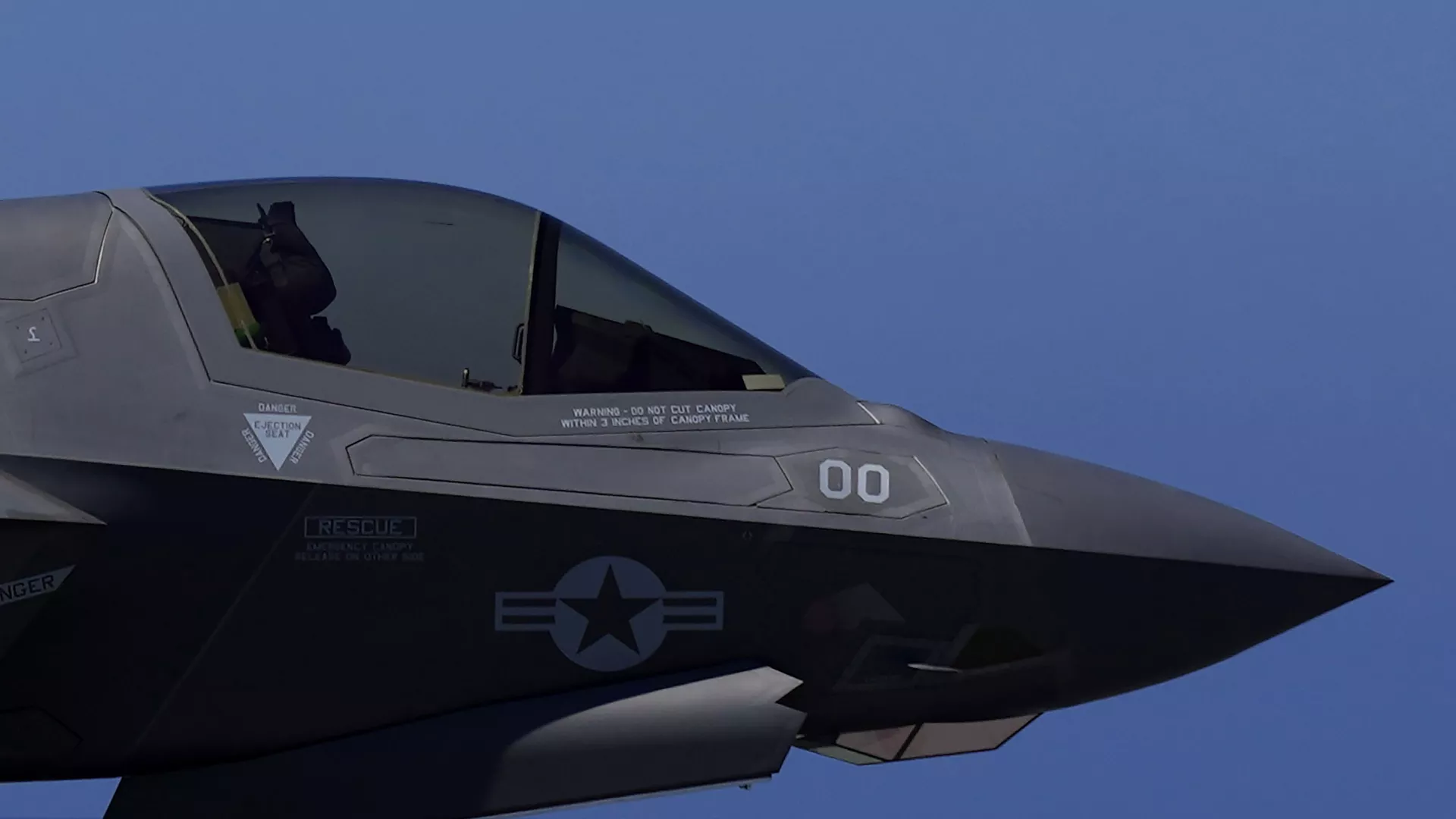
F-35: Closer Look at Colossally Costly Jet That Just Can’t Seem to Stay Airborne


F-35: Closer Look at Colossally Costly Jet That Just Can’t Seem to Stay Airborne

F-35 aircraft fly over the U.K.'s aircraft carrier HMS Queen Elizabeth in the Mediterranean Sea on Sunday, June 20, 2021.  - Sputnik International, 1920, 19.09.2023 

AP Photo / Petros Karadjias

A US Marine Corps F-35B went down over South Carolina on Sunday after its pilot ejected mid-flight for reasons unknown. Why do F-35s seem so crash-prone? What’s wrong with them? And what role does the waste and fraud in the US military-industrial complex play in creating such a Frankenstein’s monster of an aircraft? Sputnik explores.
Debris from the F-35B that went missing over South Carolina on September 17 was found in Williamsburg County, South Carolina, about two hours northeast of Joint Base Charleston on Monday following more than a day of frantic searching by the military. An as yet unspecified “mishap” was blamed for the accident. The pilot escaped unscathed.
 
“The mishap is currently under investigation, and we are unable to provide additional details to preserve the integrity of the investigative process,” the Marine Corps said in a statement Monday. The Marines ordered a two-day global pause in all aerial operations, with the errant F-35B becoming the third major aviation-related accident suffered by the military branch in less than two months.
 
Air units will be discussing “fundamentals of safe flight operations, ground safety, maintenance and flight procedures, and maintaining combat readiness,” the Marine Corps said.
 
Read more 


Friday, October 5, 2018

The US Military-Industrial Complex’s Worst Nightmare: The S-300 May Destroy and Expose the F-35

Israel has vowed to continue attacking Syria despite its upgraded air defenses
Federico Pieraccini Tue, Oct 2, 2018  

The tragic episode that caused the death of 15 Russian air force personnel has had immediate repercussions on the situation in Syria and the Middle East. On September 24, Russian Defense Minister Sergei Shoigu informed allies and opponents that the delivery of the S-300 air-defense systems to the Syrian Arab Republic had been approved by President Vladimir Putin. The delivery had been delayed and then suspended as a result of Israeli pressure back in 2013.
In one sense, the delivery of S-300 batteries to Syria is cause for concern more for Washington than for Tel Aviv. Israel has several F-35 and has claimed to have used them in Syria to strike alleged Iranian weapons transfers to
Hezbollah. With the S-300 systems deployed in an updated version and incorporated into the Russian command, control and communications (C3) system, there is a serious risk (for Washington) that Israel, now incapable of changing the course of events in Syria, could attempt a desperate maneuver.

Read more


Blogger's note:  subterrnews.blogspot.com does not send cookies, or collect any information on those using the blog.  However, the blogspot is on google, and google may collect information, and send cookies.  Many of the links that  we connect to do not send out cookies or collect information, but some do.  Your keying in to this blog you have agreed to this.


Monday, July 11, 2016

AMERICAN WAR PLANS AGAINST CHINA

 PRESENTED IN NEW REPORT FOR F-35’s


Thursday, March 24, 2016

In this July 7, 2006 file photo, the Lockheed Martin F-35 Joint Strike Fighter is shown after it was unveiled in a ceremony in Fort Worth, Texas.

The Plane That Ate the Pentagon: Media Offers Emergency Alternative to F-35

© AP Photo/ LM Ottero, File
Get short URL
036700

As the Pentagon's fifth-generation plane, the F-35, long plagued by troubles of every kind, will most likely miss its deployment deadline, the US media has come up with an emergency plan for how to substitute the most expensive weapons project ever.

An F-35 Lightning II lands Wednesday, March 6, 2013, at Nellis Air Force Base
US Air Force / Airman 1st Class Jason Couillard
Ahead of the deadline for its deployment, the end of 2016, the Lockheed Martin F-35 Joint Strike Fighter still remains plagued by failure.

Software and cyber-security weaknesses in the F-35 Lightning II, which has already been dubbed by the media as  “the plane that ate the Pentagon”, are among its unresolved problems and the mission system software supporting the aircraft's radar is not stable enough for combat, the Pentagon's top weapons tester told US lawmakers during a March 23 hearing on Capitol Hill.
Meanwhile, Defense editor Dave Majumdar has come up with his own alternative to the stealthy new jet designed for the US Air Force, Navy and Marine Corps.
“For the US Air Force, the most obvious alternative would be to resurrect the Lockheed Martin F-22 Raptor,” he suggests in the article for The National Interest magazine.
Lockheed Martin F-22 Raptor
The author acknowledges that “reconstituting the production line would be expensive and difficult”, and that the “Raptor’s antiquated computer hardware hasn’t been built in years”, however “a fleet of four hundred new F-22 Raptors would give the service a force capable of knocking down the door for follow-on conventional fighters such as upgraded or even new Lockheed F-16s or Boeing F-15E Strike Eagles.”
For the Navy – it is the Boeing F/A-18E/F Super Hornet, a twin-engine, supersonic, all weather multirole fighter jet that is capable of landing and taking off from an aircraft carrier.
Boeing F/A-18E/F Super Hornet
© Flickr/ tataquax
Boeing F/A-18E/F Super Hornet
The US Marine Corps, the author suggests, would have to “either buy the Super Hornet or leave the fixed-wing tactical fighter business without the F-35B.”
The author also suggested to US allies “who have bought the F-35, to either buy an aircraft from Eurofighter, Dassault, Boeing F/A-18E/F, Saab’s Gripen or even upgraded F-16s.”
Only recently the Air Power Australia think tank gave a scathing assessment of F-35 jets destined to fly from Darwin and Katherine, labelling the jet the “jackass of all trades and master of none”.
It has dismissed the plan to acquire 72 Lockheed Martin F-35 Lightning Joint Strike Fighters from the United States.

“Blue sky marketing” was overshadowing major problems with the aircraft, its head Peter Goon told a Canberra hearing of a Senate inquiry investigating the acquisition.
“It has all the hallmarks of a Ponzi scheme,” he said.
“Militaries have to adapt to political conditions of the day,” Dave Majumdar concludes.
That being said, given the sunk costs, the F-35 isn’t going anywhere.

Thursday, July 2, 2015

F-35 a $1.5 Trillion Piece of Shit!

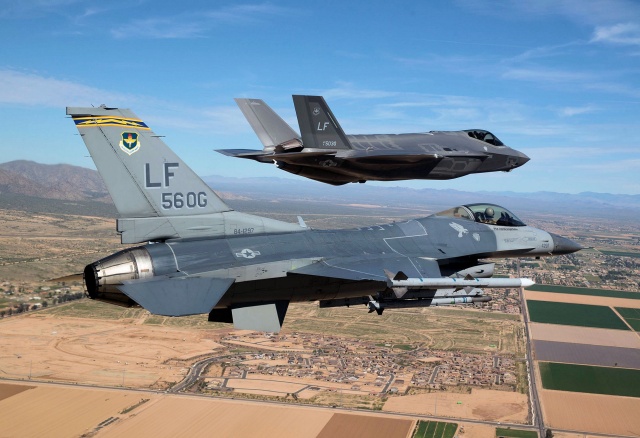
Report: In test dogfight, F-35 gets waxed by F-16

F-35 pilot found his aircraft "substantially inferior" in close battle.

US Air Force
A test pilot report obtained by defense journalist David Axe of War is Boring detailed the performance of the F-35 Joint Strike Fighter in a mock air battle against a two-seat F-16D in January. The F-16D—based on a design developed 40 years ago and from a production run in the mid-1990s—bested the F-35 in close-range combat maneuvers.

In the report, which Axe had obtained but did not publish in full, the F-35 pilot reported that his aircraft was in a "clean" configuration for the test, carrying nothing under its wings or in its internal weapons bays. The F-16, on the other hand, was flying with under-wing external fuel drop-tanks, which in theory would have put the aircraft at an aerodynamic disadvantage.
Apparently, it didn't. "Even with the limited F-16 target configuration, the F-35A remained at a distinct energy disadvantage for every engagement," the F-35 pilot reported. That means the F-35 constantly found itself flying slower and more sluggishly, unable to effectively maneuver to get the F-16 in its sights.
Furthermore, the F-35's high-tech helmet, which is supposed to give the pilot the ability to essentially "see through" the plane with the assistance of external cameras and sensors, didn't help matters. "The helmet was too large for the space inside the canopy to adequately see behind the aircraft," the pilot reported, which made it impossible to keep visual contact with the F-16 during the dogfight.
In an interview with the CBC's The Fifth Estate in November of 2014, F-16 co-designer Pierre Sprey berated the F-35 "inherently a terrible plane, because it's built based on a dumb idea"—a multirole, multi-service aircraft. "You've compromised the aircraft horribly for three different missions, and then you've compromised it again for three different services." He said the aircraft was "astonishingly unmaneuverable" because of its ratio of wing surface to weight. "In dogfighting, it's hopeless. "While much of what Sprey said in that interview has been rebutted at length elsewhere, the F-35 test pilot report seems to offer the same conclusion.

Wednesday, July 1, 2015

Pentagon’s F-35 stealth jet can’t win dogfight – report

Published time: June 30, 2015 05:48
Edited time: July 01, 2015 08:17
Three F-35 Joint Strike Fighters (Reuters/Lockheed Martin/Darin Russell)
A mock air battle between an F-16 jet and the military’s new and oft-troubled F-35 stealth jet showed that the F-35 is too sluggish to hit an enemy plane or dodge gunfire, according to a report.
The F-35 has cost the US military more than a trillion dollars since work on it began, making it the most expensive weapon in history.
The mock air battle, staged in January over the Pacific Ocean, was to test the F-35’s prowess as a close-range dogfighter at 10,000 to 30,000 feet. The F-35 pilot was to fly his jet hard, turning and maneuvering to “shoot down” the older F-16 jet, whose pilot would be doing his best to evade being hit, and trying to attack the F-35.
The test pilot’s five-page brief said that despite the F-16 being weighed down by two drop tanks, and with the F-35 jet carrying no weapons, the F-35 “remained at a distinct energy disadvantage for every engagement.”

The F-35 was designed to far exceed the fourth generation F-16 jets, first built in the 1970s, with the ability to carry its fuel and weapons internally. Yet aerodynamic problems, such as “insufficient pitch rate” for the jet’s nose while climbing, were reported during the mock battle.
The F-35 test pilot also discovered he couldn’t comfortably move his head inside the jet’s cramped cockpit.
“The helmet was too large for the space inside the canopy to adequately see behind the aircraft,” said the report.
That allowed the F-16 to sneak up on him.
The F-35 pilot tried to target the F-16 with the stealth jet’s 25-millimeter cannon, which the smaller F-16 easily dodged. The pilot said the F-35 performed so dismally that it had no place fighting other aircraft within visual range.
In one maneuver, the F-35 was able to perform decently at rudder reversal at slow speeds, but this used a lot of the aircraft’s energy, leaving the aircraft vulnerable to attack.
The brief release to the War is Boring website was unclassified but still marked “for official use only.” It documented a mock battle taking place on January 14, 2015 over a sea test range in the Pacific Ocean near Edwards Air Force Base, California.

There have been reports of fundamental problems with the F-35, which was designed by Lockheed Martin, as well as complaints about the ballooning cost of the project.
In April, Congress learned the software system for maintaining the fighter jet was giving false-positive readings 80 percent of the time, possibly leading to even more development delays.
The F-35’s Autonomic Logistics Information System (ALIS), a next-generation software system including 5 million lines of code, is supposed to identify any problems with the jet, and provide information on necessary replacement parts. It has been called the F-35’s “brains.”
READ MORE: Computer glitch prevents US’ most advanced F-35 fighter jet from firing until 2019 – report
Turner told Congress that ALIS doesn’t have a spell checker and raised concerns about the software’s ability to catch errors worse than grammatical ones. The current ALIS system is held in place by computer racks and weighs 800-1,000 pounds, making it cumbersome in combat environments. A smaller, two-man portable version is being developed which is due to be ready in July.
Last year, the Government Accountability Office found the ALIS had failed to meet basic requirements like identifying faults and failures.
READ MORE: Bailout Bombers: Italy's billion-euro F-35 'suicide mission'

Earlier news reports stated that a computer glitch had kept the aircraft’s four-barrel rotary cannon from firing, potentially delaying the jet from being fully operational until 2019.