CLICK HERE FOR THOUSANDS OF FREE BLOGGER TEMPLATES »
Showing posts with label Leonard Peltier. Show all posts

Sunday, July 28, 2024

American Indian Movement Leader Will Likely Die in Prison After Being Denied Parole


American Indian Movement Leader Will Likely Die in Prison After Being Denied Parole


[Source: en.wikipedia.org]

On July 2, Leonard Peltier (Turtle Mountain Ojibwe), a leader of the American Indian Movement (AIM) in the 1970s, was denied parole by the U.S. Parole Commission, ensuring that he will most likely die in federal prison.

Suffering from serious health issues as he nears 80, Peltier is serving two consecutive life sentences for killing FBI agents, Jack R. Coler and Ronald A. Williams, on the Pine Ridge Indian Reservation in South Dakota in June 1975.
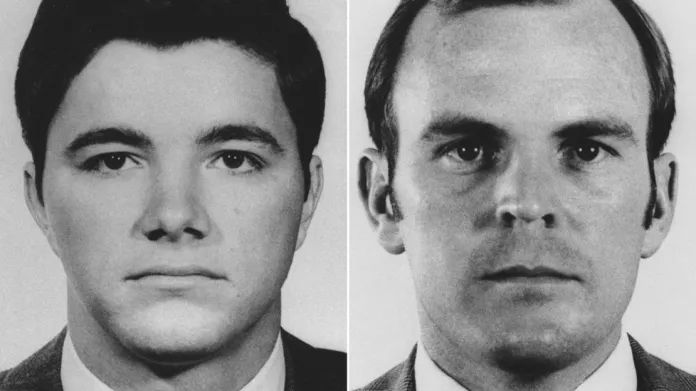
Special Agent Ronald A. Williams, left, and Special Agent Jack R. Coler were shot and killed at the Pine Ridge Reservation in South Dakota in 1975. [Source: cnn.com]

Imprisoned for nearly 50 years, Peltier has maintained his innocence and there are grounds to believe him.[1]

The federal government, for example, withheld a ballistics report at Peltier’s trial indicating the fatal bullets did not come from his weapon, according to court documents Peltier filed on appeal.
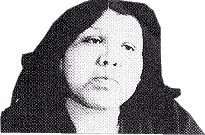

Myrtle Poor Bear [Source: dickshovel.com]

One prosecution witness, Michael Anderson, testified during cross-examination that he was threatened by an FBI agent, and said that he agreed to testify in exchange for criminal charges against him in another case being dropped.

Another witness, Myrtle Poor Bear, said that she had been coerced into signing a false affidavit implicating Peltier and that her life had been threatened. “They had the law in their hands, and could do anything,” she said of the FBI.

AIM and Pine Ridge

A member of the Turtle Mountain band of Chippewa Indians from North Dakota, Peltier had been a leader of AIM, which staged an occupation of the Pine Ridge Reservation in the early 1970s in an effort to reclaim land that had been taken during the 19th century Indian Wars.

Pine Ridge was strategically located at the site of the 1890 Wounded Knee Massacre, where the U.S. Army’s 7th Cavalry regiment killed about 300 Lakota Sioux civilians in revenge for the killing of General George Armstrong Custer at the Battle of the Little Bighorn.

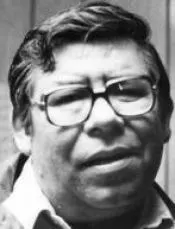
[Source: northcountrypublicradio.org]

Richard Wilson [Source: alchetron.com]

Peltier had traveled to Pine Ridge in South Dakota in 1975 to help AIM members defend themselves against the head of the Oglala Sioux tribal council, Richard Wilson, who worked with the FBI and deployed his private militia, Guardians of the Oglala Nation (GOON), against AIM.

GOON killings went unpunished as the homicide rate on the Pine Ridge Reservation became among the highest in the U.S.

Conflicting Narratives

On June 26, 1975, Coler and Williams were on the Pine Ridge Indian Reservation to arrest a man, Jimmy Eagle, on a federal warrant for armed robbery in connection with the theft of cowboy boots, according to the FBI’s investigative files.

While they were there, the agents radioed that they had come under fire in a shootout that lasted ten minutes, the FBI said.

Peltier was fingered in part because his gun—an AR-15—matched the one that killed the agents (this evidence was put into dispute), and because he was found by an Oregon state trooper after he had fled with Agent Coler’s handgun in a bag with his fingerprint on it.[2]


Leonard Peltier [Source: sfbayview.com]

In Peltier’s version of events, he was in bed at 11:00 a.m. when he heard gunshots and fellow AIM members told him “Man, we’re being attacked. We’re being attacked.” Peltier then said “Oh, my God.” and grabbed an old rifle and started running up to the house and fired his gun after being fired upon.

The FBI has said the agents were shot without provocation, though AIM said that they triggered the shootout, and killed an Indigenous man, Joe Stuntz, whose death was never investigated.

In the FBI’s version, Peltier was stopped while driving in a red truck because he had an outstanding warrant for the attempted murder of a police officer. Peltier allegedly exited the vehicle along with Norman Charles and Stuntz, and began firing at the FBI agents.

Peltier says he knows that his shots did not hit the FBI agents and he was not the one who killed them. This assessment appears to have been corroborated by Bob Robideau, who was charged with Peltier but was exonerated in a separate trial, who said in 2004: “I am ‘Mr. X’ (which is no lie) and I did kill them [the FBI agents] with the honor befitting a warrior, but they died like worms.”[4]

During a June 8, 2024, interview, Peltier’s serving attorney Kevin Sharp, a former U.S. District Judge in Tennessee, stated

“Pine Ridge was a powder keg with the Goon Squad operating there with the government’s help. AIM was there to protect those who were not part of the Goon Squad. There were many murders and assaults in a three-year timeframe. When plain-clothed agents in unmarked cars arrived, a firefight ensued. Leonard did not shoot the agents, and the FBI knew this but withheld evidence. The court of appeals acknowledged this but couldn’t overturn the conviction due to legal standards. Judge Heaney, who wrote the opinion, later supported clemency for Leonard. Now, 38 of Judge Heaney’s former clerks support parole for Leonard, including three who worked on his case. The government admits they don’t know who killed the agents, but it wasn’t Leonard. It’s time to release Leonard and start the healing process.”


Kevin Sharp [Source: tennesseelookout.com]

After the most recent parole hearing, Sharp commented that “today’s announcement continues the injustice of this long ordeal for Leonard Peltier. This decision is a missed opportunity for the United States to finally recognize the misconduct of the FBI and send a message to Indian Country regarding the impacts of the federal government’s actions and policies of the 1970s.”


  1. See Peter Matthiessen, In the Spirit of Crazy Horse: The Story of Leonard Peltier and the FBI’s War on the American Indian Movement (New York: Penguin Books, 1992). 

  2. It has been alleged that Peltier confessed to killing the two FBI agents in Marlon Brando’s motor home, and that AIM activist Ana Mae Aquash was murdered to protect the disclosure from being made public. Peltier was arrested by the Royal Canadian Mounted Police (RCMP) on a reservation in Calgary, Alberta, in February 1976. He was convicted on first-degree murder charges in April 1977. Darrelle Dean “Dino” Butler, Robert Eugene Robideau, and James “Jimmy” Eagle were also charged in a federal indictment with two counts of first-degree murder and aiding and abetting, though they were either acquitted at trial or, as in Eagle’s case, the charges were dropped. Following his initial conviction, Peltier made an armed escape from the federal penitentiary in Lompoc, California, and was apprehended after a farmer, whom he threatened with a rifle and whose truck he stole, turned him in. 

  3. Robideau said he had no remorse because it was a “defensive action” against “our enemies.” 


When you donate to CovertAction Magazine, you are supporting investigative journalism. Your contributions go directly to supporting the development, production, editing, and dissemination of the Magazine.

CovertAction Magazine does not receive corporate or government sponsorship. Yet, we hold a steadfast commitment to providing compensation for writers, editorial and technical support. Your support helps facilitate this compensation as well as increase the caliber of this work.

Please make a donation by clicking on the donate logo above and enter the amount and your credit or debit card information.

CovertAction Institute, Inc. (CAI) is a 501(c)(3) non-profit organization and your gift is tax-deductible for federal income purposes. CAI’s tax-exempt ID number is 87-2461683.

We sincerely thank you for your support.


Disclaimer: The contents of this article are the sole responsibility of the author(s). CovertAction Institute, Inc. (CAI), including its Board of Directors (BD), Editorial Board (EB), Advisory Board (AB), staff, volunteers and its projects (including CovertAction Magazine) are not responsible for any inaccurate or incorrect statement in this article. This article also does not necessarily represent the views the BD, the EB, the AB, staff, volunteers, or any members of its projects.

Differing viewpoints: CAM publishes articles with differing viewpoints in an effort to nurture vibrant debate and thoughtful critical analysis. Feel free to comment on the articles in the comment section and/or send your letters to the Editors, which we will publish in the Letters column.

Copyrighted Material: This web site may contain copyrighted material the use of which has not always been specifically authorized by the copyright owner. As a not-for-profit charitable organization incorporated in the State of New York, we are making such material available in an effort to advance the understanding of humanity’s problems and hopefully to help find solutions for those problems. We believe this constitutes a ‘fair use’ of any such copyrighted material as provided for in section 107 of the US Copyright Law. You can read more about ‘fair use’ and US Copyright Law at the Legal Information Institute of Cornell Law School.

Republishing: CovertAction Magazine (CAM) grants permission to cross-post CAM articles on not-for-profit community internet sites as long as the source is acknowledged together with a hyperlink to the original CovertAction Magazine article. Also, kindly let us know at info@CovertActionMagazine.com. For publication of CAM articles in print or other forms including commercial internet sites, contact: info@CovertActionMagazine.com.

By using this site, you agree to these terms above.


About the Author


Wednesday, September 13, 2023

Supporters of Native activist Leonard Peltier hold White House rally, urging Biden to grant clemency

Supporters of Native activist Leonard Peltier hold White House rally, urging Biden to grant clemency

September 12, 2023

Free Leonard Peltier Mural Unveiling on the National Mall  

Hundreds of activists and Indigenous leaders rallied outside the White House on Tuesday to support Leonard Peltier on the imprisoned activist's 79th birthday, holding signs and chanting slogans urging President Joe Biden to grant clemency to the Native American leader.

Peltier is serving life in prison for the killing of two FBI agents during a 1975 standoff on the Pine Ridge Indian Reservation in South Dakota. He was convicted in 1977.

Key figures involved in Peltier's prosecution have stepped forward over the years to urge his release, rally organizers said, including the judge who presided over Peltier's 1986 appeal and the former U.S. attorney whose office handled the prosecution and appeal. 

Read more 

Source:   https://www.cbsnews.com/minnesota/news/supporters-of-native-activist-leonard-peltier-hold-white-house-rally-urging-biden-to-grant-clemency/


Friday, July 1, 2016

Native Activist Leonard Peltier Calls for Clemency Support


On the 40th anniversary of the gunfight at the Pine Ridge Reservation, imprisoned Native American activist Leonard Peltier is calling on President Obama to grant him clemency before the end of his presidency.
On June 26, 1975, members of the American Indian Movement (AIM) were involved in a gun fight with agents of the U.S. Federal Bureau of Investigation (FBI) on the Pine Ridge Reservation in South Dakota. When the exchange of gunfire was finished three men were dead – Special Agents Jack R. Coler and Ronald A. Williams of the FBI and Joe Stuntz, a member of AIM.
On February 6, 1976, AIM member Leonard Peltier would be arrested and extradited from Canada after being accused of being the one who fired the shots that killed Coler and Williams. Peltier was born on September 12, 1944 in Grand Forks, North Dakota. He is a Turtle Mountain Chippewa on his father’s side, and a Dakota Sioux on his mother’s. Peltier spent his childhood on the Turtle Mountain reservation near Belcourt, North Dakota before moving to Seattle, Washington. In the 1970s he would get involved in Native activism and join the American Indian Movement.
For the last 50 years, AIM has led the charge in the “Red Power” movement that calls attention to the injustices and oppression taking place against Native communities. AIM established itself as a force to be reckoned with through a series of protests and occupations during the late 1960s and 1970s. These actions included the 19-month occupation of Alcatraz Island, the 1972 “Trail of Broken Treaties” and occupation of the Bureau of Indian Affairs building, the 1973 Wounded Knee Incident, the occupation of Mount Rushmore, the Longest Walk, and the gunfight on the Pine Ridge reservation.
Although Peltier was convicted of first degree murder in 1977, and subsequently sentenced to two consecutive life sentences, his role in the murders has been the subject of controversy since the very beginning. Special Agents Coler and Williams originally came to the Pine Ridge Reservation in search of a man named Jimmy Eagle who was wanted for questioning in an assault and robbery case. The two agents were driving separate unmarked vehicles while following a red pick-up truck which matched a description of Jimmy Eagle. Williams and Coler would later report that they were under fire from occupants of the truck and unable to return fire. The men radioed that they would likely be killed if reinforcements did not arrive.
Once the gunfight ended, the FBI began investigating and looking for someone to pin the murders on. Leonard Peltier was at the reservation but has always maintained that he was innocent. To be certain, over the years Peltier has given different alibis to different people. Peltier was reported to be driving a vehicle that was red and white and was wanted for questioning. After being added to the FBI’s Ten Most Wanted Fugitives he went to live in Alberta, Canada.
On February 6, 1976, he was arrested and extradited from Canada. His arrest was conducted based on signed affidavits from Myrtle Poor Bear, a local woman from the Pine Ridge Reservation. In the affidavits Poor Bear claimed to have been dating Peltier at the time and also claimed to have witnessed the murders. In 2000, 25 years later, Myrtle Poor Bear admitted she had been forced to make the confessions.
“I was forced into this, and I feel very awful. I just wish that Leonard Peltier will get out of prison,” Myrtle Poor Bear confessed in 2000.
Now, on the 40th anniversary of the murders, Leonard Peltier has released a letter calling for support and asking President Obama to grant him clemency and release him from prison. He also spoke of his declining health and the need to act quick to get him proper treatment (see below for the full letter).
“My health issues still have not been thoroughly addressed, and I still have not gotten the results of the MRI done over a month ago for the abdominal aortic aneurysm,” Peltier writes. “As the last remaining months of President Obama’s term pass by, my anxiety increases. I believe that this President is my last hope for freedom, and I will surely die here if I am not released by January 20, 2017.”
“The long and complicated case history reveals a pattern of misconduct by the FBI, including the coercion of an alleged eyewitness, suppression of potentially exculpatory evidence and deep concerns about the agency’s political motivation for so zealously pursuing the case,” Heiss wrote. “The U.S. Parole Commission has acknowledged to Peltier the “lack of any direct evidence that you personally participated in the executions of two FBI agents.”
In Amnesty International’s 2010 annual report, Peltier’s case was also placed under the “Unfair Trials” category.
As of 2016, Leonard Peltier is incarcerated at the United States Penitentiary, Coleman in Florida. His next scheduled parole hearing will be in July 2024. Barring appeals, parole or presidential pardon, his projected release date is October 11, 2040.
Find out how you can help achieve Peltier’s freedom here whoisleonardpeltier.info

Letter from Leonard Peltier:

Sisters, brothers, friends and supporters:
June 26th marks 41 years since the long summer day when three young men were killed at the home of the Jumping Bull family, near Oglala, during a firefight in which I and dozens of others participated. While I did not shoot (and therefore did not kill) FBI agents Ronald Williams and Jack Coler, I nevertheless have great remorse for the loss of their young lives, the loss of my friend Joe Stuntz, and for the grieving of their loved ones. I would guess that, like me, many of my brothers and sisters who were there that day wish that somehow they could have done something to change what happened and avoid the tragic outcome of the shootout.
This is not something I have thought about casually and then moved on. It’s something I think about every day. As I look back, I remember the expressions of both fear and courage on the faces of my brothers and sisters as we were being attacked. We thought we were going to be killed! We defended our elders and children as they scattered for protection and to escape. Native people have experienced such assaults for centuries, and the historical trauma of the generations was carried by the people that day — and in the communities that suffered further trauma in the days that followed the shootout, as the authorities searched for those of us who had escaped the Jumping Bull property.
As the First Peoples of Turtle Island, we live with daily reminders of the centuries of efforts to terminate our nations, eliminate our cultures, and destroy our relatives and families. To this day, everywhere we go there are reminders — souvenirs and monuments of the near extermination of a glorious population of Indigenous Peoples. Native Peoples as mascots, the disproportionately high incarceration of our relatives, the appropriation of our culture, the never-ending efforts to take even more of Native Peoples’ land, and the poisoning of that land all serve as reminders of our history as survivors of a massive genocide. We live with this trauma every day. We breathe, eat and drink it. We pass it on to our children. And we struggle to overcome it.
Like so many Native children, I was ripped away from my family at the age of 9 or so and taken away to get the “Indian” out of me at a boarding school. At that time, Native Peoples were not able to speak our own languages for fear of being beaten or worse. Our men’s long hair, which is an important part of our spiritual life, was forcibly cut off in an effort to shame us. Our traditional names were replaced by new European-American names. These efforts to force our assimilation continue today. Not long ago, I remember, a Menominee girl was punished and banned from playing on the school’s basketball team because she taught a classmate how to say “hello” and “I love you” in her Native language. We hear stories all the time about athletes and graduates who face opposition to wearing their hair long or having a feather in their cap.
With this little bit of my personal history in mind, I think it is understandable that I would then, as a young person in the 1960’s and 70’s, be active in the Indigenous struggle to affirm our human, civil, and treaty rights. Our movement was a spiritual one to regain our ceremonies and traditions and to exercise our sovereignty as native or tribal nations. For over 100 years some of our most important ceremonies could not be held. We could not sing our songs or dance to our drum. When my contemporaries and I were activists, there were no known sun dances. Any ceremony that took place had to be hidden for fear of reprisals. One of our roles as activists for the welfare of our Peoples was to create space and protection for Native peoples who were trying to reconnect to our ancient cultures and spiritual life. This was dangerous and deadly. It meant putting our lives on the line because people who participated in these ceremonies, and people who stood up for our elders and our traditional way of life, were brutally beaten, killed or disappeared. Paramilitary groups and death squads ruled some reservations and each day was a battle. If an uninvited, unknown or unrecognized vehicle pulled up to your house, the first reaction was that you were being visited by someone who meant to do you harm in some way. This was learned behavior on the reservations. This was excruciatingly true in the 1970’s.
Hey, I don’t want to be all doom and gloom here. I see over the decades that in some important ways, life has improved for our Peoples. President Obama’s extraordinary efforts to forge a strong relationship with our Tribal Nations is good cause for a new sense of optimism that our sovereignty is more secure. By exercising our sovereignty, life for our people might improve. We might begin to heal and start the long journey to move past the trauma of the last 500 years. But what will we do if the next Administration rolls back those gains made over the past 8 years?
I often receive questions in letters from supporters about my health. Yes, this last year has been particularly stressful for me and my family. My health issues still have not been thoroughly addressed, and I still have not gotten the results of the MRI done over a month ago for the abdominal aortic aneurysm.
As the last remaining months of President Obama’s term pass by, my anxiety increases. I believe that this President is my last hope for freedom, and I will surely die here if I am not released by January 20, 2017. So I ask you all again, as this is the most crucial time in the campaign to gain my freedom, please continue to organize public support for my release, and always follow the lead of the International Leonard Peltier Defense Committee.
Thank you for all you have done and continue to do on my behalf.
In the Spirit of Crazy Horse…
Doksha,
Leonard Peltier
Derrick Broze is an investigative journalist and liberty activist. He is the Lead Investigative Reporter for ActivistPost.com and the founder of the TheConsciousResistance.com. Follow him on Twitter.
Derrick is available for interviews.
This article may be freely reposted in part or in full with author attribution and source link.
Paid Content: Paid Content: Paid Content: Paid Content:

Tuesday, June 28, 2016

41 Years Since Jumping Bull

(But 500 Years of Trauma)

June 26th marks 41 years since the long summer day when three young men were killed at the home of the Jumping Bull family, near Oglala, during a firefight in which I and dozens of others participated. While I did not shoot (and therefore did not kill) FBI agents Ronald Williams and Jack Coler, I nevertheless have great remorse for the loss of their young lives, the loss of my friend Joe Stuntz, and for the grieving of their loved ones. I would guess that, like me, many of my brothers and sisters who were there that day wish that somehow they could have done something to change what happened and avoid the tragic outcome of the shootout.
This is not something I have thought about casually and then moved on. It’s something I think about every day. As I look back, I remember the expressions of both fear and courage on the faces of my brothers and sisters as we were being attacked. We thought we were going to be killed! We defended our elders and children as they scattered for protection and to escape. Native people have experienced such assaults for centuries, and the historical trauma of the generations was carried by the people that day — and in the communities that suffered further trauma in the days that followed the shootout, as the authorities searched for those of us who had escaped the Jumping Bull property.
As the First Peoples of Turtle Island, we live with daily reminders of the centuries of efforts to terminate our nations, eliminate our cultures, and…

Tuesday, November 25, 2014

LEONARD HAS BEEN IN PRISON FOR 40 YEARS FOR A CRIME THAT HE DID NOT COMMIT.  THE TRIAL WAS RIGGED.  HE WAS PUT THEIR AS A RESULT OF COINTELPRO, WHICH WAS AN UNCONSTITUTIONAL PROGRAM RUN BY THE FBI.