EU Plans One Trillion Euro ‘Green Deal’ For Net-Zero CO2 Emissions
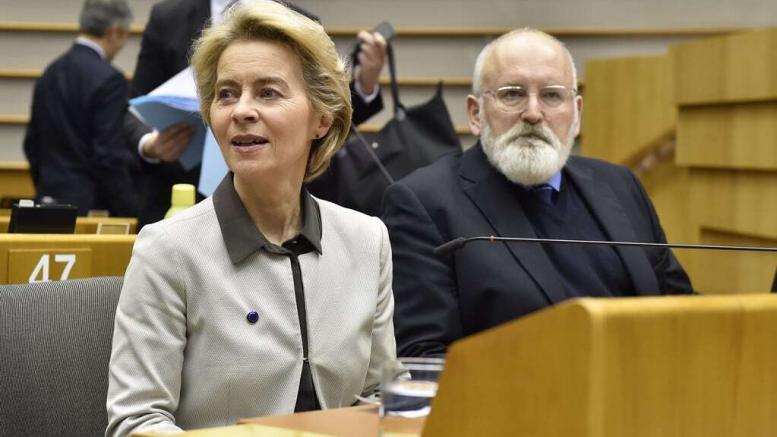 Photographer: Jean-Christophe VERHAEGEN; Copyright European Union 2019 - Source : EP
The
war on CO2 in the name of global warming is the worst case of mass
hysteria ever experienced on planet earth. The EU has declared that it
will sink a cool one trillion euros into its member states to be
‘net-zero’ by 2050. ⁃ TN Editor
The EU executive is to unveil details of its Sustainable Europe Investment Plan, aimed at mobilising investment of 1 trillion euros over 10 years, using public and private money to help finance its flagship project – the European Green Deal.
The “Green Deal” is an ambitious rethinking of Europe’s economy, transport and energy sectors aimed at turning the EU into a global leader on the clean technologies that will shape the coming decades.
Overall, the Commission estimates that an extra €260 billion in investments are needed per year to finance the switch to clean energy and reduced emissions.
But behind the sweeping rhetoric of the endeavour, that will be debated later today at a sitting of the European Parliament in Strasbourg, are a number of knotty problems that have to be worked out.
€7.5 billion “fresh money”
A main one is how to set coal-dependent EU regions – think Poland, the Czech Republic, or parts of Germany – on the path of renewable energy.
European Commission President Ursula von der Leyen has proposed a Just Transition Mechanism meant to bankroll the sort of deep changes needed, which would make available up to €100 billion a year. She also wants to review the EU’s strict state aid rules in order to seed investments into clean technologies.
According to early drafts, the Just Transition Mechanism will be composed of three pillars:
- A Just Transition Fund established under the EU’s regional policy budget, staffed with €7.5 billion additional money. The new fund will reach an overall financing capacity of €30-50 billion when including other Cohesion Policy resources and national co-financing;
- A dedicated investment scheme under the EU budget’s InvestEU plan, forrmerly known as the Juncker plan;
- A new public loan facility managed by the European Investment Bank (EIB).
The Commission retorts that the fund will be augmented by money from the EU’s long-term budget, loans from the European Investment Bank and the InvestEU programme, using the principle of leveraging limited public funds to attract private cash by covering the riskiest parts of an investment.
Read full story here…
Source: technocracy.news
Blogger's note:
subterrnews.blogspot.com does not send cookies, or collect any information on
those using the blog. However, the blogspot is on google, and google may
collect information, and send cookies. Many of the links that we
connect to do not send out cookies or collect information, but some do.
You are keying in to this blog, and you have agreed to this.
The views expressed in the articles
do not necessarily represent the opinions of this blog. They are the views, and opinions of the
author(s) of the article.
0 comments:
Post a Comment