Private Cities: ‘Priority Is Not The Needs Of Citizens’
Please Share This Story!
Private
Cities are the beginning of neo-Feudalism where citizens exist for the
pleasure and convenience of the land barons. If the ‘owners’ don’t like
you, you can be summarily expelled with no recourse. ⁃ TN Editor
I was walking beneath the tightly packed, identical high-rise towers of Danga Bay,
a new 20,000-person mixed-use development built entirely on reclaimed
land in Johor Bahru, in the south of Malaysia, with my camera drawn. I
had been writing about new cities and developments like this all over
Asia for many years, and doing informal visits where I could get a feel
for the place, chatting with home buyers and people running local
businesses, was part of my standard operating procedure.
But something happened here that I hadn’t experienced before: I was
approached by a security agent and was sternly told that I couldn’t use
my camera—that cameras were not allowed in Danga Bay.I questioned him: “So in a development where 20,000 people are supposed to live, nobody is allowed to have a camera?”
He said that was correct.
Of course, that wasn’t true, but there was nothing that I could do: I was in a small city-sized development that was 100% privately-owned and operated by the Chinese developer Country Garden. The word of the company was law.
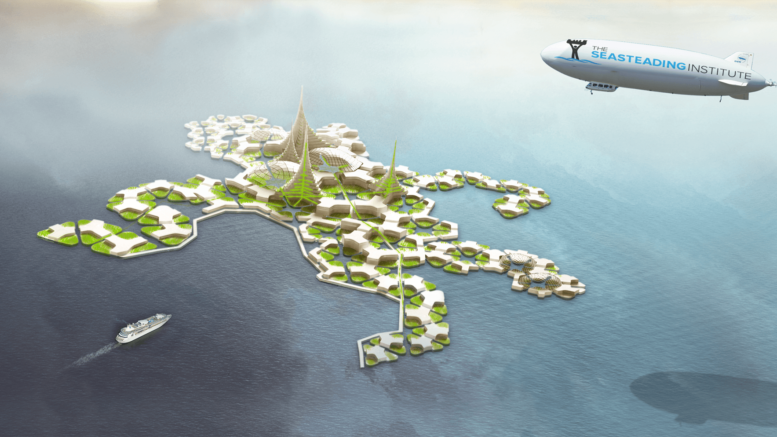
Private cities, generally marketed as being “better, cheaper and freer than existing state models” have become the new trend in the 21st century urban development. They are mixed-use developments where people live, work and play that are presided over by a CEO rather than a mayor—a company rather than a government. In some ways, private cities are viewed as a “win-win” type of shortcut, as governments can get their new developments built for them via private capital rather than tax dollars and still take a cut of the earnings, while private firms can profit at each stage of the urbanization process.
Private cities, kind of like special economic zones, often have their own sets of rules which often run perpendicular to the laws of the nations they are geographically located within. They are essentially legal wild cards—a swath of land purchased by a private company that can be run as that company sees fit. They are wild cards where the conventions of the broader country don’t apply, where new labor regulations, tax codes, financial laws, business and property registration systems, and education models can be implemented and tested. The ideas behind many private cities tend to be very libertarian: get government out of the way and let the people prosper.
According to Moser, there are well over 15 new private cities and dozens more new urban areas being developed on public-private partnerships throughout the world today. Songdo, a 130,000-person new city owned and operated by Gale International and POSCO in South Korea is one of the dominant models of this movement. Forest City, a nascent $100 billion 700,000-person new city being built on reclaimed land just up the coast from Danga Bay by China’s Country Garden is another. As is Springfield, Australia, a private city that was built from scratch on 7,000 acres of bush by Australia’s 39th richest man that now houses 40,000 residents. Google even recently received approval to build a private “smart” city in a Toronto suburb.
“Private cities are appealing to many governments who want instant urban and economic development and believe that outsourcing to the private sector is efficient and lucrative,” Moser notes. “Real estate development companies and technology companies are attracted by the profits that stand to be made in new city projects and governments around the world are willing to cede land, utilities and control in the hopes of attracting Amazon or some other tech giant.”
Read full story here…
Source: technocracy.news
Blogger's note:
subterrnews.blogspot.com does not send cookies, or collect any information on
those using the blog. However, the blogspot is on google, and google may
collect information, and send cookies. Many of the links that we
connect to do not send out cookies or collect information, but some do.
You are keying in to this blog, and you have agreed to this.
The views expressed in the articles
do not necessarily represent the opinions of this blog. They are the views, and opinions of the
author(s) of the article.
0 comments:
Post a Comment