All Global Research articles can be read in 51 languages by activating the Translate Website button below the author’s name.
To receive Global Research’s Daily Newsletter (selected articles), click here.
Click the share button above to email/forward this article to your friends and colleagues. Follow us on Instagram and Twitter and subscribe to our Telegram Channel. Feel free to repost and share widely Global Research articles.
***
All
over the Earth, birds — symbols of freedom and joy — have been
disappearing, and unless we stop killing them, they will never more
enliven our skies and imaginations.
They
are terns, seagulls, avocets, gannets, skuas, guillemots, puffins,
oystercatchers, ducks, geese, godwits, pheasants, magpies, sanderlings,
storks, cranes, pelicans, herons, swans, loons, sparrows, pigeons,
red-winged blackbirds, owls, cormorants, grebes, dunlins, crows, ravens,
bald eagles, hawks, falcons, vultures, all of them vanishing from the
landscapes of our homes, forests, sea coasts and minds. It rarely makes
the news, and a world grown accustomed to ever-dwindling resources and
diminishing life has not been paying attention.
The
warning of a Silent Spring, sounded sixty years ago like a trumpet’s
blare, has shrunken from a year-round emergency to the
almost-meaningless ritual of Earth Day, celebrated just once a year.
But
last spring, during May and June, the world was awakened to shocking
tales and heart-rending photographs of dead seabirds littering their
breeding grounds all over the Northern Hemisphere, nowhere so vividly as
in the De Petten Nature Reserve on the island of Texel in the
Netherlands, where the corpses of Sandwich terns littered the ground as
if they had fallen dead out of the sky in mid-flight:

Texel Island, early June 2022
Ornithologists
and bird conservation organizations, reflexively, said to themselves
and the world, “This must be bird flu,” and they dressed in hazmat suits
and masks as they wandered among the avian graveyards with their
specimen collectors and testing equipment, while ignoring obvious signs
to the contrary.
Bird
flu, they pronounced, is so contagious and deadly that it travels round
the world in days, spreads like water between species, and kills entire
colonies in weeks. While ignoring the fact that two Dutch colonies of
Sandwich terns just 20 miles apart during the same breeding season had
completely different outcomes: Waterdunen, whose 7,000 nesting birds
were completely wiped out, and Yerseke Moer, whose smaller colony
suffered zero mortality. That in France, 3,000 Sandwich terns at Platier
d’Oye were entirely killed while thousands of pairs of Sandwich terns
at Polder de Sébastopol had no disease at all. That bird flu was an
autumn and winter disease and had never before been known to occur in
spring or summer. And that it had never before affected so many
different kinds of birds at once.
But this was not “bird flu”, it was radiation sickness from cell towers, as documented in my newsletter of July 28, 2022.
Eighteen
new 4G antennas had been added to three cell towers located at De
Petten, within the territory where the birds were breeding, just days
before they began dying. And a large number of other antennas and towers
were aimed at the reserve from across a busy shipping lane whose
traffic made heavy use of those antennas. While Yerseke Moer is host to
no cell towers, has far fewer antennas aimed at it, and is in an
isolated location, not near a major port, and not on a shipping lane.
Similarly,
in France, dozens of new 4G and 5G antennas had just been added to
towers near and at the reserve at Platier d’Oye, located near the port
of Calais, while the Polder de Sébastopol is on an isolated island with
no towers, few human residents or visitors and far from any shipping
traffic.
One year later
In
August 2022, researchers were astonished to find that 600 pairs of
Sandwich terns — at least some of whom had come from the colonies that
had been wiped out — had decided to try again so late in the season.
They laid their eggs and raised at least 300 young birds, successfully,
during July and August in a new location on Texel Island, a beach at the
Prince Hendrik Sand Dike, owned by the water authority,
Hoogheemraadschap Hollands Noorderkwartier (HHNK). And this spring in
2023, the Prince Hendrik Sand Dike is filled with almost 3,000 breeding
pairs of Sandwich terns, while a second reserve — the island of De Bliek
in the Haringvliet — has more than 2,000 breeding pairs. These two
colonies, and five smaller colonies, total about half the number of
Sandwich terns of previous years.
They
are thriving, but all of last spring’s disastrous breeding grounds,
many of which had been the breeding grounds for this species for years
or decades, have been abandoned. “It is striking: the areas
with colonies that were heavily affected by bird flu last year remained
vacant this year, including those of Waterdunen (ZL), Wagejot and De
Petten on Texel (NH), Griend and De Putten near Camperduin (NH)”, wrote Ruud van Beusekom of Vogelbescherming Nederland (BirdLife Netherlands) on June 5, 2023.
Now
everyone is assuming that the birds nesting successfully this year have
acquired immunity from the H5N1 influenza virus. But the areas chosen
this year by the Sandwich terns are lower-radiation areas. The Prince
Hendrik Sand Dike, the only breeding ground for these birds this year on
the island of Texel, is the quietest, least visited beach on the
island. The nearest antennas are about 3 kilometers away, and because of
the small number of visitors and ships they are little used and emit
little radiation. Likewise De Bliek, in the Haringvliet, is an island
with no people and no antennas in a closed waterway visited by few
ships.
Another
anomaly not explained by researchers is the fact that removing all dead
birds from the colonies last year increased mortality: “Last year it
appeared that collecting carcasses in colonies has a negative effect on
the further spread of bird flu,” wrote Odessa Langeveld
on May 12 of this year. In other words, leaving virus-infected
carcasses to rot on the breeding grounds decreased the spread of the
disease, while removing them increased its spread. But no one is
considering that the teams of workers removing the carcasses on a daily
basis were all carrying and using mobile phones, which not only were
emitting radiation themselves but were forcing the cell towers on or
near the site to be continuously active.
It bears repeating that influenza, whether in people, animals, or birds, has never been demonstrated to be a contagious disease.
In 1918, at the very height of the Spanish influenza, attempts by
medical teams in Boston and San Francisco to demonstrate the contagious
nature of the flu met with complete and resounding failure. Such
experiments in humans were published in the Journal of the American Medical Association, the Boston Medical and Surgical Journal, and Public Health Reports. Such experiments in horses were published in Veterinary Journal.
Chapters 7, 8 and 9 of my book, The Invisible Rainbow: A History of Electricity and Life,
are devoted to a complete, detailed examination of the history and
science of influenza. Chapter 16, the longest chapter in the book, is
devoted in part to the effects of electromagnetic radiation on birds. I
suggest that all bird conservation organizations should acquire my book
and read it carefully.
I
receive reports from observers around the world about birds
disappearing from sea coasts after cell towers are built on them. Just
yesterday, for example, this email came from Manju Carrow, writing about
a new Verizon tower on a quiet cape in Florida:
“I went to Cape San Blas, Florida last week. Sometime between April 2022 and before June 11th, 2023 they added a cell tower to the cape.
Granted there are 2 nearby, but not directly on the cape. I have gone
there 5 times since 2020. The cape has only homes and some small shops,
no hotels. On all the beaches I’ve ever been to, there are many birds on
the beach. For the first time on a beach, I didn’t see the little
sandpipers and other birds that usually run on the beach when the waves
go out to peck at the bugs. I mentioned it to a resident and actually
they realized the same thing, they just hadn’t noticed. Of course, on
day one when I realized I had only seen 2 birds all day I immediately
thought of the new tower.”
*
Note to
readers: Please click the share button above. Follow us on Instagram and
Twitter and subscribe to our Telegram Channel. Feel free to repost and
share widely Global Research articles.
Arthur Firstenberg, President, Cellular Phone Task Force, Author, The Invisible Rainbow: A History of Electricity and Life, Administrator, International Appeal to Stop 5G on Earth and in Space, Caretaker, ECHOEarch.org (End Cellphones Here On Earth)
Featured image: Low-radiation reserve on Texel Island, early June 2023
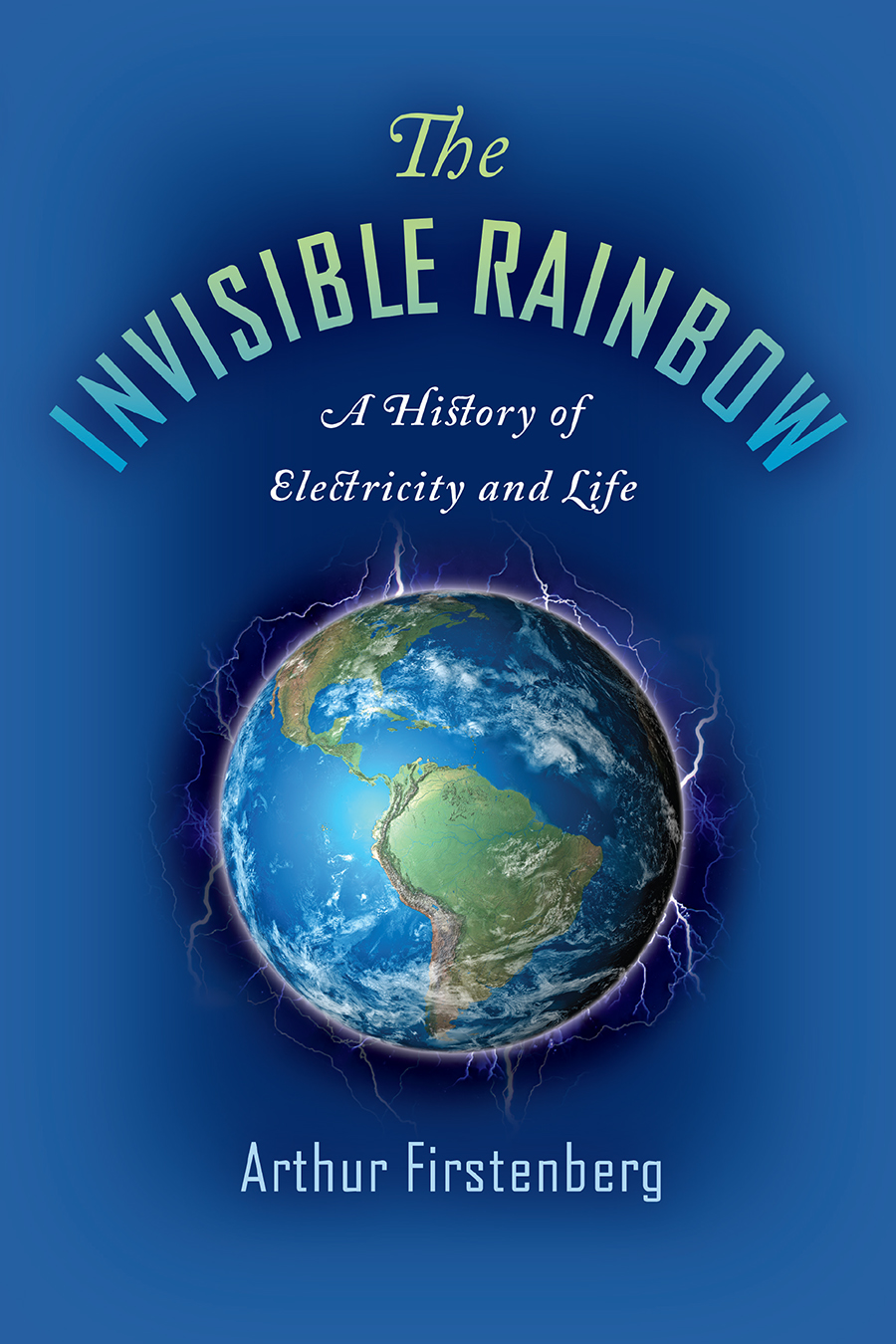 The Invisible Rainbow: A History of Electricity and Life
By Arthur Firstenberg
Pages: 576
Publisher: Chelsea Green Publishing
Publication Date: March 9, 2020
ISBN: 9781645020097
5g
is being rolled out across the country, despite growing evidence that
it is disruptive to our health, our safety, and the environment. The Invisible Rainbow
is the groundbreaking story of electricity as it’s never been told
before—exposing its very real impact on the biosphere and human health.
Over
the last 220 years, society has evolved a universal belief that
electricity is ‘safe’ for humanity and the planet. Scientist and
journalist Arthur Firstenberg disrupts this conviction by telling the
story of electricity in a way it has never been told before—from an
environmental point of view—by detailing the effects that this
fundamental societal building block has had on our health and our
planet.
In The Invisible Rainbow,
Firstenberg traces the history of electricity from the early eighteenth
century to the present, making a compelling case that many
environmental problems, as well as the major diseases of industrialized
civilization—heart disease, diabetes, and cancer—are related to
electrical pollution.
Click here to order.
The original source of this article is Global Research


