US war crimes then and now.
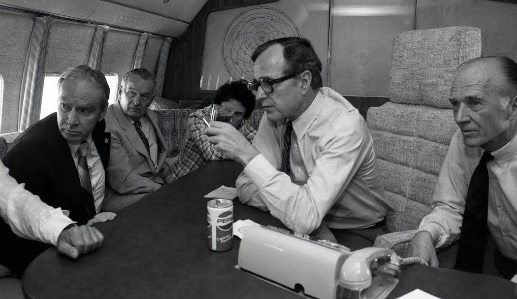
George H. W. Bush (1991). A “statesman” and “American hero”? What a lie!
George W. Bush declares war on Afghanistan (2001)
George W. Bush and Tony Blair wage war on Iraq (2003),
Barack Obama’s fake “counterterrorism” war against the people of Libya, Iraq, Syria, Yemen, (2011-2017),
Trump’s war against Iraq and Syria (2017-
The list is long…
**
When George H.W. Bush was president he ordered
the massacre of Iraqi soldiers after the ceasefire in 1991, and after he
had promised them safe passage out of Kuwait. This article, which went
viral after the war, exposed Bush as a mass murderer and war criminal,
directly involved in the “Highway of Death.” He is a “hero” only to Big
Oil and the Wall Street financial empire. This account was assembled by
the author and presented by her at a tribunal examining U.S. war crimes.
It is still cited around the world on anniversaries of this war.
I want to give testimony on what are called the “highways of death.”
These are the two Kuwaiti roadways, littered with remains of 2,000
mangled Iraqi military vehicles, and the charred and dismembered bodies
of tens of thousands of Iraqi soldiers, who were withdrawing from Kuwait
on February 26th and 27th 1991 in compliance with UN resolutions.
U.S. planes trapped the long convoys by disabling vehicles in the
front, and at the rear, and then pounded the resulting traffic jams for
hours. “It was like shooting fish in a barrel,” said one U.S. pilot. The
horror is still there to see.

On the inland highway to Basra is mile after mile of burned, smashed,
shattered vehicles of every description – tanks, armored cars, trucks,
autos, fire trucks, according to the March 18, 1991, Time magazine. On
the sixty miles of coastal highway, Iraqi military units sit in gruesome
repose, scorched skeletons of vehicles and men alike, black and awful
under the sun, says the Los Angeles Times of March 11, 1991. While 450
people survived the inland road bombing to surrender, this was not the
case with the 60 miles of the coastal road. There for 60 miles every
vehicle was strafed or bombed, every windshield is shattered, every tank
is burned, every truck is riddled with shell fragments. No survivors
are known or likely. The cabs of trucks were bombed so much that they
were pushed into the ground, and it’s impossible to see if they contain
drivers or not. Windshields were melted away, and huge tanks were
reduced to shrapnel.
“Even in Vietnam I didn’t see anything like this. It’s pathetic,”
said Major Bob Nugent, an Army intelligence officer. This one-sided
carnage, this racist mass murder of Arab people, occurred while White
House spokesman Marlin Fitzwater promised that the U.S. and its
coalition partners would not attack Iraqi forces leaving Kuwait. This is
surely one of the most heinous war crimes in contemporary history.
The Iraqi troops were not being driven out of Kuwait by U.S. troops
as the Bush administration maintains. They were not retreating in order
to regroup and fight again. In fact, they were withdrawing, they were
going home, responding to orders issued by Baghdad, announcing that it
was complying with Resolution 660 and leaving Kuwait. At 5:35 p.m.
(Eastern standard Time) Baghdad radio announced that Iraq’s Foreign
Minister had accepted the Soviet cease-fire proposal and had issued the
order for all Iraqi troops to withdraw to positions held before August
2, 1990 in compliance with UN Resolution 660. President Bush responded
immediately from the White House saying (through spokesman Marlin
Fitzwater) that “there was no evidence to suggest the Iraqi army is
withdrawing. In fact, Iraqi units are continuing to fight. . . We
continue to prosecute the war.” On the next day, February 26, 1991,
Saddam Hussein announced on Baghdad radio that Iraqi troops had, indeed,
begun to withdraw from Kuwait and that the withdrawal would be complete
that day. Again, Bush reacted, calling Hussein’s announcement “an
outrage” and “a cruel hoax.”
Eyewitness Kuwaitis attest that the withdrawal began the afternoon of
February 26, 1991 and Baghdad radio announced at 2:00 AM (local time)
that morning that the government had ordered all troops to withdraw.
The massacre of withdrawing Iraqi soldiers violates the Geneva
Conventions of 1949, Common Article III, which outlaws the killing of
soldiers who are out of combat. The point of contention involves the
Bush administration’s claim that the Iraqi troops were retreating to
regroup and fight again. Such a claim is the only way that the massacre
which occurred could be considered legal under international law. But in
fact the claim is false and obviously so. The troops were withdrawing
and removing themselves from combat under direct orders from Baghdad
that the war was over and that Iraq had quit and would fully comply with
UN resolutions. To attack the soldiers returning home under these
circumstances is a war crime.
Iraq accepted UN Resolution 660 and offered to withdraw from Kuwait
through Soviet mediation on February 21, 1991. A statement made by
George Bush on February 27, 1991, that no quarter would be given to
remaining Iraqi soldiers violates even the U.S. Field Manual of 1956.
The 1907 Hague Convention governing land warfare also makes it illegal
to declare that no quarter will be given to withdrawing soldiers. On
February 26,199 I, the following dispatch was filed from the deck of the
U.S.S. Ranger, under the by-line of Randall Richard of the Providence
Journal:
“Air strikes against Iraqi troops retreating from Kuwait
were being launched so feverishly from this carrier today that pilots
said they took whatever bombs happened to be closest to the flight deck.
The crews, working to the strains of the Lone Ranger theme, often
passed up the projectile of choice . . . because it took too long to
load.”
New York Times reporter Maureen Dowd wrote,
“With the Iraqi leader facing military defeat, Mr. Bush
decided that he would rather gamble on a violent and potentially
unpopular ground war than risk the alternative: an imperfect settlement
hammered out by the Soviets and Iraqis that world opinion might accept
as tolerable.”
In short, rather than accept the offer of Iraq to surrender and leave
the field of battle, Bush and the U.S. military strategists decided
simply to kill as many Iraqis as they possibly could while the chance
lasted. A Newsweek article on Norman Schwarzkopt, titled “A Soldier of
Conscience” (March 11,1991), remarked that before the ground war the
general was only worried about “How long the world would stand by and
watch the United States pound the living hell out of Iraq without
saying, ‘Wait a minute – enough is enough.’ He [Schwarzkopf] itched to
send ground troops to finish the job.” The pretext for massive
extermination of Iraqi soldiers was the desire of the U.S. to destroy
Iraqi equipment. But in reality the plan was to prevent Iraqi soldiers
from retreating at all. Powell remarked even before the start of the war
that Iraqi soldiers knew that they had been sent to Kuwait to die. Rick
Atkinson of the Washington Post reasoned that “the noose has been
tightened” around Iraqi forces so effectively that “escape is
impossible” (February 27, 1991). What all of this amounts to is not a
war but a massacre.
There are also indications that some of those bombed during the
withdrawal were Palestinians and Iraqi civilians. According to Time
magazine of March 18, 1991, not just military vehicles, but cars, buses
and trucks were also hit. In many cases, cars were loaded with
Palestinian families and all their possessions. U.S. press accounts
tried to make the discovery of burned and bombed household goods appear
as if Iraqi troops were even at this late moment looting Kuwait. Attacks
on civilians are specifically prohibited by the Geneva Accords and the
1977 Conventions.
How did it really happen? On February 26, 1991 Iraq had announced it
was complying with the Soviet proposal, and its troops would withdraw
from Kuwait. According to Kuwaiti eyewitnesses, quoted in the March 11,
1991 Washington Post, the withdrawal began on the two highways, and was
in full swing by evening. Near midnight, the first U.S. bombing started.
Hundreds of Iraqis jumped from their cars and their trucks, looking for
shelter. U.S. pilots took whatever bombs happened to be close to the
flight deck, from cluster bombs to 500 pound bombs. Can you imagine that
on a car or truck? U.S. forces continued to drop bombs on the convoys
until all humans were killed. So many jets swarmed over the inland road
that it created an aerial traffic jam, and combat air controllers feared
midair collisions.
The victims were not offering resistance. They weren’t being driven
back in fierce battle, or trying to regroup to join another battle. They
were just sitting ducks, according to Commander Frank Swiggert, the
Ranger Bomb Squadron leader. According to an article in the March 11,
1991 Washington Post, headlined “U.S. Scrambles to Shape View of Highway
of Death,” the U.S. government then conspired and in fact did all it
could to hide this war crime from the people of this country and the
world. What the U.S. government did became the focus of the public
relations campaign managed by the U.S. Central Command in Riyad,
according to that same issue of the Washington Post. The typical line
has been that the convoys were engaged in “classic tank battles,” as if
to suggest that Iraqi troops tried to fight back or even had a chance of
fighting back. The truth is that it was simply a one-sided massacre of
tens of thousands of people who had no ability to fight back or defend
themselves.
The Washington Post says that senior officers with the U.S. Central
Command in Riyad became worried that what they saw was a growing public
perception that Iraqi forces were leaving Kuwait voluntarily, and that
the U.S. pilots were bombing them mercilessly, which was the truth. So
the U.S. government, says the Post, played down the evidence that Iraqi
troops were actually leaving Kuwait.
U.S. field commanders gave the media a carefully drawn and inaccurate
picture of the fast-changing events. The idea was to portray Iraq’s
claimed withdrawal as a fighting retreat made necessary by heavy allied
military pressure. Remember when Bush came to the Rose Garden and said
that he would not accept Saddam Hussein’s withdrawal? That was part of
it, too, and Bush was involved in this cover up. Bush’s statement was
followed quickly by a televised military briefing from Saudi Arabia to
explain that Iraqi forces were not withdrawing but were being pushed
from the battlefield. In fact, tens of thousands of Iraqi soldiers
around Kuwait had begun to pull away more than thirty-six hours before
allied forces reached the capital, Kuwait City. They did not move under
any immediate pressure from allied tanks and infantry, which were still
miles from Kuwait City.
This deliberate campaign of disinformation regarding this military
action and the war crime that it really was, this manipulation of press
briefings to deceive the public and keep the massacre from the world is
also a violation of the First Amendment of the U.S. Constitution, the
right of the people to know.
*
Note to readers: please click the share
buttons above. Forward this article to your email lists. Crosspost on
your blog site, internet forums. etc.
Joyce Chediac
presented her report at the New York Commission hearing of the
Commission of Inquiry for the International War Crimes Tribunal, May 11,
1991. It is reprinted from War Crimes: A Report on United States War
Crimes Against Iraq, Maisonneuve Press, 1992.
Featured image: A small part of the highway of death. Photo: rarehistoricalphotos.com
The original source of this article is Global Research
Blogger's note:
subterrnews.blogspot.com does not send cookies, or collect any information on
those using the blog. However, the blogspot is on google, and google may
collect information, and send cookies. Many of the links that we
connect to do not send out cookies or collect information, but some do.
You are keying in to this blog, and you have agreed to this.
The views expressed in the articles
do not necessarily represent the opinions of this blog. They are the views, and opinions of the
author(s) of the article.