Towards a New International Monetary System
All Global Research articles can be read in 51 languages by activating the Translate Website button below the author’s name (only available in desktop version).
To receive Global Research’s Daily Newsletter (selected articles), click here.
Click the share button above to email/forward this article to your friends and colleagues. Follow us on Instagram and Twitter and subscribe to our Telegram Channel. Feel free to repost and share widely Global Research articles.
New Year Donation Drive: Global Research Is Committed to the “Unspoken Truth”
***
Background and Introduction
This relatively lengthy introduction is deemed necessary to understand how we got to where we are today; to grasp the long-term western (US) plan to dominate the world economy with their currency, the US dollar, to which some 23 years ago the US-dollar’s cousin, the Euro, was added, with the same “zero-backing” base.
*
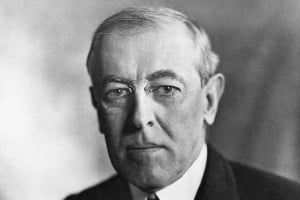
The current western (US) made International Monetary System (IMS) has been plagued by unfairness since the beginning, when it was created through the so-called Federal Reserve Act (FRA), signed by US President Woodrow Wilson on December 23, 1913.
Image is from the public domain

The FRA supposedly provided the US Government with the means to control inflation, and most importantly, it brought about the internationalization of the US-dollar as a global currency. Meaning, the US dollar could be used internationally as a trading currency, which de facto, made it into an international reserve currency. As such, it was increasingly used by countries around the world as a major reserve currency, allowing, or “necessitating” Washington to increase their money supply.
In 1834, the United States fixed the price of gold at $20.67 per ounce, where it remained until 1933. Other major countries joined the gold standard in the 1870s. The period from 1880 to 1914 is known as the classical gold standard. During that time, most countries adhered (to varying degrees) to gold.
The law required the Federal Reserve to hold gold equal to 40 percent of the value of the currency it issued, i.e. the US dollar, and to convert those dollars into gold at a fixed price of $20.67 per ounce of pure gold.
The Federal Reserve Act of 1913 effectively created the Federal Reserve Bank called “The Fed”.
For purposes of (US) “financial stability” and adjustment to “varying international economic situations” the FRA also allowed The Fed to issue interest rates as guiding instruments for the US banking system, and de facto ever more for the international banking system, as The FED also internationalized the US dollar, especially for trade, so that gradually countries trading in US dollars were dollarized, to differing degrees. Trading in US dollars, no matter between what countries, became an unwritten rule.
This meant on average and over time, more than 90% of international reserves were held in gold and US dollars, thereby ever-more increasing their economies’ dependence on the US – or the US currency.
This also meant that the US could print dollars ever more indiscriminately – without backing – as the world depended ever-more on the US dollar for trade and national reserves.
When in July 1944 the Bretton Woods (BW) Conference not only created the International Monetary Fund (IMF) and the World Bank, but also a new Gold Standard, the US, organizer and effective “owner” of the BW Conference and its results, in a clever move, “convinced” the participating delegates of 44 nations to accept that the new Gold Standard – 1 troy ounce (about 31.1 grams) would be pegged to the US dollar.
Instead of fixing the value of gold according to the weighed average of the 5 or 6 key currencies emerging after WWII – applying the SDR principle – the gold rate was fixed at US$ 35 / per troy ounce (t-oz); the gold value used for backing the currencies of the BW-participating nations was expressed in US dollars.
This meant that de facto gold was replaceable by the US dollar.
The US also were and still are in full control of the IMF and the World Bank with a veto power. The US being the largest shareholder with a 16.5% share, effectively giving it veto power, since major decisions need 85% for approval.
This total control over the IMF and the World Bank is also the reason why China is vastly underrepresented in both the IMF and the World Bank. China is the second largest economy in absolute GDP terms, and the world’s largest economy in Purchasing Power Parity, or PPP-terms – see below.
The US administration needs congressional approval for any IMF quota reform. It took the government years to get Congress to put its stamp on the 2010 reform that increased China’s voting at the expense of European countries, but NOT at the expense of the US.
Similarly, only in October 2016, was the Chinese Yuan (RMB) accepted to join the IMF’s basket of Special Drawing Rights (SDR). In May 2022 was the currency weight in the SDR “adjusted” for the US-dollar to currently 43.38% from 41.73% and the yuan to 12.28% from 10.92%. The euro’s weighting declined to 29.31% from 30.93%, the yen’s fell to 7.59% from 8.33% and the British pound fell to 7.44% from 8.09%.
There is no doubt, comparing the Chinese economy with that of the US and Europe, that the Yuan is way undervalued. A more just valuation / weighing of the Yuan in the SDR currency basket (US$, Euro, Chinese Yuan, UK pound, Japanese yen) – is of high priority.
U.S. Abandons the Gold Standard
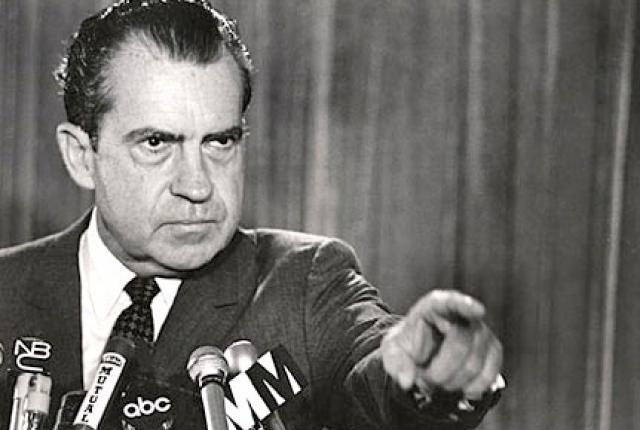 When
in 1971 President Nixon abandoned the gold standard, via the US
controlled IMF, meaning that the US would no longer adhere to backing
her currency (US dollar) with gold, the price of gold skyrocketed and
the US dollar took de facto over the role of gold.
This presented an unquestioned reason for the US to print indiscriminately US dollars, as the world needed them for their international trade and national reserve coffers.
The second blow came when in 1974, after the artificially created oil crisis of 1973-1974, the U.S. “negotiated” with Saudi Arabia, the head of OPEC (Organization of Petroleum Exporting Countries) that hydrocarbons, predominantly oil and gas, would only be traded in US dollars, thus, prompting Petrodollars flooding the world.
In exchange, the U.S. would provide Saudi Arabia with military protection and assist with weapons deals and infrastructure investment.
As of this day, oil continues to be the most valuable asset on the planet. More than 85% of all energy used to fuel the world’s economy originates from hydrocarbons.
The OPEC-dollar transaction deal allowed the US again to print indiscriminately more US dollars, as every country in the world needed US dollars to buy its (hydrocarbon) energy, thereby strengthening the US’s currency dominance over the world.
Today, about 60% of the world’s most used currencies (formerly called “convertible currencies”) are US dollars. While the world is flooded with the totally non-backed US dollar, the Chinese Yuan, the currency of the second largest or arguably the largest economy (in PPP-terms), accounts only for about 5%.
This disequilibrium must be corrected.
Indications for de-dollarization are increasing. In the early 1990s more than 90% of all monetary reserves were held in US dollar-denominated securities. Equally, about 90% of all international trade took place in US dollars. Today these proportions have been reduced to about 50% and 65%, respectively.
It is worth mentioning that many of the OPEC countries have fully or partially abandoned the unwritten rule of trading hydrocarbons in US dollars, replacing the dollar by local currencies, or by Yuan.
But much more is needed.
Back to President Wilson, the signatory of the Federal Reserve Act.
Shortly before his death in February 1924, President Wilson apparently came to regret signing the bill (Federal Reserve Act), saying:
“I am a most unhappy man. I have unwittingly ruined my country. A great industrial nation is controlled by its system of credit. Our system of credit is concentrated. The growth of the nation, therefore, and all our activities are in the hands of a few men. We have come to be one of the worst ruled, one of the most completely controlled and dominated Governments in the civilized world no longer a Government by free opinion, no longer a Government by conviction and the vote of the majority, but a Government by the opinion and duress of a small group of dominant men.”
 If
indeed this is a true quote by President Woodrow Wilson, his foresight
had repercussion up to this date – the world is ruled by a small elite
and an unequal system, today still largely dominated by a single
currency, the US dollar, which is backed by nothing, not gold, not
commodities, not even by the United States’s own economy.
If GDP and debt are any indication for the value of a currency, consider this: Today’s US GDP in absolute terms is about US$ 27 trillion (followed by China US$ equivalent of 19.4 trillion), compared to a current US debt of 33.2 trillion – about 123% of GDP (China’s current debt of US-dollar equivalent 12.6 trillion – about a 65% debt-GDP ratio).
However, the real US debt, also called “unfunded liabilities” is currently about US$ 290 trillion (almost 11 times the current US GDP). Approximately 40% of unfunded liabilities consist of accrued interest on debt never intended to be paid, and another 20% of unmet medical liabilities, mostly related to war veterans’ injuries and psychic traumas; and about 12% relate to unfunded social security liabilities.
A little used economic indicator is Purchasing Power Parity (PPP). It equalizes the value of a basket of goods a currency can purchase, by eliminating the differences in price levels between countries. The GDP-PPP factor in the US is US$ 23.6 trillion, compared to China’s of US$-equivalent 33.5 trillion (2023 est.).
Converted into per capita, per year (pc/yr.) PPP: US = US$ 69,500; and China = US$ equivalent 24,000. Meaning – in China you may purchase for US$ 24,000 /pc/yr, what in the US would costs US$ 69,500 pc/yr.
In real economic terms GDP-PPP is more meaningful than the unadjusted GDP.
Towards a New International Monetary System
Any monetary reform must be seen and carried out considering the current international order – which is heavily marked by ever increasing conflicts between West and East.
Western powers are seeking to preserve their status, by rivaling the autonomous and sovereign development of independent nations, or nations that strive to become and stay independent from the western fangs.
To enhance their control over global events – and de facto, attempting to establish a “Global One World Government” — western powers have set up so-called “rules-based orders” attempting to erase established international and national laws. As a result, the International Court of Justice (ICJ) in the Hague has become inoperable, defunct.
China’s and Russia’s philosophy of life and cooperation with the world and particularly within Asia is promoting a space for stability and joint development.
The year 2023 has shown that Greater Eurasia and Asia have so far been resistant to the negative external influences that are having the most dramatic consequences in Europe and the Middle East.
In summary, Asia and Eurasia remain a space of cooperation, not competition. The leading regional powers are able to reach terms that are fair to their smaller partners.
The new geographically widely dispersed BRICS-11 (5+6) add a new dimension to international cooperation – and to a constructive detachment from the western (US) sanctions regime and US dollar-dominated world-dictate.
*
A New or Revised International Monetary System: Might Consider.
General
- Assign a greater role of PPP – in economic valuation as well as in the weighted average of IMF’s SDRs;
- A massive reduction of US-dollars flooding the globe.
IMF / World Bank
- Chinese Yuan to be revalued in the SDR, according to China’s economic strength
- Chinese contribution in both IMF and World Bank to be reassessed, according to the weighted average of member-countries’ economies
- Veto-power within these organizations to be reassessed; either abandoned altogether, i.e. one participant – one vote, or assigned according to newly assessed voting powers.
Asian Infrastructure and Investment Bank (AIIB)
- AIIB to become an ever-stronger player in international economic development, not as a competitor to the World Bank and IMF, but rather as a cooperator and leader or co-leader in specific sectors, where AIIB might have a comparative advantage.
- AIIB might take a lead in multi-currency (economic development) investments, promoting local currencies, under the premises that local currencies are enhancing a nation’s sovereignty and economic strength.
Virtual / Trading Currencies
With the objective of de-dollarization – i.e., brining an equilibrium of currencies in world circulation – and effective banning / blocking of (economic) sanctioning, which has proven detrimental to smaller and weaker economies:
- Promote trading in local currencies – SWAP agreements
- Abandoning SWIFT transfer system – replacing it with not one, but different transfer systems, not linked to the US-dollar;
- Developing SDR-type (weighted average of specific economic indicators) virtual trading currency or currencies;
SDR-type – means an International Trading Currency (ITC) based on the principles applied to the IMF’s SDR; - AIIB could be at the forefront of developing an ITC
- BRICS-plus could be an initial trial for a common SDR-type ITC;
Digital Currencies – including Central Bank Digital Currencies (CBDC)
- To be used specifically for international trading;
- If used for day-to-day people’s and commercial transactions, digital currencies, incl. CBDCs should not replace cash transactions, leaving people free to choose between cash and digital currencies
Backing of Currencies
- A country’s own economy should be determining a country’s monetary flow, considering international reserves and internal economic growth- and contraction fluctuations
- Instead of
gold or other precious metals, currencies might be backed by a package
or packages of, say 20 -25 internationally used commodities, of which
approx. a third could be country-specific.
Such commodity packages might also include gold and other precious metals, but foremost commonly used and essential food products and different types of raw materials, including hydrocarbons (notably petrol and gas) – and possibly other (maybe 10%-15%?), of less tangible social indicators; like public health; level of education; peaceful international cooperation; capacity of conflict resolution….
It is understood that these indicators, the commodity packages, and possibly social indicators, would have to be periodically reviewed and reassessed by an international body, designated by the Community of Nations.
The Community of Nations is not necessarily represented by the United Nations. The UN, as its stands and functions today, is no longer the UN established in October 1945 in San Francisco, to replace the League of Nations (set up after WWI), with the specific goal to help resolve international conflicts and to foster peace and harmony among nations, as today it is dominated by the US and a few US allies.
While a revision of the UN is necessary, it is beyond the task of designing a revised or new international monetary system.
Conclusion
The process of introducing a new system of “currency backing” might take time, and could start in Asia, under the lead of China and Russia, extending to the ASEAN and BRICS countries, and eventually and hopefully be adopted also in the west, meaning a successful revision and overhaul of the IMF and World Bank.
The AIIB and Shanghai Cooperation Organization (SCO), as well as China’s International Monetary Institute (IMI), might take a leading role in designing currency backing packages.
The above are a few ideas for consideration and discussion possibly during the seminar on a “New International Monetary System” on 23 January 2024 in Beijing.
*
Note to readers: Please click the share button above. Follow us on Instagram and Twitter and subscribe to our Telegram Channel. Feel free to repost and share widely Global Research articles.
Peter Koenig is a geopolitical analyst and a former Senior Economist at the World Bank and the World Health Organization (WHO), where he worked for over 30 years around the world. He is the author of Implosion – An Economic Thriller about War, Environmental Destruction and Corporate Greed; and co-author of Cynthia McKinney’s book “When China Sneezes: From the Coronavirus Lockdown to the Global Politico-Economic Crisis” (Clarity Press – November 1, 2020).
Peter is a non-resident Senior Fellow of the Chongyang Institute of Renmin University, Beijing. He is also a Research Associate of the Centre for Research on Globalization (CRG).
Posted with the permission of the author.