CLICK HERE FOR THOUSANDS OF FREE BLOGGER TEMPLATES »
Showing posts with label Habitat III. Show all posts

Sunday, December 11, 2016

Habitat III:

How The World Can Be Transformed Through Cities
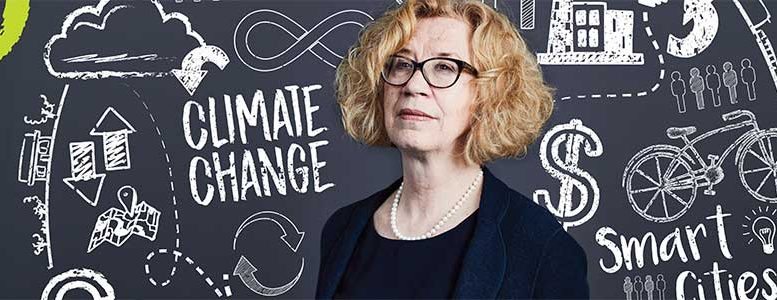
Trudi ElliottTrudi Elliott, RTPI CEO
Technocrats envision a new world where the city-state replaces the nation-state, and cities are multicultural melting pots of humanity. Thus, planning, monitoring and directing is everything. ⁃ TN Editor
“I don’t really like things being about me,” protests Trudi Elliott. It’s just as well then that the RTPI chief executive and I have met to talk about October’s Habitat III conference in Quito, Ecuador, which she attended with the RTPI’s president Phil Williams and international officer Marion Frederiksen.
But it’s hard to ignore the fact that she’s just reached the end of her fifth year in the job. Moreover, with positive noises about planning coming from the new regime at the Department for Communities and Local Government, there is no lack of RTPI business to chat about, too.
We start with Habitat III, however. As trailed in The Planner in September, this was the third iteration of the United Nations’ conference on housing and sustainable urban development.
The event takes place every 20 years only, and each time reconfigures the international approach to tackling the challenges – and opportunities – presented by human settlements around the world.
At its heart this time is the New Urban Agenda (NUA), a blueprint for sustainable development over the next 20 years agreed by states worldwide. Unlike the Paris climate agreement, however, the NUA is not legally binding, leading to suggestions that Habitat III was little more than a talking shop.
If so, with 35,000 attendees from politics, academia, business, the professions, civil society and the media, it was a significant talking shop.
“It was amazing in terms of the scale,” says Elliott. “For someone who’s interested in planning, urbanism and global challenges there were so many things you could go to. What do you pick?”
The biggest “take home”, she says, was the sheer variety of people who attended the conference and took part in myriad side events looking at the issues around urbanisation and sustainable development.
“You would be sitting at something and you might have someone representing slum-dwellers on one side and a tech expert on the other,”
she continues.
Notably, she says, there was significant business presence – a sign that commerce is taking conference themes seriously.
“This was about us collectively looking at global challenges, comparing and contrasting and coming to a shared agenda about what needs to be addressed.”
Collectively, that is, except for a significant missing group – UK politicians. Although the UK was well represented by civil society, academia, professional bodies and private business – including a delegation of civil servants from the
Department for International Development – there were no ministers or city mayors that Elliott was aware of. This brings the sole downbeat note from Elliott.
Attendance would have been an excellent chance for senior politicians to promote the UK’s international development and built environment expertise post-Brexit.
Tactfully, she suggests this may be because the event came too soon for the fledgling May government. She also notes a change in attitudes towards planning at the Department of Communities and Local Government under the new regime.
“It’s always interesting to see what other people are doing. It’s reassuring to note that some of the issues we are grappling with, it’s not just us. We found comparing and contrasting with sister institutions really quite helpful.
“In every session we felt we had something to offer and something to learn. It’s a shame there wasn’t more political engagement,” she says, adding: “We cannot adopt the ‘not invented here’ approach.”

Cities for all

So what issues struck Elliott most forcefully? In a world with an expanding population and the greater proportion of people moving to towns and cities, the availability of land in the right places for good quality and affordable development is critical.
“In some places it’s the sheer quantum [of housing required], in some it’s the location. There’s formal settlement versus informal settlement, the community implications of massive redevelopment.”
Then there is the “link between housing and infrastructure, housing and jobs” and the related issues of land and tenure, and what patterns of land ownership mean for land price and assembly. “The land question came up in lots of different ways. In some places the land tenure and land valuation issues were as a big a challenge as planning.”
It’s a worldwide challenge that, Elliott stresses, links to viability and the economic and fiscal models that are used to unlock development. Are they fair? Do they privilege one set of people over another? Who benefits the most from development?
We grapple with these challenges in the UK but, says Elliott, “they manifest themselves in different ways all over the world”. Inspiration comes from seeing how different states try to resolve the conundrum. She was particularly impressed with a scheme on Mexico’s stand.
“They’re doing a really interesting piece of work involving unions, developers, housing associations and the government to provide homes. The fact that unions were involved was interesting – and they’d thought about how you make the financial model stack up for the individual and for the lending organisation.”
The threat of climate change was ever-present. “It’s inextricably linked now to the quality of life issue and resilience. It’s fundamental to how you make places where people want to live.
“It’s also about how to prepare for and rebuild communities after disaster, which is why we launched the UK Built Environment Advisory Group with RIBA and the Institution of Structural Engineers at Habitat III, to give built environment support to the humanitarian sector.”
The RTPI also successfully argued for the inclusion of statements about the linked issue of air quality in the final NUA, Elliott points out, adding: “There were things I wasn’t expecting, too. I didn’t expect the gender issue to keep coming up – the issue about how safe women feel in cities.”
Indeed, she suggests, the conference could almost be distilled into the single question: “How do you create a city that works for everybody?”. To answer this means tackling a deep structural issue that afflicts countries around the world, says Elliott. We are trying to resolve 21st century problems with 20th century – even 19th century –governance frameworks.
Above all, the administrative architecture of our societies, including planning systems, needs to be updated to work in tune with the modern world. How do we manage such a transition smoothly and to the benefit of the planet and the widest number of people?

Source:  Technocracy.news

Thursday, November 10, 2016

After Habitat III,

ICLEI Stresses Urgency To Start Implementing Radical Agenda

The author of this story, Gino Van Begin, is secretary-general of ICLEI, or Local Governments for Sustainability. ICLEI expects to play a major conduit to take New Urban Agenda to the world’s cities and towns. ⁃ TN Editor
The Habitat III conference wrapped up last month in Quito, Ecuador, where nations adopted the New Urban Agenda — a 20-year vision on sustainable urbanization.
The agenda sets an important precedent: For the first time, national governments fully embraced much of the language on local sustainable development that has been used by local and subnational governments for the past 20 years. On the other hand, the New Urban Agenda is not yet the landmark turning point we hoped it would be.
The document does include ambitious language. It also established, albeit at the last minute, a crucial link with the process of “localizing” — or figuring out how to locally implement — the new Sustainable Development Goals (SDGs), the U. N.’s overarching framework that will guide anti-poverty efforts over the next 15 years.
Many were looking to the New Urban Agenda to offer specific guidance on localizing the SDGs. Unfortunately, the new document does not contain details as to how these goals should be translated, implemented and monitored at the national and local levels.
Thus, in order to use the agenda as a tool to deal with the many intertwining challenges related to urbanization and development, its text needs to be translated into a meaningful roadmap for sustainable urban development.
How will we know if Habitat III has been a success or not? Nations will soon begin a series of steps by which they will decide how to monitor and evaluate progress on the New Urban Agenda. That process should be finished in two years, and by the end we should be able to assess the real success of Habitat III. Also by that point, hopefully, national authorities will have come up with innovative modalities for engaging local and subnational governments in the U. N. system, as well.
Eventually, the New Urban Agenda should set the course for coordination across all levels of government on the implementation of global frameworks. But in the meantime, there are several important actions that local governments can take to start moving decidedly toward the implementation of the SDGs and the New Urban Agenda — and indeed, many are already doing so.
ICLEI has defined three strategic actions that local governments can take, starting tomorrow.

Three actions

1. Establish local commitments.
It’s important to develop a local strategy, identifying where current plans already align with the SDGs and the actions that could be taken to increase that alignment. This is, for instance, what New York City and Freiburg, Germany, are doing — developing plans and strategies to translate the SDGs in terms of their current and pre-existing commitments and programmes.
An important component of the strategy is also for local authorities to screen all the SDGs systematically, in order to identify gaps and thus needs for additional policies and action.
It also may be useful for city officials to appoint a liaison or set up an international relations office. Doing so not only helps to ensure that local action is connected with global goals but also provides important feedback to global processes, detailing the real implementation that is taking place on the ground.
Equally important will be to start building the political capital and commitment necessary to push forward sustainable development policies. This can be done by creating campaigns and movements across the political spectrum in order to ensure continuity of action, regardless of changes in the leadership of administrations through elections.
Similarly, local authorities can immediately start developing multi-stakeholder partnerships with local businesses, civil society and academia.
2. Seek sustainable and innovative financing mechanisms.
Cities will need to be proactive, looking at innovative ways to self-finance — for instance, through green bonds. They also should work to better position themselves to attract financing by improving communications around existing commitments and actions on SDGs implementation, and by showcasing progress and potential for further advancement. This is what the cities of Seoul and Malmö, Sweden, are doing, for instance — organizing forums on SDGs and knowledge-exchange opportunities. (Malmö is hosting such an event later this month.)
Local governments also can advocate for more and better financing opportunities. ICLEI’s Transformative Action Program (TAP) is one important way to connect potential funders and cities with high ambitions and low resources.
3. Raise awareness and advocate for support.
City leaders can explain the SDGs to citizens and all stakeholders, including local and multinational business, aiming to mobilize them to participate in their implementation. They also will need to put pressure on national counterparts so that they put in place enabling frameworks and inclusive approaches in defining national strategies for SDGs implementation.
Finally, local leaders can seek to develop urban sustainability alliances engaging a variety of stakeholders. This would help giving momentum to concerted local action to implement the SDGs.

Urgency of now

This week, the next round of international climate talks — known as COP 22 — begins in Marrakech, Morocco. Given that this event is taking place just a few weeks after the New Urban Agenda was approved, we are reminded of the importance of convergence.
From a local governments’ perspective, in fact, the climate debate and the sustainability debate must go hand in hand. Their connection is clearest when from global agendas and conferences we get to the business of implementing commitments and developing local plans of action.
 
Source:  Technocracy.news

Thursday, July 14, 2016

The ‘New Urban Agenda’

Is Coming At UN’s Habitat III in October 2016

TN Note: If you thought Agenda 21 was dangerous to freedom and liberty, just wait until you see the New Urban Agenda that will be produced at the upcoming Habitat III conference. The original ‘Urban Agenda’ was based on the Millennium Development Goals (MDGs) which have been updated with the Sustainable Development Goals (SDGs) and will be the basis for the New Urban Agenda.

What is the New Urban Agenda?

The New Urban Agenda will be the outcome document agreed upon at the Habitat III cities conference in October 2016. In turn, it will guide the efforts around urbanization of a wide range of actors — nation states, city and regional leaders, international development funders, United Nations programmes and civil society — for the next 20 years. Inevitably, this agenda will also lay the groundwork for policies and approaches that will extend, and impact, far into the future.

Who will write the New Urban Agenda?

The preparatory process along the road to Quito will influence the formulation of the New Urban Agenda, which was unveiled as a “zero draft” in May 2016. That preparatory process included an extensive series of official and semi-official events, including regional meetings, thematic meetings and “Urban Thinkers Campuses” for stakeholder input.
In addition, from August 2015 to February 2016 a group of 200 experts, known as “policy units”, came up with important recommendations for the drafting and implementing of the New Urban Agenda. Those recommendations, too, were open to broad public comment.
While reflecting the ideas hashed out in the global dialogue that leads up to the October 2016 event, eventually the Habitat III Bureau (composed of 10 U. N. member states) and Secretariat were the ones to write the zero draft. Its terms are now being negotiated by member states before an agreement is, hopefully, reached in Quito.
The United Nations’ current thinking on global urbanization is summed up in the Habitat Agenda: Istanbul Declaration on Human Settlements, the outcome document agreed upon in 1996 at the Habitat II conference. It called for adequate shelter for all and sustainable human settlements in an urbanizing world.
Since then, over 100 countries have adopted constitutional rights to adequate housing, a major success of the Habitat Agenda. At the same time, however, international aid organizations and bilateral development agencies have steadily reduced their investments in cities and slashed their urban programmes. These are trends that have challenged the full implementation of the Habitat Agenda.

What has been the legacy of this previous agenda?

Within the United Nations, the Habitat Agenda’s influence has been wide-ranging over the past two decades. Its main provisions worked their way into the Millennium Development Goals (MDGs) of 2000 with a target of achieving “cities without slums”. The MDGs’ focus on eradicating poverty and ensuring environmental sustainability closely correlated with the Habitat Agenda.
Since then, major United Nations gatherings on sustainable development, such as the World Summit on Sustainable Development in 2002 and Rio+20 in 2012, have consistently reaffirmed the core tenets of the Habitat Agenda.
Current discussions around the Post-2015 Development Agenda, too, draw on the principles of the Habitat Agenda. For example, “Realizing the Future We Want For All”, the 2012 report to the secretary-general by a U. N. task team, noted that by 2050, “70 per cent of the world’s population will be living in cities.” That report also highlighted the development challenges inherent in rapid urbanization.
Finally, the follow-up development agenda to the MDGs, the Sustainable Development Goals (SDGs), also include prominent reference to the spirit of the Habitat Agenda. The urban-focused SDG, Goal 11, can also be seen as an extension of an idea first set out by the Habitat Agenda.

What will the New Urban Agenda cover?

The New Urban Agenda, coming on the heels of the crystallization of the Post-2015 Development Agenda, will seek to create a mutually reinforcing relationship between urbanization and development. The idea is that these two concepts will become parallel vehicles for sustainable development.
Early documents on the New Urban Agenda suggest that it will particularly highlight what are being referred to as “development enablers” and “operational enablers”. Together, this thinking goes, these two factors will be able to further cement the relationship between urbanization and sustainable development.
Development enablers can be thought of as frameworks that seek to harness the multiple, often chaotic forces of urbanization in ways that can generate across-the-board growth. Examples of development enablers that the New Urban Agenda will highlight include national urban policy; laws, institutions and systems of governance; and the broad urban economy.
Operational enablers, on the other hand, aim to bolster sustainable urban development — or to allow it to take place at all. When implemented, they result in better outcomes for patterns of land use, how a city is formed and how resources are managed. The New Urban Agenda will highlight three operational enablers, collectively being referred to by the UN-Habitat leadership as the “three-legged” approach: local fiscal systems, urban planning, and basic services and infrastructure.

What priorities will guide the New Urban Agenda?

Beyond the specific technocratic solutions of economics and governance, several core ideas will form the ideological underpinnings of the New Urban Agenda. Initial documents suggest that, for instance, democratic development and respect for human rights will feature prominently, as will the relationship between the environment and urbanization.
Similarly, the New Urban Agenda will almost certainly include significant focus on equity in the face of globalization, as well as how to ensure the safety and security of everyone who lives in urban areas, of any gender and age. Risk reduction and urban resilience will likewise play prominent roles. And the new agenda will place key importance on figuring out how to set up a global monitoring mechanism to track all of these issues and concerns.
Meanwhile, the core issues of the Habitat Agenda — adequate housing and sustainable human settlements — remain on the table, as the number of people worldwide living in urban slums continues to grow. Indeed, in the time since the Habitat Agenda was adopted the world has become majority urban, lending extra urgency to the New Urban Agenda.
There is also an increasing recognition that cities have morphed into mega-regions, urban corridors and city-regions whose economic, social and political geographies defy traditional conceptions of the “city”. The New Urban Agenda will have to address these trends in urbanization while also recognizing that cities and metropolitan areas are the major drivers of national economies.
This fact in particular should entice member states to give credence to the tenets of the New Urban Agenda.

Will the New Urban Agenda be a binding agreement for member states?

No. As an “agenda” it will provide guidance to nation states, city and regional authorities, civil society, foundations, NGOs, academic researchers and U. N. agencies in their thinking about cities, urbanization and sustainable development. But guidance is not binding.
This arrangement is different from, for example, the December 2015 climate negotiations in Paris, which aspired to result in a legally binding agreement — terms that could now be reflected in the New Urban Agenda. After all, there is increasingly widespread agreement that cities today hold the key to quick and immediate action on global climate change.