In Case You Haven’t
Noticed Continued
My Name It Is Nothing
Richard Nixon in 1945 was in Naval Intelligence, and came to
know Allen Dulles. He also knew of the
machinations of Dulles with the enemies.
Then there was Representative Jerry Voorhis who was from Nixon’s
district. Voorhis wrote a book entitled
“Beyond Victory”. It was not accepted by
the establishment, nor by their enforcers, aka the CIA. Representative Voorhis proposed the
nationalization of the private central bank which is the Federal Reserve. The
Federal Reserve was, and still is unconstitutional. The Federal Reserve is not a federal
entity. So the Eastern banking
establishment wanted to replace Voorhis for he was a representative of people. Voorhis
was not representing their own private.
Representative Voorhis also stepped on other toes with his moves against
the unlimited power of the oil companies.
He stopped He stopped a sweetheart deal as the Navy was to grant
Standard Oil exclusive drilling rights in the Elk Hill naval reserve in Central
California. He also posed a direct
threat to the Dulles Brothers. He was
shining a light on the wartime collusion between Cromwell and Sullivan, and
their clients with the Nazi cartels. The
Dulles brothers were both former employees of Cromwell and Sullivan. To further infuriate the Shadow Government of
the World he demanded a congressional investigation of The Bank of International
Settlements, and its director, Thomas McKittrick. McKittrick was a close associate of the
Dulles brothers. McKittrick was a Nazi
collaborator. So you can see that it was not the Representative’s constituents
that wanted to vote Voorhis out, no it was the Deep State.
The National Security Act of 1947 established the National
Security Council and the Central Intelligence Agency. This agency was exempted from limitations on
the use of Federal Funds. Allen Dulles was involved with the covert activities
of the CIA.
In 1948 New York Governor Thomas Dewey was expected to
win. Dewey was a gang busting attorney,
and quite popular. With the War over,
unemployment, inflation, and Truman’s civil Rights initiative the Democratic
Party was fractured. Yet Truman
won. Two years later Richard Nixon is
elected to the Senate. He ran against a
very popular Karen Gahagen Douglas. All
but one newspaper in California endorsed Nixon.
Who plays the media like a mighty Wurlitzer?
Post war Nixon was managing the legal aspects of Navy
procurement contracts. While doing this
he came across papers that the Dulles brothers had initiated. These papers were to initiate Operation
Paperclip. Operation Paperclip was to facilitate the bringing Nazi to the
US. This was in direct violation of
President Truman’s orders. As the story
goes Richard Nixon answered add in a local California newspaper that asked if
you want to run for office. The story
was a bit more complicated. An old
associate of the Eastern banking establishment asked him to return to
California and run for Representative Voorhis’s seat. He agreed, and he ran a red baiting
campaign. He won, and landed in Congress
in 1947. He made a name for himself on
the House Un-American Committee. He had
something on the Dulles brothers, and this he was to use effectively. Nixon demanded a position on the Presidential
ticket for the 1952 election, and he got it.
President Eisenhower, though a little known fact that he was
a war criminal, was nominated by the Republican Party for the Presidential
position on the ticket. Of course this
little known fact was known by the Dulles brothers and the military industrial
complex. Eisenhower named John Foster Dulles as his Secretary of State.
Eisenhower did not have it easy as the military believed that with an ex general
in office that they could have their way, so it was a constant battle. You may recall that Eisenhower had to
threaten those that ran Area 51 with a military invasion if he was not kept
abreast of what was happening there.
Intelligence, if I may call it, was running Area 51. Then Eisenhower was to meet with the Soviet Unions’
Nikita Khrushchev for negotiations. Though
all U2 reconnaissance flights were to be grounded on My 1st a U2 flown by Gary Powers was shot down over
the Soviet Union. In whose interests was
it that the spy missions continued, and for what purpose. It sure was not in the interests of the United
States, its citizens, or for world peace.
Who gathers intelligence for the United States?
So here comes the 1960 Presidential Election and it is John
F. Kennedy/Lyndon Johnson versus Richard Nixon/Henry Cabot Lodge Jr. Nixon wanted Nelson Rockefeller as his
running mate, but Rockefeller was not interested. Nixon knew who buttered his bread. Well JFK’s father Joe knew how the game was
played, and he played it even better.
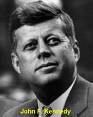
John F. Kennedy was elected President, but it would not be for
long.
Nixon while vice president had been working with Allan
Dulles to overthrow Fidel Castro the leader of the Cuban Government. They were planning the Bay of Pigs
invasion. Well JFK inherited it, and
Allen Dulles informed him that the invasion would be a sure thing. Well it was a total failure. Kennedy then fired Dulles. President Kennedy said that he was going to tear the CIA into a thousand pieces and throe it to the wind.
It might be do us well to go back to a speech given by
President Kennedy on April 27, 1961 to the Press Club. The speech was about the responsibilities of
the Press, and the danger to the nation of the secret societies within it. (A copy of the transcript is attached to this
article.) Some say that it was his signing
his ow death warrant. President Kennedy
began to print Treasury Notes which were backed silver. Those of the Federal Reserve were
incensed. He fired Allan Dulles. He did not want Israel to obtain an atomic
weapon. The mob was enraged at his
brother’s going after them. The Cubans
that wanted the overthrow of the Castro government were enraged. The Deep State. The Oil Industry, the
Military Industrial Complex all wanted an end to his Presidency. Kennedy was going to remove all troops from
Vietnam, which was another nail in his coffin.
The CIA was fully behind the assassination of the President. George Herbert Walker Bush was there in
Dallas on that day, November 22, 1963.
He could not remember where he was that day. He as assisting in the assassination. Then came the cover-up. The patsy was Lee Harvey Oswald, and he was
described as the “lone nut assassin”. Of
course this was not to be believed by many.
So as evidence to the contrary arose, especially when the “lone nut” is
himself assassinated while in police custody the CIA comes up with a
label. They attack the messengers, and
not their messages with “Conspiracy Theorist”.
How convenient is that?
So in comes Lyndon Banes Johnson to be the President, and he
immediately rescinds Kennedy’s removal of the troops from Vietnam. Instead he escalates the useless war to
satisfy the military industrial complex.
Johnson runs for the 1964 Election and wins, but he did not accept
another term. No, Richard Nixon comes
back to run for President. His handpicked
challenger was to be Hubert Humphrey, but Bobby Kennedy has other designs. Bobby wins the California primaries, and is
immediately assassinated by another “lone nut assassin”.
To be continued
Appendix:
The President and the Press: Address before the
American Newspaper Publishers Association, April 27, 1961
President John F. Kennedy
Waldorf-Astoria Hotel, New York City
April 27, 1961
Mr. Chairman, ladies and gentlemen:
I appreciate very much your generous
invitation to be here tonight.
You bear heavy responsibilities
these days and an article I read some time ago reminded me of how particularly
heavily the burdens of present day events bear upon your profession.
You may remember that in 1851 the
New York Herald Tribune under the sponsorship and publishing of Horace Greeley,
employed as its London correspondent an obscure journalist by the name of Karl
Marx.
We are told that foreign
correspondent Marx, stone broke, and with a family ill and undernourished,
constantly appealed to Greeley and managing editor Charles Dana for an increase
in his munificent salary of $5 per installment, a salary which he and Engels
ungratefully labeled as the "lousiest petty bourgeois cheating."
But when all his financial appeals
were refused, Marx looked around for other means of livelihood and fame,
eventually terminating his relationship with the Tribune and devoting his
talents full time to the cause that would bequeath the world the seeds of
Leninism, Stalinism, revolution and the cold war.
If only this capitalistic New York
newspaper had treated him more kindly; if only Marx had remained a foreign
correspondent, history might have been different. And I hope all publishers
will bear this lesson in mind the next time they receive a poverty-stricken
appeal for a small increase in the expense account from an obscure newspaper
man.
I have selected as the title of my
remarks tonight "The President and the Press." Some may suggest that
this would be more naturally worded "The President Versus the Press."
But those are not my sentiments tonight.
It is true, however, that when a
well-known diplomat from another country demanded recently that our State
Department repudiate certain newspaper attacks on his colleague it was
unnecessary for us to reply that this Administration was not responsible for
the press, for the press had already made it clear that it was not responsible
for this Administration.
Nevertheless, my purpose here
tonight is not to deliver the usual assault on the so-called one party press.
On the contrary, in recent months I have rarely heard any complaints about
political bias in the press except from a few Republicans. Nor is it my purpose
tonight to discuss or defend the televising of Presidential press conferences.
I think it is highly beneficial to have some 20,000,000 Americans regularly sit
in on these conferences to observe, if I may say so, the incisive, the
intelligent and the courteous qualities displayed by your Washington
correspondents.
Nor, finally, are these remarks
intended to examine the proper degree of privacy which the press should allow
to any President and his family.
If in the last few months your White
House reporters and photographers have been attending church services with regularity
that has surely done them no harm.
On the other hand, I realize that
your staff and wire service photographers may be complaining that they do not
enjoy the same green privileges at the local golf courses that they once did.
It is true that my predecessor did
not object as I do to pictures of one's golfing skill in action. But neither on
the other hand did he ever bean a Secret Service man.
My topic tonight is a more sober one
of concern to publishers as well as editors.
I want to talk about our common
responsibilities in the face of a common danger. The events of recent weeks may
have helped to illuminate that challenge for some; but the dimensions of its
threat have loomed large on the horizon for many years. Whatever our hopes may
be for the future--for reducing this threat or living with it--there is no
escaping either the gravity or the totality of its challenge to our survival
and to our security--a challenge that confronts us in unaccustomed ways in
every sphere of human activity.
This deadly challenge imposes upon
our society two requirements of direct concern both to the press and to the
President--two requirements that may seem almost contradictory in tone, but
which must be reconciled and fulfilled if we are to meet this national peril. I
refer, first, to the need for a far greater public information; and, second, to
the need for far greater official secrecy.
I
The very word "secrecy" is
repugnant in a free and open society; and we are as a people inherently and
historically opposed to secret societies, to secret oaths and to secret proceedings.
We decided long ago that the dangers of excessive and unwarranted concealment
of pertinent facts far outweighed the dangers which are cited to justify it.
Even today, there is little value in opposing the threat of a closed society by
imitating its arbitrary restrictions. Even today, there is little value in
insuring the survival of our nation if our traditions do not survive with it.
And there is very grave danger that an announced need for increased security
will be seized upon by those anxious to expand its meaning to the very limits
of official censorship and concealment. That I do not intend to permit to the
extent that it is in my control. And no official of my Administration, whether
his rank is high or low, civilian or military, should interpret my words here
tonight as an excuse to censor the news, to stifle dissent, to cover up our
mistakes or to withhold from the press and the public the facts they deserve to
know.
But I do ask every publisher, every
editor, and every newsman in the nation to reexamine his own standards, and to
recognize the nature of our country's peril. In time of war, the government and
the press have customarily joined in an effort based largely on
self-discipline, to prevent unauthorized disclosures to the enemy. In time of
"clear and present danger," the courts have held that even the
privileged rights of the First Amendment must yield to the public's need for
national security.
Today no war has been declared--and
however fierce the struggle may be, it may never be declared in the traditional
fashion. Our way of life is under attack. Those who make themselves our enemy
are advancing around the globe. The survival of our friends is in danger. And
yet no war has been declared, no borders have been crossed by marching troops,
no missiles have been fired.
If the press is awaiting a
declaration of war before it imposes the self-discipline of combat conditions,
then I can only say that no war ever posed a greater threat to our security. If
you are awaiting a finding of "clear and present danger," then I can
only say that the danger has never been more clear and its presence has never
been more imminent.
It requires a change in outlook, a
change in tactics, a change in missions--by the government, by the people, by
every businessman or labor leader, and by every newspaper. For we are opposed
around the world by a monolithic and ruthless conspiracy that relies primarily
on covert means for expanding its sphere of influence--on infiltration instead
of invasion, on subversion instead of elections, on intimidation instead of
free choice, on guerrillas by night instead of armies by day. It is a system
which has conscripted vast human and material resources into the building of a
tightly knit, highly efficient machine that combines military, diplomatic,
intelligence, economic, scientific and political operations.
Its preparations are concealed, not
published. Its mistakes are buried, not headlined. Its dissenters are silenced,
not praised. No expenditure is questioned, no rumor is printed, no secret is
revealed. It conducts the Cold War, in short, with a war-time discipline no
democracy would ever hope or wish to match.
Nevertheless, every democracy
recognizes the necessary restraints of national security--and the question
remains whether those restraints need to be more strictly observed if we are to
oppose this kind of attack as well as outright invasion.
For the facts of the matter are that
this nation's foes have openly boasted of acquiring through our newspapers
information they would otherwise hire agents to acquire through theft, bribery
or espionage; that details of this nation's covert preparations to counter the
enemy's covert operations have been available to every newspaper reader, friend
and foe alike; that the size, the strength, the location and the nature of our
forces and weapons, and our plans and strategy for their use, have all been
pinpointed in the press and other news media to a degree sufficient to satisfy
any foreign power; and that, in at least in one case, the publication of
details concerning a secret mechanism whereby satellites were followed required
its alteration at the expense of considerable time and money.
The newspapers which printed these
stories were loyal, patriotic, responsible and well-meaning. Had we been
engaged in open warfare, they undoubtedly would not have published such items.
But in the absence of open warfare, they recognized only the tests of
journalism and not the tests of national security. And my question tonight is
whether additional tests should not now be adopted.
The question is for you alone to
answer. No public official should answer it for you. No governmental plan
should impose its restraints against your will. But I would be failing in my
duty to the nation, in considering all of the responsibilities that we now bear
and all of the means at hand to meet those responsibilities, if I did not
commend this problem to your attention, and urge its thoughtful consideration.
On many earlier occasions, I have
said--and your newspapers have constantly said--that these are times that
appeal to every citizen's sense of sacrifice and self-discipline. They call out
to every citizen to weigh his rights and comforts against his obligations to
the common good. I cannot now believe that those citizens who serve in the
newspaper business consider themselves exempt from that appeal.
I have no intention of establishing
a new Office of War Information to govern the flow of news. I am not suggesting
any new forms of censorship or any new types of security classifications. I
have no easy answer to the dilemma that I have posed, and would not seek to
impose it if I had one. But I am asking the members of the newspaper profession
and the industry in this country to reexamine their own responsibilities, to
consider the degree and the nature of the present danger, and to heed the duty
of self-restraint which that danger imposes upon us all.
Every newspaper now asks itself,
with respect to every story: "Is it news?" All I suggest is that you
add the question: "Is it in the interest of the national security?"
And I hope that every group in America--unions and businessmen and public
officials at every level-- will ask the same question of their endeavors, and
subject their actions to the same exacting tests.
And should the press of America
consider and recommend the voluntary assumption of specific new steps or
machinery, I can assure you that we will cooperate whole-heartedly with those
recommendations.
Perhaps there will be no
recommendations. Perhaps there is no answer to the dilemma faced by a free and
open society in a cold and secret war. In times of peace, any discussion of
this subject, and any action that results, are both painful and without
precedent. But this is a time of peace and peril which knows no precedent in
history.
II
It is the unprecedented nature of
this challenge that also gives rise to your second obligation--an obligation
which I share. And that is our obligation to inform and alert the American
people--to make certain that they possess all the facts that they need, and
understand them as well--the perils, the prospects, the purposes of our program
and the choices that we face.
No President should fear public
scrutiny of his program. For from that scrutiny comes understanding; and from
that understanding comes support or opposition. And both are necessary. I am
not asking your newspapers to support the Administration, but I am asking your
help in the tremendous task of informing and alerting the American people. For
I have complete confidence in the response and dedication of our citizens
whenever they are fully informed.
I not only could not stifle
controversy among your readers--I welcome it. This Administration intends to be
candid about its errors; for as a wise man once said: "An error does not
become a mistake until you refuse to correct it." We intend to accept full
responsibility for our errors; and we expect you to point them out when we miss
them.
Without debate, without criticism,
no Administration and no country can succeed--and no republic can survive. That
is why the Athenian lawmaker Solon decreed it a crime for any citizen to shrink
from controversy. And that is why our press was protected by the First
Amendment-- the only business in America specifically protected by the
Constitution- -not primarily to amuse and entertain, not to emphasize the
trivial and the sentimental, not to simply "give the public what it
wants"--but to inform, to arouse, to reflect, to state our dangers and our
opportunities, to indicate our crises and our choices, to lead, mold, educate
and sometimes even anger public opinion.
This means greater coverage and
analysis of international news--for it is no longer far away and foreign but
close at hand and local. It means greater attention to improved understanding of
the news as well as improved transmission. And it means, finally, that
government at all levels, must meet its obligation to provide you with the
fullest possible information outside the narrowest limits of national
security--and we intend to do it.
III
It was early in the Seventeenth
Century that Francis Bacon remarked on three recent inventions already
transforming the world: the compass, gunpowder and the printing press. Now the
links between the nations first forged by the compass have made us all citizens
of the world, the hopes and threats of one becoming the hopes and threats of us
all. In that one world's efforts to live together, the evolution of gunpowder
to its ultimate limit has warned mankind of the terrible consequences of
failure.
And so it is to the printing
press--to the recorder of man's deeds, the keeper of his conscience, the
courier of his news--that we look for strength and assistance, confident that
with your help man will be what he was born to be: free and independent.
Blogger's note:
subterrnews.blogspot.com does not send cookies, or collect any information on
those using the blog. However, the blogspot is on google, and google may
collect information, and send cookies. Many of the links that we
connect to do not send out cookies or collect information, but some do.
You are keying in to this blog, and you have agreed to this.
The views expressed in the articles
do not necessarily represent the opinions of this blog. They are the views, and opinions of the
author(s) of the article.