CLICK HERE FOR THOUSANDS OF FREE BLOGGER TEMPLATES »
Showing posts with label Mechanism. Show all posts

Monday, November 4, 2024

US Elections 2024: The Mechanism of Fraud. Manlio Dinucci


US Elections 2024: The Mechanism of Fraud. Manlio Dinucci

Global Research, November 03, 2024

 The Presidential Election System

1) The two major Republican and Democrat parties choose their presidential candidate through primary elections held in 50 states. They are organised in various ways from state to state.  In some states, candidates are selected through secret ballots, in other states through open meetings, called caucuses.  In some states, only registered members of the party that organises the caucus may participate in the caucus, in others, non-members of the party or members of the opponent party may also participate and vote.

2) According to the caucus result, each candidate is assigned a variable number of delegates, who represent their state at the party’s national convention, which selects its presidential candidate. The Convention is attended not only by state delegates but also by super-delegates, important party personalities who can vote for whomever they want, sometimes reversing the situation.

3) A general election is held Once the two parties have chosen their presidential candidates.  The voters do not directly elect the President but a Grand Elector representing the nominated candidate.

4) 558 Major Electors are to elect the President of the United States. To become President, it is necessary to obtain the votes of at least 270 of them. Each Great Elector represents the party to which he/she belongs, but the US Constitution does not require him/her to vote for the presidential candidate chosen by his/her party.

5) Each state has a number of Grand Electors, calculated to favour smaller states: sparsely populated Wyoming has one Grand Elector for every 194,000 inhabitants; more populous California has one Grand Elector for every 723,000 inhabitants.

RESULT: This system allows political manoeuvring of all sorts: for example, having members of their party attend and vote for members of the opposing party’s caucus, in such a way as to prevent the election of a particular candidate considered politically dangerous.  The assignment of a Grand Elector based on a number of inhabitants changes from state to state and sometimes leads to the Presidency of United States candidates who received fewer votes in the general election.

The Voting Mechanism

1) There is no federal law requiring the identification of voters. The Governor of California, a member of the Democratic party, has introduced a law that prohibits requiring identification of those who show up at polling stations to vote.

2) In the 2020 elections, postal voting increased substantially to over 66 million (up to 28 million in 2016).  

3) A 2002 law requires the presence of an electronic voting machine in all polling stations. However, there is no such standard for building a securely usable electronic machine.

4) About a fourth of the voters will vote with machines that issue paper ballots. The remaining ones will vote by electronic machines that store the votes, and may or may not generate a paper record of the vote.

RESULT: This mechanism allows all kinds of fraud. Ballots arriving by mail are opened and recorded by personnel hired through private companies, in those companies there may be people in charge of falsifying the results. Electronic voting machines can be manipulated by loading them with programs that falsify the results.  Professor Alex Halderman, who teaches computer science at the University of Michigan, demonstrated it by simulating a vote the electronic machines overturned.

*

Click the share button below to email/forward this article to your friends and colleagues. Follow us on Instagram and Twitter and subscribe to our Telegram Channel. Feel free to repost and share widely Global Research articles.

Don’t Miss Out on Global Research Online e-Books! 

This article was originally published in Italian on Grandangolo, Byoblu TV.

Manlio Dinucci, award winning author, geopolitical analyst and geographer, Pisa, Italy. He is a Research Associate of the Centre for Research on Globalization (CRG). 

Featured image is licensed under Creative Commons
Tuesday, April 2, 2024

Scientists Uncover Mechanism Viruses Use to Cause Cancer

Scientists Uncover Mechanism Viruses Use to Cause Cancer

Findings from a new study have wide ranging implications as viruses are responsible for between 10 to 20 percent of cancers globally.
Scientists Uncover Mechanism Viruses Use to Cause Cancer
(Kateryna Kon/Shutterstock)
Emma Suttie
3/31/2024
Updated:
4/1/2024
0:00

Viral infections are thought to be a central cause of between 10 to 20 percent of cancers worldwide, representing a significant portion of the global cancer burden.

A recent discovery may further our understanding of how viruses cause cancer.

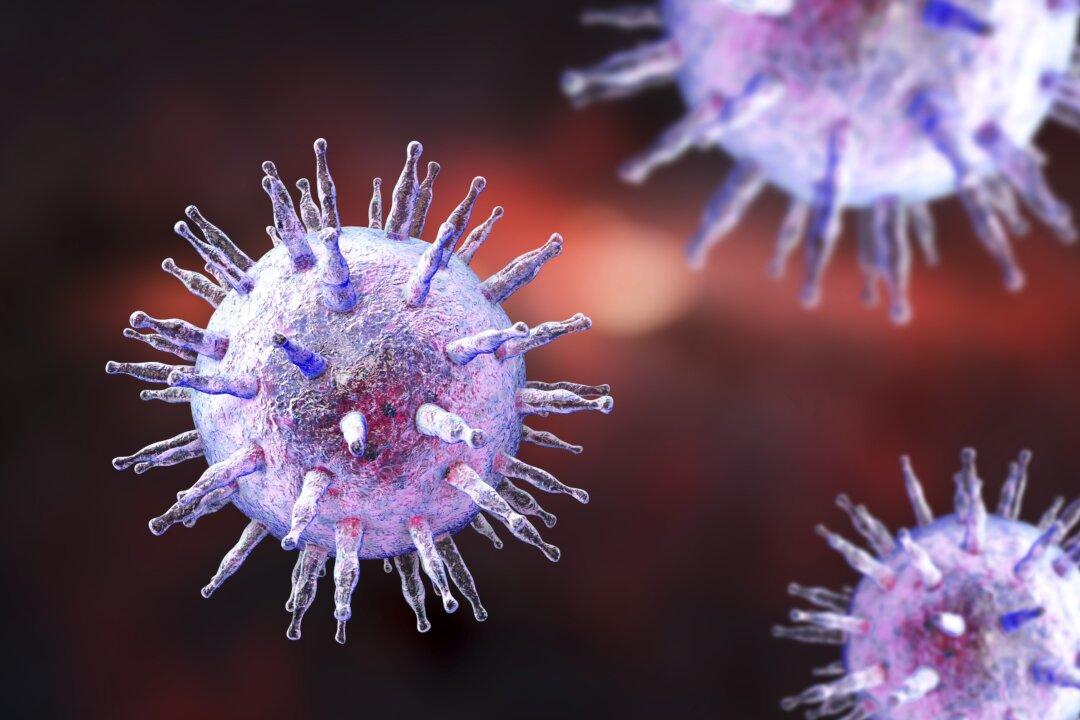
Researchers from the Cleveland Clinic uncovered one of the mechanisms that a type of virus called Kaposi sarcoma-associated herpesvirus (KSHV) uses to induce cancer.

The study, published in February in Nature Communications, found that the KSHV virus activated a specific pathway responsible for cell metabolism and the way cells grow and multiply. Using current U.S. Food and Drug Administration (FDA)-approved breast cancer drugs, they were able to reduce the replication of the virus, stop the progression of the lymphoma, and shrink existing tumors in preclinical models.

Jun Zhao, of the Cleveland Clinic Florida Research and Innovation Center, who holds a doctorate in genetic, molecular, and cellular biology is the study’s lead author.

“Our findings have significant implications: viruses cause between 10% to 20% of cancers worldwide, a number that is constantly increasing as new discoveries are made. Treating virus-induced cancers with standard cancer therapies can help shrink tumors that are already there, but it doesn’t fix the underlying problem of the virus,” Mr. Zhao explained in a news release. “Understanding how pathogens transform a healthy cell into a cancer cell uncovers exploitable vulnerabilities and allows us to make and repurpose existing drugs that can effectively treat virus-associated malignancies.”

Kaposi Sarcoma-Associated Herpesvirus

Kaposi sarcoma-associated herpesvirus, also known as human herpesvirus 8 (HHV8), is “A type of virus that causes Kaposi sarcoma (a rare cancer in which lesions grow in the skin, lymph nodes, lining of the mouth, nose, and throat, and other tissues of the body). Kaposi sarcoma-associated herpesvirus also causes certain types of lymphoma (cancer that begins in cells of the immune system),” according to The National Cancer Institute.

According to the news release, Kaposi sarcoma-associated herpesvirus is similar to other herpesviruses in that it is often asymptomatic and stays in the body laying dormant after primary infection. However, when the immune system becomes weakened or compromised, as it does in many elderly people, transplant recipients, or those with HIV or AIDS (acquired immunodeficiency syndrome), the virus can reactivate. In these high-risk immunocompromised groups, the reactivated virus “can trigger aggressive cancers.”

Cancer cells replicate quickly and reprogram the body’s metabolism to help them grow and spread. Most viruses don’t produce their own energy or the molecules they need and therefore hijack the body’s cells to do the work for them. However, the researchers found that the KSHV virus assumes control of two host proteins (CDK6 and CAD) which causes the virus to replicate more quickly and the cells to multiply and spread out of control.

The news release also states that KSHV-induced cancers are “fast-acting, aggressive and difficult to treat,” and that an estimated 10 percent of people in North America and Northern Europe, and 50 percent of people in Africa have KSHV, although the numbers are thought to be much higher because the virus can present without symptoms and often goes undiagnosed.

A University of Pittsburgh article about KSHV writes, “It is highly likely that over 95% of persons who are healthy and infected with KSHV do not have symptoms and never will,” and that problems develop once a person’s immune system becomes compromised.

Viruses and Cancer

In addition to KSHV, several other viruses are known to cause human cancers. According to the American Cancer Society, the following viruses can cause cancer in humans:
  • Human papillomaviruses
  • Epstein-Barr virus
  • Hepatitis B virus and hepatitis C virus
  • Human immunodeficiency virus
  • Human T-lymphotropic virus-1
  • Merkel cell polyomavirus
The American Society of Microbiology states that “Viruses can lead to cancer by associating with host proteins, proliferating when the human immune system is weakened, and hijacking proliferating human cells. Compared to other viruses, human tumor viruses are unusual because they infect, but do not kill, their host cells.” This process allows the human tumor viruses to initiate ongoing infections.
The research team discovered that the combination of Palbociclib—a drug that is FDA-approved to treat breast cancer and works by blocking CDK6—and a compound that blocks CAD (the two host proteins that are hijacked by the virus) caused a substantial reduction in tumor size and improvements in cancer survival rates in preclinical models. According to the news release, “Most tumors virtually disappeared after about a month of treatment, and remaining tumors shrank around 80%. Survival increased to 100% for selected lymphoma cell lines.”

Future Impact

The findings could lead to new options for the treatment of KSHV-associated cancers, which include Kaposi’s sarcoma, primary effusion lymphoma, and HHV8-associated multicentric Castleman disease. They could also potentially extend beyond KSHV-associated cancers to other viruses that cause cancer using the same or similar mechanisms.

As for what the findings mean for the future, Mr. Zhao says, “Cellular metabolism could be hijacked by both viruses and cancers for pathogenesis. By investigating these metabolic rewiring mechanisms, we aim to find the Achilles’ heel of cancer-causing viruses and non-viral cancers. I’m excited to see what the future of this work holds.”

Emma is an acupuncture physician and has written extensively about health for multiple publications over the past decade. She is now a health reporter for The Epoch Times, covering Eastern medicine, nutrition, trauma, and lifestyle medicine.

Source:   https://www.theepochtimes.com/health/scientists-uncover-mechanism-viruses-use-to-cause-cancer-5607511?src_src=partner&src_cmp=ZeroHedge