CLICK HERE FOR THOUSANDS OF FREE BLOGGER TEMPLATES »
Showing posts with label Model. Show all posts

Saturday, July 3, 2021

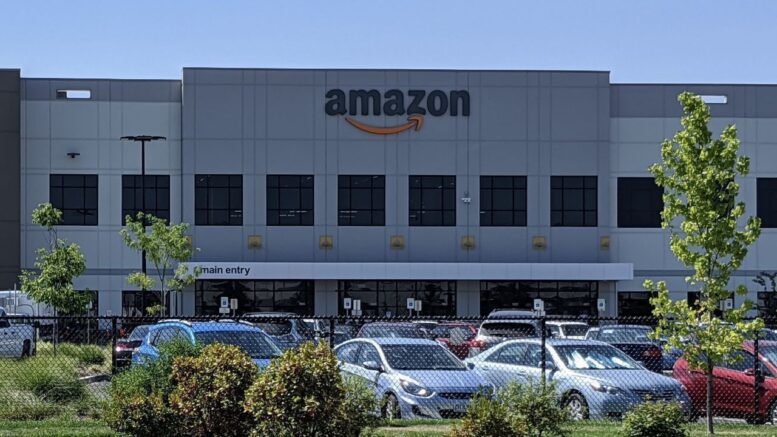
Amazon’s Predatory Business Model Causes Delivery Revolt
Amazon’s Predatory Business Model Causes Delivery Revolt

Wikimedia Commons
Please Share This Story!
 
Amazon is one of the largest companies in the world because it employed a predatory business model that crushed everything and everyone in its path. This is also an example of what it’s like to live in a Scientific Dictatorship. ⁃ TN Editor

Last week, two well-established Amazon delivery companies in Portland, Oregon offered Amazon an ultimatum: agree to a set of conditions that it said would improve revenue and driver safety—or we’ll stop delivering Amazon packages.

Amazon refused, and the two companies in the Portland area terminated their contract with Amazon, their only client, effectively shutting down.

“Amazon’s conduct over the past two years has become intolerable, unconscionable, unsafe, and most importantly, unlawful,” a letter sent to Amazon by the attorney of the two delivery companies, Triton and Last Mile and obtained by Motherboard, reads.

The incident is notable as it appears to be the first public example in the United States of Amazon delivery service partners, small businesses that deliver packages exclusively for Amazon, using their leverage to protest against Amazon—which has been known to enforce strict rules that squeeze productivity out of their delivery drivers, putting drivers and the public at risk.

Amazon’s delivery service partner program, which launched in 2019 to compete with FedEx and UPS, relies on 2,000 small delivery companies that employ 115,000 drivers in the United States to deliver billions of packages each year. Delivery service partners are responsible for paying drivers and assume liability for all aspects of the operations—shielding Amazon from scrutiny and responsibility. Delivery service partners are not owned by Amazon, but deliver packages exclusively for the company, and have to adhere to a strict set of rules from Amazon around hiring, pay, delivery times and routes, and more.

“The companies were losing money and employees trying to satisfy Amazon and their constant abusive changes,” Tom Rask, an attorney for Last Mile and Triton, told Motherboard. “You have to hire numerous drivers who may or may not be working. One day Amazon dictates that you have thirty routes, the next day forty, then the day after twenty. You’re supposed to have enough drivers for back-up while Amazon is lowering pay. Amazon’s actions are unlawful.”

To date, there are few recorded instances of Amazon delivery drivers in the United States collectively protesting against Amazon—though drivers in one warehouse in upstate New York staged a walkout during the pandemic, and last week, the Teamsters union announced a coordinated national effort to unionize Amazon employees, in particular its delivery drivers.

In their letter to Amazon, the two Portland companies outlined a series of grievances, such as cutting routes from delivery companies without notice, unevenly distributing workloads among drivers, lowering reimbursement for drivers’ wages, accessing their employee’s records and personal information, and firing their drivers without input from delivery companies. Amazon frequently changes rules on a whim without notifying delivery service partners, the letter alleges.

In recent days, Rask said he’s received an outpouring of phone calls from Amazon delivery service partners around the country asking him for legal advice on how and whether to shut down operations because of Amazon’s predatory business model.

The Portland delivery service partners’ letter to Amazon outlines a set of demands as a condition for doing business with Amazon again, including a limit on packages and stops, a 8.5-hour cap on delivery routes, a commitment to at least 40 routes per company, and $20 per hour per driver. (Drivers earned $18 an hour until last week’s layoffs.) The companies are also requesting $36 million to compensate laid off drivers and for damages to both companies. Until Amazon agrees, they will not do business with the company, the letter to Amazon obtained by Motherboard states.

“At one point both companies had 150 employees,” Rask said. “Amazon’s actions killed these companies. They were the best performing in Portland and then they were crushed by Amazon’s arbitrary and improper behavior.”


Kate Kudrna, a spokesperson for Amazon, emphasized that the two companies were putting their drivers at risk by shutting down. “Last week, two Delivery Service Partners abruptly threatened to stop servicing the Amazon account and jeopardize the livelihood of their drivers if we did not pay them $36 million within 48 hours along with a string of other demands,” she said.

“We refused their demands and they followed through with their threat, terminating their contract with us, leaving their employees confused and looking for answers,” she continued. “We’re doing everything we can to support the affected employees including connecting them with other Delivery Service Partners in the area who are hiring.”

Currently, Amazon delivery drivers are expected to deliver upwards of 400 packages a day on 10-hour routes that often extend up to 12 hours. The two Portland delivery companies are demanding a cap at 250 packages and 150 stops per 8.5 hour route. As Motherboard has previously reported, in order to qualify for bonuses and complete their routes on time to avoid discipline, drivers have been forced to suspend safety monitors, run across busy four-lane highways, skip lunch breaks, and pee and defecate in their vans rather than find bathrooms.

The letter says that Amazon forces its delivery companies to commit to routes three weeks in advance but Amazon can change drivers’ schedules within a day or less than a day’s notice. This forces scheduled drivers to show up to work without actual work to do, and companies to pay drivers’ wages for days when they didn’t deliver packages.

A new program also allows Amazon to increase or decrease routes each day by 10 percent without any advance notice to delivery companies—forcing them to eat the cost of extra scheduled drivers, according to the letter. Under Oregon law, delivery companies must pay drivers for their scheduled hours even if the work is unavailable. In such cases, Amazon forces their delivery companies to pay drivers’ wages, the letter states.

“As a result of this one-sided arrangement, Last Mile and Triton must commit employees to Amazon in advance, while Amazon can save costs when it experiences low inventory or labor shortages at its warehouse by suddenly changing or reducing routes when it no longer needs those drivers,” the letter states.  “Meanwhile, Last Mile and Triton must still pay those drivers who committed to the routes, with no reimbursement from Amazon.”

Read full story here…

Source:  technocracy.news

Be the first to comment.

Blogger's note:  subterrnews.blogspot.com does not send cookies, or collect any information on those using the blog.  However, the blogspot is on google, and google may collect information, and send cookies.  Many of the links that  we connect to do not send out cookies or collect information, but some do.  You are keying in to this blog, and you have agreed to this.

The views expressed in the articles do not necessarily represent the opinions of this blog.  They are the views, and opinions of the author(s) of the article.


Wednesday, October 21, 2020

The Rise of The Corporate Censors


The Rise of The Corporate Censors: How America Is Drifting Toward The Chinese Model Of Media

Below is my column in The Hill newspaper on the censorship of the Hunter Biden controversy by Facebook and Twitter. The response of the Biden campaign and figures like Rep. Adam Schiff has been to dismiss the story as the likely product of Russian intelligence. Notably however they do not address the underlying emails. As many of us have written, there is ample reason to suspect foreign intelligence and the FBI is reportedly investigating that possibility. However, that does not mean that the emails are not authentic. Hillary Clinton was hacked by Russia but the emails were still real. It is possible to investigate both those responsible for the laptop’s disclosure and what has been disclosed on the laptop. The censorship by these companies however has magnified concerns in the controversy, particularly with the disclosure of close connections between some company officials and the Biden campaign.

Chinese citizens watched President Xi Jinping deliver an important speech this week not far from Hong Kong. Well, not the whole speech: Xi apparently is ill, and every time he went into coughing spasms, China’s state media cut away so that he would be shown only in perfect health.

Xi’s coughs came to mind as Twitter and Facebook prevented Americans from being able to read the New York Post’s explosive allegations of influence-peddling by Hunter Biden through their sites. The articles cited material reportedly recovered from a laptop; it purportedly showed requests for Hunter Biden to use his influence on his father, then-Vice President Joe Biden, as well as embarrassing photos of Hunter Biden.

Many of us have questioned the sketchy details of how the laptop reportedly was left by Hunter Biden with a nearly blind computer repairman and then revealed just weeks before the presidential election. There are ample reasons to question whether this material was the product of a foreign intelligence operation, which the FBI apparently is investigating.

Yet the funny thing about kompromat — a Russian term for compromising information — is that often it is true. Indeed, it is most damaging and most useful when it is true; otherwise, you deny the allegations and expose the lie. Hunter Biden has yet to deny these were his laptop, his emails, his images. If thousands of emails and images were fabricated, then serious crimes were committed. But if the emails and images are genuine, then the Bidens appear to have lied for years as a raw influence-peddling scheme worth millions stretched from China to Ukraine to Russia. Moreover, these countries likely have had the compromising information all along while the Bidens — and the media — were denying reports of illicit activities.

Either way, this was major news.

The response of Twitter and Facebook, however, was to shut it all down. Major media companies also imposed a virtual blackout on the allegations. It didn’t matter that thousands of emails were available for review or that the Bidens did not directly address the material. It was all declared to be fake news.

The tech companies’ actions are an outrageous example of open censorship and bias. It shows how private companies effectively can become state media working for one party. This, of course, was more serious than deleting coughs, but it was based on the same excuse of “protecting” the public from distractions or distortions. Indeed, it was the realization of political and academic calls that have been building for years.

Democratic leaders from Hillary Clinton to Rep. Adam Schiff (D-Calif.) have long demanded such private censorship from social media companies, despite objections from some of us in the free speech community; Joe Biden himself demanded that those companies remove President Trump’s statements about voting fraud as fake news. Academics have lined up to support calls for censorship, too. Recently, Harvard law professor Jack Goldsmith and University of Arizona law professor Andrew Keane Woods called for Chinese-style internet censorship and declared that “in the great debate of the past two decades about freedom versus control of the network, China was largely right and the United States was largely wrong.”

It turns out traditional notions of journalism and a free press are outdated, too, and China again appears to be the model for the future. Recently, Stanford communications Professor Emeritus Ted Glasser publicly denounced the notion of objectivity in journalism as too constraining for reporters seeking “social justice.” In an interview with The Stanford Daily, Glasser insisted that journalism needed to “free itself from this notion of objectivity to develop a sense of social justice.” He said reporters must embrace the role of “activists” and that it is “hard to do that under the constraints of objectivity.” Problem solved.

Such views make Twitter and Facebook’s censorship of the Post not simply justified but commendable — regardless of whether the alleged Biden material proves to be authentic. As Twitter buckled under criticism of its actions, it shifted its rationale from combating fake news to barring hacked or stolen information. (Putting aside that the information allegedly came from a laptop, not hacking, this rule would block the public from reviewing any story based on, say, whistleblowers revealing nonpublic information, from the Pentagon Papers to Watergate. Moreover, Twitter seemingly had no qualms about publishing thousands of stories based on the same type of information about the Trump family or campaign.) Twitter now says it will allow hacked information if not posted by the hacker.

Social media companies have long enjoyed protection, under Section 230 of the federal Communications Decency Act, from liability over what users post or share. The reason is that those companies are viewed as neutral platforms, a means for people to sign up to read the views or thoughts of other people. Under Section 230, a company such as Twitter was treated as merely providing the means, not the content. Yet for Twitter to tag tweets with warnings or block tweets altogether is akin to the telephone company cutting into a line to say it doesn’t like what two callers are discussing.

Facebook and Twitter have now made the case against themselves for stripping social media companies of immunity. That would be a huge loss not only to these companies but to free speech as well. We would lose the greatest single advance in free speech via an unregulated internet.

At the same time, we are seeing a rejection of journalistic objectivity in favor of activism. The New York Times apologized for publishing a column by a conservative U.S. senator on using national guardsmen to quell rioting — yet it later published a column by a Chinese official called “Beijing’s enforcer” who is crushing protests in Hong Kong. The media spent years publishing every wacky theory of alleged Trump-Russia collusion; thousands of articles detailed allegations from the Steele dossier, which has been not only discredited but also shown to be based on material from a known Russian agent.

When the Steele dossier was revealed, many of us agreed on the need to investigate because, even if it was the work of foreign intelligence, the underlying kompromat could be true. Today, in contrast, the media is not only dismissing the need to investigate the Biden emails, but ABC News’s George Stephanopoulos didn’t ask Biden about the allegations during a two-hour town hall event on Thursday.

This leaves us with a Zen-like question: If social media giants prevent the sharing of a scandal and the media refuses to cover it, did a scandal ever occur? After all, an allegation is a scandal only if it is damaging. No coverage, no damage, no scandal. Just deleted coughs lost in the ether of a controlled media and internet.

Jonathan Turley is the Shapiro Professor of Public Interest Law at George Washington University. You can find his updates online @JonathanTurley.

Blogger's note:  subterrnews.blogspot.com does not send cookies, or collect any information on those using the blog.  However, the blogspot is on google, and google may collect information, and send cookies.  Many of the links that  we connect to do not send out cookies or collect information, but some do.  You are keying in to this blog, and you have agreed to this.

The views expressed in the articles do not necessarily represent the opinions of this blog.  They are the views, and opinions of the author(s) of the article.


Monday, October 19, 2015

Bolivia: A Model For Sustainable Development?

Bolivian Supreme Court. Image courtesy of WikipediaBolivian Supreme Court. Image courtesy of Wikipedia
TN Note: Bolivia is the poorest nation in South America, where 45% live in abject poverty. One reason the nation is so poor is because it has been repeatedly plundered by the global elite over the last 40 years. Nevertheless, what better place to implement the 2030 Agenda goal of “Eradicating poverty everywhere”? If if first you don’t succeed, try, try again.
With the adoption of the UN Sustainable Development Goals last week, we have a clear outline for the global political ambitions for the next 15 years. Before we start the discussion about setting national strategies for how to work towards the 17 goals, ranging from hunger and poverty, to climate change and gender inequality, I would like to turn your attention to La Paz, the capital of the poorest country in South America. Here we find inspiration for how to model future sustainable development.
Approximately 45 percent of the Bolivian population lives in poverty (1) and it has the highest rate of illiteracy in the region. In the slums of La Paz, 42 percent of children under five are under- or malnourished (2) . But from this austere foundation a miracle has emerged.
In 2014, the first-ever class of Claus Meyer’s Melting Pot foundation graduated from cooking school and they have been followed by more graduates since. You might recognize the name Claus Meyer, as he is the co-founder of the world renowned restaurant NOMA — which was elected the World’s Best restaurant four times in recent years. Maybe you have also heard that he has been one of the driving forces of the New Nordic Food Movement, which emphasizes the use of local and sustainable foods.
In 2011, he created the Melting Pot Bolivia Foundation, an initiative to enhance future opportunities and improve the quality of life for marginalized people by focusing on food, food craft, and entrepreneurship, applying the principles behind one of the most exclusive and high-end restaurants to one of the poorest countries in the world.
In collaboration with the Danish independent development organization, IBIS, he launched a gourmet restaurant with an integrated cookery school named GUSTU as a socioeconomic venture. Over the next two years an additional 13 micro restaurants will educate more than 3,000 young people in the slum district of El Alto, outside La Paz. The goal is that these initiatives will lift up a new generation of culinary entrepreneurs, foster a Bolivian food movement, and revive a sense of pride in the Bolivian food culture. In 2014, GUSTU was voted the 32nd best restaurant in Latin America by Restaurant Magazine and The Best Restaurant in South America by Como Sur Magazine.
The project in Bolivia is a microcosm of how food can become an entry point for sustainability, health, job-creation, social protection and renewed cultural pride. It shows how food can be a silver bullet to address a range of complex and interconnected challenges and it gives us the recipe for the food systems of tomorrow. Food systems that not only are sustainable and healthy, but also the point of departure for resilient societies.
This case is one of many examples featured in the new publication “EAT in Sustainia” that is launched today. The publication offers a taste of the food systems of tomorrow and provides insights into some of the most innovative opportunities and solutions for creating sustainable and healthy food systems, while simultaneously addressing many of the challenges represented by the SDGs.
Read full story
Note:  Source Technocracy.news