Tuesday, 22 March 2016
Refugee Crisis: Using Chaos to Build Power
Written by Alex Newman
- font size decrease font size
increase font size

BERLIN — A European Union military force with power to intervene in member states. A new “Marshall Plan” to radically redesign whole regions of the world and impose regional government. A United Nations empowered to manage it all. Christendom under siege. And the end of nationhood as it is understood today. That is where the “refugee crisis” is heading, as the engineered disaster wreaks havoc across Europe and beyond. Despite the appearance of chaos, though, it is all by design, with a series of radical goals in mind.
While the establishment’s demands on Europe to accept millions of Middle Eastern refugees have been couched in “humanitarian” rhetoric, the real agenda is nothing of the sort. Rather than helping out their fellow human beings, globalist forces actually created the refugee crisis and the suffering behind it. And they are using it to advance multiple, related agendas — primarily globalism and statism. That the crisis is being exploited to undermine Western culture, national sovereignty, and even nationhood itself is now beyond dispute. Top globalists are openly bragging about it.
“I will ask the governments to cooperate, to recognize that sovereignty is an illusion — that sovereignty is an absolute illusion that has to be put behind us,” declared former Goldman Sachs chairman Peter Sutherland, an ex-member of the Bilderberg Steering Committee who currently “serves” as the UN special representative of the secretary-general for international migration. “The days of hiding behind borders and fences are long gone. We have to work together and cooperate together to make a better world. And that means taking on some of the old shibboleths, taking on some of the old historic memories and images of our own country and recognizing that we’re part of humankind.”
Billionaire globalist and open-borders zealot George Soros, in denouncing European officials trying to control the human tsunami coming across their borders, similarly declared, “Our plan treats the protection of refugees as the objective and national borders as the obstacle.”
In essence, then, the engineered refugee crisis was created and is being used, at least in part, to advance what globalists often refer to in public as “global governance” and their “new world order.” As part of that, even the idea of nationhood is under fire — everybody is just part of “humankind,” as Sutherland put it. And as such, people must be governed by the “Parliament of Humanity,” as UN Secretary-General Ban Ki-moon referred to the dictators club known as the UN last year.
Already, the UN manages a global refugee program via the UN High Commissioner for Refugees (UNHCR). This agency decides which refugees will be settled where, including those destined to be settled in the United States at U.S. taxpayer expense. Further clues about the agenda can be found in the fact that the UN refugee outfit was until very recently led by António Guterres, the former president of the powerful global socialist-government-promoting Socialist International, as senior editor William Jasper documented in an October 19, 2015 cover story for this magazine.
There are several elements to the globalist plot as it relates to the refugee crisis.
Creating the Refugee Crisis
To begin with, it is important to understand that the same self-styled humanitarians claiming to be concerned about refugees, while demanding that they be given asylum in the West by the millions, are, in reality, the same people responsible for making their victims into refugees to begin with. As this magazine documented extensively in its October 19 cover story package, the globalist establishment literally unleashed the refugee exodus.
Among other actions to spark the crisis, Western governments and their allies — not to mention the globalist forces behind them, such as the Council on Foreign Relations and other global-government-promoting powerhouses — destroyed multiple Middle Eastern nations via war and chaos. These include Libya, bombed to smithereens by Obama and NATO under the supposed authority of the UN; as well as Syria, destroyed by civil war fueled by the globalist establishment; and of course Iraq, also crushed by Western intervention and globalist-fueled civil war.
Those same globalist forces were also responsible for wreaking havoc in many more nations — such as Yemen, Egypt, Ivory Coast, and Tunisia — through supporting uprisings, revolutions, terror groups, dictatorships, and more.
The predictable response to having one’s nation destroyed, of course, is attempting to leave — particularly if wealthier, freer nations throw down the welcome mat. And that is exactly what has happened and is still happening. Many of the same globalists responsible for creating the chaos and terror that refugees are fleeing from are publicly and loudly opening Europe’s doors to the growing tsunami of displaced victims. Obama and his billionaire supporter Soros, for example, were both instrumental in the UN-authorized war to destroy Libya, which was based on lies, and in fueling the civil war that is destroying what remains of Syria. And both of those figures have been very outspoken in demanding that the West welcome millions of refugees, regardless of the costs or the desires of Western voters.
The question that must be asked is: “Why?” The answers can be found in what has happened and what is happening, and especially in the policy prescriptions allegedly aimed at dealing with the crisis that globalists unleashed. At this point, Europe, Africa, and the Middle East are all in the cross hairs of internationalists, who are exploiting the refugee crisis to build up supranational institutions at the regional and global level to smash national sovereignty and even nationhood, to build up the power of government generally, and to destabilize societies. If left unchecked and unexposed, the refugee crisis will serve as a powerful tool to push the world ever closer to “global governance,” with a great deal of pain and misery along the way.
A New Marshall Plan: Regional Government for the Middle East
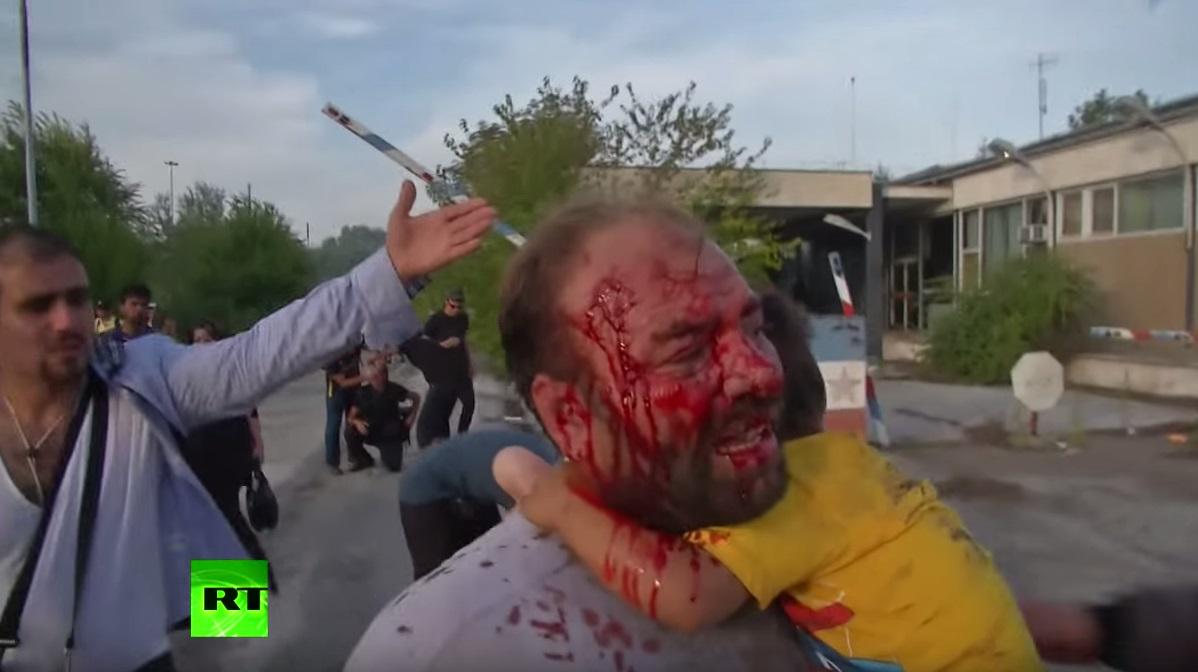
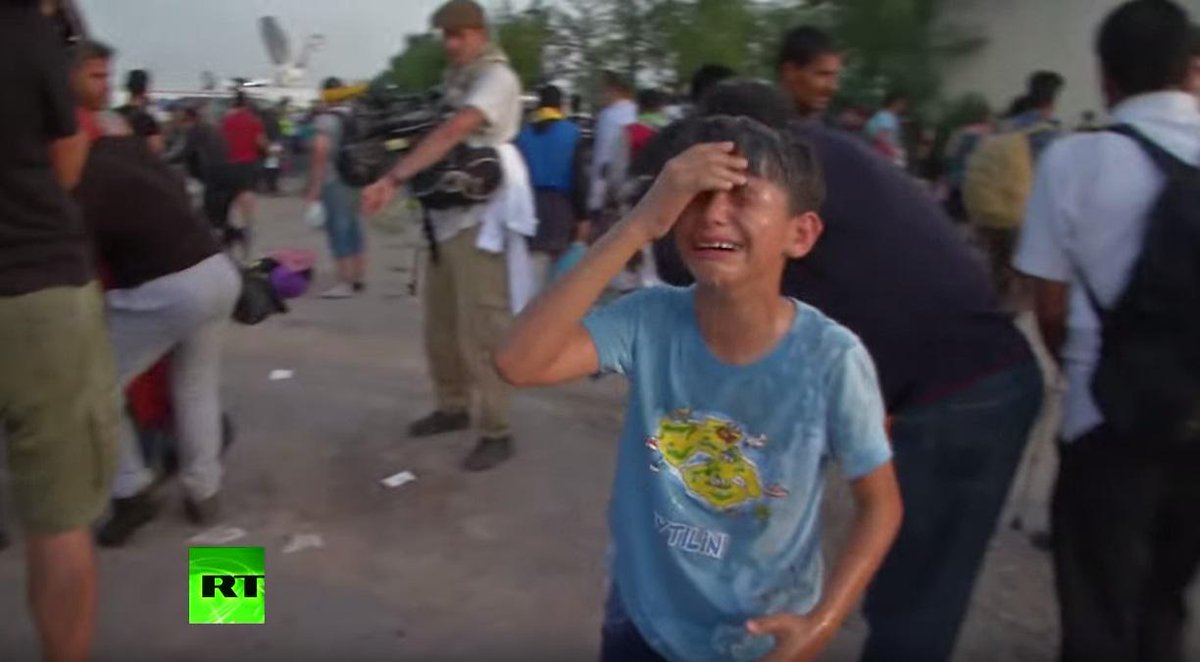
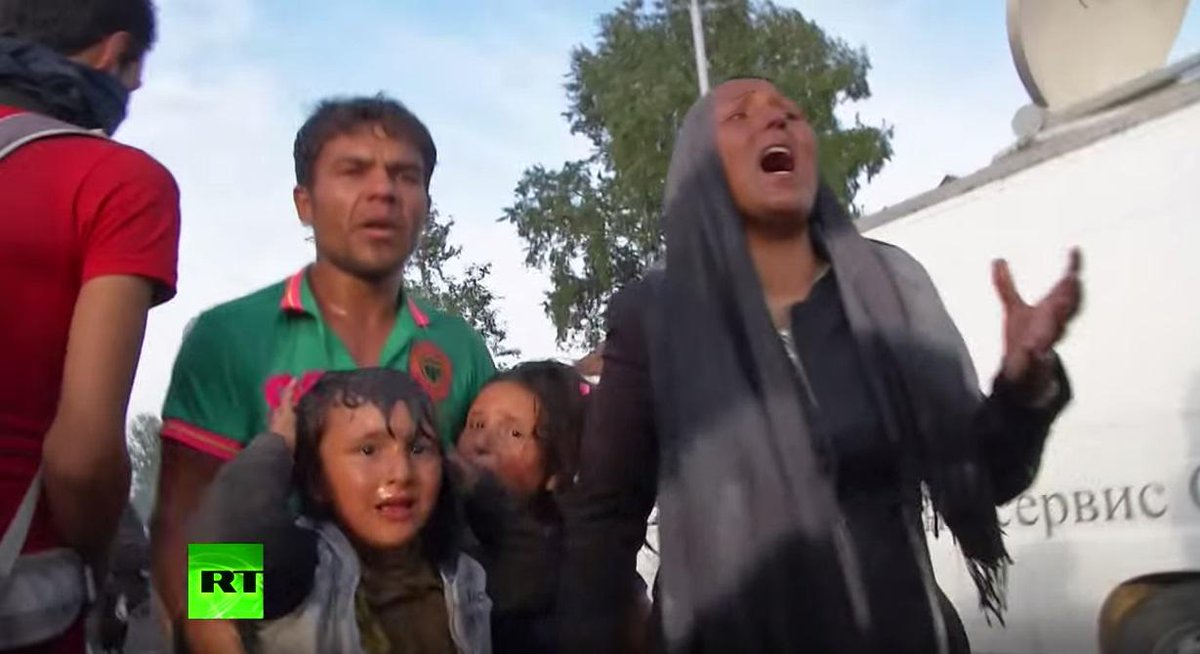
With the refugee situation quickly spiraling out of control across parts of the continent — the mass sexual assaults on New Year’s Eve across Germany and beyond, the implosion of law and order around Calais in France, the widely reported overrunning of Stockholm’s central station by refugee youths, and more — the public is now growing increasingly outraged. Indeed, even the establishment forces responsible for unleashing the chaos are now in some cases denouncing it. The New York Times, an establishment mouthpiece that dutifully promoted the globalist wars that sparked the refugee crisis and the subsequent flooding of the West with the victims of those wars (and many opportunists who joined the exodus), ran an op-ed pointing out that Germany was “on the brink” due to the crisis. Top European political bosses have also been sounding the alarm.
Another senior globalist, Rothschild banking dynasty protégé and billionaire hedge-fund boss Soros, played an instrumental role in encouraging the myriad wars and the subsequent tsunami of refugees into Europe that was sparked by those wars. And now, like other establishment voices, Soros is also pointing out the obvious. The European Union, he said in a recent interview, is “on the verge of collapse” due to the sudden influx of well over a million Islamic refugees last year. Not coincidentally, Soros also has ideas about “solutions.” And not surprisingly, those alleged “solutions” involve more globalism for Europe, Africa, and the Middle East — along with less sovereignty, self-government, and liberty.
In an interview with Bloomberg from the World Economic Forum (WEF) in Davos, Switzerland, the radical anti-national sovereignty statist claimed that Europe needed to finance a new “Marshall Plan” for the regions of the world from which the refugees are fleeing — regions and nations destroyed in large part by the globalist Western establishment figures pushing the new plan. Soros was expressing support for a proposal made earlier by a fellow globalist, German Finance Minister Wolfgang Schäuble. The new Marshall Plan they envision seeks to transfer wealth from struggling European taxpayers to areas of the globe ruined by globalist machinations — but the real agenda goes much deeper, as did the last Marshall Plan after World War II.
“What is most important is for us to invest billions in those regions from which the refugees come to reduce the pressure on the external frontiers of Europe,” Schäuble argued in a panel discussion at the globalist WEF, speaking alongside several European prime ministers who also played a key role in flooding Europe with refugees displaced from the nations they helped destroy. “That will cost Europe much more than we thought.” Of course it will, and taxpayers, already suffering under a crushing burden, will pay for it all. Writing in the Soros-backed “Project Syndicate” propaganda organ in 2014, Schäuble previously called for a global taxation regime in a piece called Why Taxation Must Go Global,one of his many calls for more globalism and statism.
So what would a new “Marshall Plan” for the Middle East and Africa look like? A brief history of the original Marshall Plan might offer some clues. Officially known as the “European Recovery Program,” or ERP, the scheme involved transferring the equivalent of almost $150 billion in today’s dollars from U.S. taxpayers to Western European governments. The ostensible purpose was to help rebuild Europe after World War II. In practice, though, it served as a key tool in the transformation of Western Europe into a statist region dominated by Big Government and supranational institutions, eventually culminating in the subjugation of Europeans under the unaccountable EU super-state. That was the goal all along.
As far back as 1947, then-U.S. Secretary of State George Marshall (CFR) — a key player in handing China to Chairman Mao’s murderous communists, and perhaps mass-murdering dictator Joseph Stalin’s most important ally in the world — called for European “economic cooperation” as a precondition for the desperately needed American aid after the war. “It is already evident that, before the United States government can proceed much further in its efforts to alleviate the situation and help start the European world on its way to recovery, there must be some agreement among the countries of Europe as to the requirements of the situation and the part those countries themselves will take in order to give proper effect to whatever action might be undertaken by this Government,” said Marshall, the man after whom the scheme was named. “The initiative, I think, must come from Europe.... The program should be a joint one, agreed to by a number, if not all European nations.” The Committee of European Economic Cooperation responded with a major report signed by government representatives from across Europe outlining efforts to create a “customs union” that could eventually lead to even further cooperation. U.S. officials were pleased.
Members of Congress even tried to get language in the statement of purpose for the original Marshall Plan bill of 1948 explicitly declaring that it was the policy of the United States to encourage the economic unification and the political federation of Europe. In the end, language calling for the development of economic cooperation was included instead. The next year, the “political federation” amendment was pursued again, with the result being the addition of the sentence: “It is further declared to be the policy of the people of the United States to encourage the unification of Europe.” By 1951, Congress finally came out and said it openly, with a clause included in the 1951 Mutual Security Act stating that its purpose was “to further encourage the economic unification and the political federation of Europe.”
The goals of U.S. government support for European integration were explained in part decades ago, though largely ignored, by top U.S. officials. On September 20, 1966, for example, then-Under Secretary of State George Ball (CFR) testified before Congress on the State Department’s view on forming an “Atlantic Community,” essentially merging the United States with Europe. “I find little evidence of any strong interest among Europeans for any immediate move toward greater political unity with the United States,” he explained. “They fear the overwhelming weight of U.S. power and influence in our common councils.... We believe that so long as Europe remains merely a continent of medium- and small-sized states there are definite limits to the degree of political unity we can achieve across the ocean.” Globalism was the agenda then, just as it is today.
Creating a Middle East Union
Not coincidentally, the new “Marshall Plan” is being pushed by the same globalist establishment that has been openly advancing the imposition of a “Middle East Union” on the region in recent years. “Just as a warring [European] continent found peace through unity by creating what became the EU, Arabs, Turks, Kurds and other groups in the region could find relative peace in ever closer union,” claimed Mohamed “Ed” Husain, a former caliphate-seeking Islamist and current “adjunct senior fellow for Middle Eastern studies” at the CFR, in a piece published in the Financial Times and on the CFR website in mid-2014. “After all, most of its problems — terrorism, poverty, unemployment, sectarianism, refugee crises, water shortages — require regional answers. No country can solve its problems on its own.” That is, of course, nonsense, but it is standard globalist rhetoric.
Plenty of other globalists have offered similar admissions. It has become fashionable for establishment figures and their hangers-on to compare today’s Middle East with Europe before the EU. Indeed, Richard Haass, the CFR boss and a former leader at the U.S. State Department, writing in Soros’ Project Syndicate, does precisely that. In an incredible admission, Haass explains, without admitting the CFR’s giant role in instigating all of the tragedies he mentions, that the CFR-backed globalist wars of the last decade and a half were crucial in setting the region on fire — the same blaze that now supposedly can only be extinguished by a CFR-inspired “Middle East Union.” The globalist strategy used over and over again goes like this: Create a problem, then exploit and manage the inevitable reaction to push a “solution.”
“The 2003 Iraq war was highly consequential, for it exacerbated Sunni-Shia tensions in one of the region’s most important countries and, as a result, in many of the region’s other divided societies,” Haass wrote. “Regime change in Libya [by Obama, the UN, NATO, and CFR apparatchiks] has created a failing state; lukewarm support for [CFR- and Soros-backed] regime change in Syria has set the stage for prolonged civil war.” And the chaos, bloodshed, and terror will continue, he says, until “a new local order emerges or exhaustion sets in.” In the meantime, globalists should treat the region as a “condition to be managed,” Haass said. How convenient — the CFR sets a fire, and now purports to have the fire extinguisher, promising a raging inferno unless and until everyone submits to the globalist demands, including a new regional “order,” which, as in “new world order,” is globalist-speak for transnational government.
Of course, Husain, Haass, and the CFR are not alone. In 2011, the Islamist president of Turkey at the time, Abdullah Gül, also called for an EU-style regime to rule the Middle East. Speaking in the United Kingdom, Gül claimed “an efficient regional economic cooperation and integration mechanism” was needed for the region. “We all saw the role played by the European Union in facilitating the democratic transition in central and Eastern Europe after the fall of the Berlin Wall,” he claimed. Islamic Turkey is also working to join the EU.
Various Middle Eastern tyrants have echoed the calls for a regional regime, too — the kings of Saudi Arabia and Jordan, for example. As Husain pointed out, the radical Muslim Brotherhood and the terrorist group Hamas are also working to unify the Middle East under one single tyrannical government of gargantuan proportions. With financial backing from the West under a new “Marshall Plan” and the bloodshed fueled by globalist-engineered wars, not to mention EU and UN support, the plot could easily become a reality.
Further Empowering the European Union
Also being advanced using the refugee crisis is the further empowerment of the EU itself, the regional government created thanks in large part to the original Marshall Plan. Among the various schemes allegedly needed to deal with the immigrant influx is the creation of military outfits — a border and coast-guard force — ostensibly aimed at “protecting Europe’s borders” from the immigration tsunami. The force would also fight “transnational crime and terrorism,” according to an EU outline of the scheme. The plan calls for mandatory biometric ID checks to come or go from the super-state’s territory, so everyone can be checked against Interpol’s databases.
Most alarmingly, perhaps, the EU military force would be able to “intervene” in European nations — even without permission from national authorities, as long as EU bosses claim the situation is “urgent.” In fact, even if the nation “considers that there is no need for additional intervention” from the new EU force, it could still be imposed by Brussels. The force would also have the power to commandeer national governments’ resources, something even the U.S. federal government cannot do to state or local authorities.
At the national level, some European officials were appalled. Creating such a structure “that is independent of member states is shocking,” said Polish Foreign Minister Witold Waszczykowski, noting that nobody even knew who the force would be accountable to. Greek and Swedish officials also spoke out.
Among EU leadership, though, it is par for the course. “Managing Europe’s external borders must be a shared responsibility,” claimed European Commission “First Vice President” Frans Timmermans with the Dutch Labor Party, a Bilderberg summit attendee. Noting that the new force could take over the management of national borders in some circumstances, the globalist official claimed, “It is essential to restore the credibility of our border management system.”
Meanwhile, EU officials and apparatchiks have taken to shrieking whenever a government actually takes serious actions to “restore the credibility” of border management. The howls have been especially pronounced when border checks were re-introduced along some intra-EU borders. When Hungarian authorities tried to stop the tsunami with a fence along the border with Serbia, for instance, eurocrats were fuming. In a letter sent to the government of Hungary, the European Commission — essentially the unelected regime now ruling Europe — blasted the use of troops on the border, complained about criminal sanctions imposed on illegal immigrants who damage the fence, and demanded that refugees stop being denied entry on the grounds that they transitted through a safe country. In short, actually guarding the borders appears to be the last thing on the EU’s agenda, except as an excuse to create a paramilitary force with powers to intervene in member nations.
Also at the top of the EU-empowerment agenda is a new agency in charge of refugees, with the power to resettle refugees in EU members against their will. A number of Eastern European governments have fought back against the plot, but it continues to advance, having already allocated a number of immigrants throughout the bloc. Last year the EU agreed to relocate 40,000, with that number set to balloon even further. (More than a million others are simply staying in nations where they registered without involvement with EU.)
For the UN, even all of that has not been enough. “UNHCR is deeply disappointed that although a majority of member States were in agreement with a wider relocation proposal involving 120,000 people, a final consensus on this could not be reached,” a UNHCR spokesperson said after the EU approved the deal. “Decisive agreement is needed without further delay to address the needs, as is bold action based on solidarity from all member States.” The then- “High Commissioner” himself, former Socialist International boss António Guterres, has also been loudly demanding that the EU usurp all power over asylum and resettlement. In other words, more assaults on sovereignty.
Some Europeans, though, have seen through the scheming and the exploitation of the refugee crisis by the Brussels-based super-state to advance its radical agenda. “Is Western Europe to be a series of democratic nation states that govern themselves, control their borders and trade with each other, or is the supra nationalist agenda of Brussels going to win? That’s the real debate that’s going on,” said EU Parliamentarian and U.K. Independence Party chief Nigel Farage.
Separately, Hungarian Prime Minister Viktor Orbán has described the orchestrated refugee tsunami as a tool of a “treasonous conspiracy” to destroy nationhood, Western civilization, and Christendom. “Ladies and gentlemen, what we face is nothing less than the challenge of finding ourselves at the gateway to the implementation of a deliberate conceptual project, which could be described as left-wing and which seeks to marginalize the nation states of Europe,” he told his countrymen. “Where this project has failed to overcome Christianity and the identity of the nation state — and the values and responsibility springing from it — in conventional political struggle, it will strive to eliminate it on ethnic grounds.”
Beyond crushing sovereignty, the crisis is also advancing assaults on liberty. Especially useful to the assault on individual freedoms has been the threat of terrorism posed by the influx of millions of Muslims, at least some of whom are and will be radicalized.
ISIS has been boasting that its operatives are among the refugees, and U.S. presidential contender Ben Carson even said it would be “jihadist malpractice” not to send terrorists into the West among the immigrants. He is right, of course, as the Paris attacks last year showed. Now, the jihadists will be used as the justification to wage war on liberty.
Already, as The New American has documented extensively, “Islamic” terror — much of it fomented behind the scenes by globalists and communists — is being used as a pretext to radically expand government. Just last year, EU “police,” known as Europol, announced the creation of a new unit to censor the Internet under the guise of fighting “extremism.” In Britain, authorities are cracking down on homeschoolers and Sunday schools under the guise of rooting out Islamic extremism. Attacks on gun rights, free speech, and more are all advancing under the guise of stopping “Islamic terrorism” and “Islamic extremism.” And as millions of Muslims continue to flood Europe, the totalitarian advances will only accelerate.
The end game is clear: using the increasingly powerful regional blocs such as the European Union, the African Union, Putin’s Eurasian Union, and the Middle East Union as building blocks to build what globalists such as Soros, Bush, Clinton, Biden, and others often refer to in public as their “New World Order.” In his recent book World Order, globalist operative and former Secretary of State Henry Kissinger laid out the plan. “The contemporary quest for world order [world government] will require a coherent strategy to establish a concept of order [regional government] within the various regions and to relate these regional orders [governments] to one another,” he wrote. State Department documents going back decades outline the same strategy.
If humanitarianism were truly the motivation, countless experts have pointed out, it would be radically more cost effective, not to mention humane, to help refugees and victims of globalist wars closer to their homes. Literally 25 to 50 times more people could be supported in Lebanon or Jordan than in Europe for the same amount of tax funds. The wars that destroyed Middle Eastern countries and caused the crisis to begin with would never have been launched if the purported “humanitarian concerns” of the establishment were genuine. Instead, the agenda is to advance globalism, pure and simple, and the establishment seems barely interested in concealing it anymore.
In short, the “refugee crisis” appears to have been engineered in yet another typical example of what legendary French philosopher Frédéric Bastiat described as concocting the antidote and the poison in the same laboratory. Now that the deed is done, politicians and establishment figures are pointing out the obvious while exploiting the inevitable public reaction. Hopefully the people of Europe and the world will be smarter than to fall for the ruse yet again, as the consequences are deadly serious.
Photo: AP Images
This article is an example of the exclusive content that's available only by subscribing to our print magazine. Twice a month get in-depth features covering the political gamut: education, candidate profiles, immigration, healthcare, foreign policy, guns, etc. Digital as well as print options are available!
Related article: