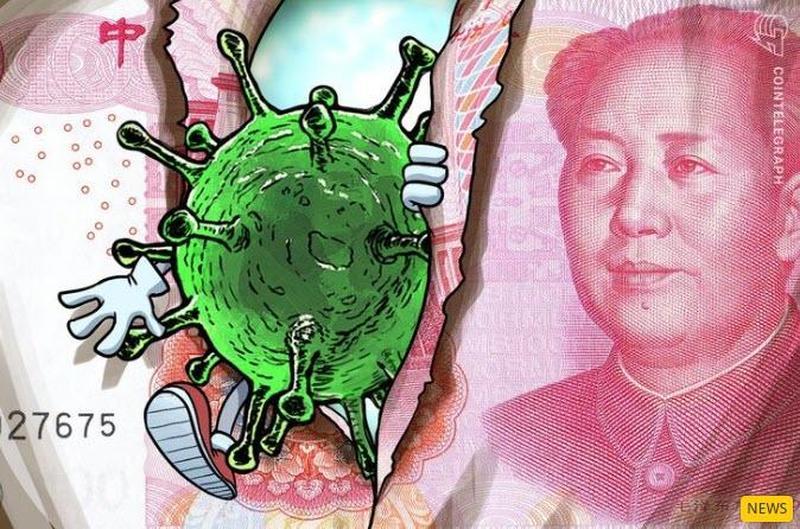
The United Nations is planning to adopt a digital pact between member states at the “Summit of the Future” in New York next week as part of the globalist roll out of digital ID and central bank digital currencies.
The dystopian UN pact aims to promote digitization, mandate the use of digital devices, and digital ID, and implement plans for the roll out of the technology.
Critics of the UN plans claim there has been a lack of public consultation and parliamentary involvement in the negotiations of this pact.
If you disregard the fluffy language with which the Global Digital Compact is packed, you can see an agreement to force all people into a world controlled by digital corporations and technology developed by leading globalists including Bill Gates.
However, the UN and member state governments involved in the preparation of the summit have made no effort to inform the public about the plan, or even to have it discussed in parliaments and the media.
Instead, the compact will be discussed for the first time at a forum attended by The World Economic Forum and the Club of Rome, as reported – organizations which are opaque, undemocratic and do not have our best interests at heart.
The text of the treaty, we learn by way of the introduction, states that digital technologies “offer immense potential benefits for human welfare and the progress of societies,“ and that we, therefore, have to eliminate any digital divide between countries and within countries.
The declared goal is “a digital future for everyone.“
Norbert Haering explains why the elite are not discussing the terms of the compact with the public. They are simply not interested in giving us any say in the matter:
What is important is what is not in the contract. The word voluntary only occurs in connection with the signing of the contract. However, there is no right for citizens to choose a future other than the fully digitised one for themselves. Because that would open up a digital divide that should no longer exist. There is no right to regulate many of his/her affairs in a traditional way in dealing with other people instead of computers. Nobody should be allowed to choose that their children are taught by teachers instead of computers, or that conversations with the doctor and treatments remain a secret instead of being packed on the servers of the IT groups. Nothing in the contract suggests that such a right has been considered at all.
The elite are determined to build a digital prison planet of which there will be no escaping.
The General Manager of the Bank of International Settlements, known as the “Central Bank of Central Banks,” described the elites’ vision of a financial surveillance state and cashless society in picture perfect detail.
According to Augustin Carstens, central banks will soon have “absolute control”of everyone’s money and the “technology to enforce that.”
The video in which Carstens issues the threat has gone viral after announcements by the Biden Administration and other governments regarding the development of Central Bank Digital Currencies.
Known as CBDCs for short, the currencies are federally-issued but take the form of crypto, and are being promoted as a means to usher in a cashless society.
By banning cash and using CBDCs, Carstens boasts, governments and their financial oligarchs will not only be able to track purchases globally and see exactly who’s buying what, but they’ll also be able to fulfill their longtime goal of having “absolute control” over financial transactions.
“We don’t know who’s using a $100 bill today and we don’t know who’s using a 1,000 peso bill today,” the globalist banker said, bemoaning the anonymity of cash.
“The key difference with the CBDC is the central bank will have absolute control on the rules and regulations that will determine the use of that expression of central bank liability,” Carstens said.
“And also we will have the technology to enforce that,” he added.
WHO Urges People To Go 'Cashless' Because 'Dirty Banknotes Can Spread The Virus'
It looks like the Chinese started something...
Following reports that Beijing had "quarantined" dirty cash,
the WHO warned on Monday that the virus could survive on banknotes,
potentially spreading Covid-19 within communities, and across the world.
To reduce the risk of being infected by money, the NGO advised citizens in countries struggling with outbreaks to favor digital payments when possible, the Daily Telegraph reported.
That the WHO is telling the public to avoid cash is hardly a surprise: research has found that coronaviruses have been found to live on surfaces for as long as 9 days.
During the statement, a WHO spokesman referenced a Bank of England study claiming that banknotes "can carry bacteria or viruses" and urged people to wash their hands.
Other studies have shown that 90% of US $1 bills had bacteria present,
and one Swiss study found that viruses had survive on the faces of Swiss
francs for days.
The WHO's warnings follow the People's Bank of China
last month started disinfecting currency deposited at Chinese banks
using ultraviolet light, before quarantining the bills for a week before
releasing them back into circulation.
Blogger's note:
subterrnews.blogspot.com does not send cookies, or collect any information on
those using the blog. However, the blogspot is on google, and google may
collect information, and send cookies. Many of the links that we
connect to do not send out cookies or collect information, but some do.
You are keying in to this blog, and you have agreed to this.
The views expressed in the articles
do not necessarily represent the opinions of this blog.They are the views, and opinions of the
author(s) of the article.
Thursday, December 7, 2017
Warning: ‘They Need The Markets To Implode’ To Usher In Cashless System
Market analyst Lynette Zang predicts in the next market meltdown, “real estate, stocks, and bonds will all crash.” When asked when this will happen, Zang says, “Enjoy your Christmas,” but in 2018, all bets are off.
Greg Hunter interviewed Lynette Zang, Chief Market Strategist at ITMtrading.com, and her assessment of the 2018 economy is dire. Zang predicts, “In 2018, I don’t think they can hold these things together. I think we will see a major market correction in 2018. When that happens, that will cause the derivative implosion. We have to feel a lot of pain. . . . I think we are going to go into hyperinflation, and I think we will start to see that in 2018 because I think we will see these markets implode. I think we will see QE4 (money printing) for sure. . . . We have QE right now propping it up, according to the Fed’s own documents.”
“I am 100% certain we are in the middle of a money standard shift. Ultimately, they need the markets to implode. . . . In 2008, the debt based system broke. It died, it was done. The central banks, globally, put it on life support, and they have to create a new system. In my opinion, they want us cashless, and they want everything in digital form. They want to dematerialize wealth at least for the masses. I am 100% certain that this Bitcoin craze, and all of this, is about getting people used to digital currencies. So, when they shift us from the debt based system to the digital system, we are more comfortable with it and more familiar with it.”
But this crash is still going to be painful for most because the central banks won’t simply give up their power.
“They are not going to give up their power just like that. We’ve had a great run, and now it’s your turn. Hey, population, yes, we’ve taken 96% of your wealth, but here we’re going to let you have this piece. It doesn’t work like that. The system doesn’t work like that.”
“After you have a major implosion, all confidence is lost. What if we have a grid implosion? You won’t have access to your Bitcoin. You are going to need barterable silver, and you are going to need physical gold. You can always convert real tangible money into any good, service or any other currency. The true value of gold, if they did the reset today, is north of $9,500 per ounce. That is a very conservative number. Before the reset happens, the higher the debt amount and the higher the derivatives amount, the higher that gold price goes.”
Most experts and history tend to agree that precious metals are the best way to protect yourself against the coming market crash.
Author: Mac Slavo Views: Read by 2,769 people Date: December 7th, 2017 Website:www.SHTFplan.com
Copyright Information: Copyright SHTFplan and Mac Slavo. This content may be freely reproduced in full or in part in digital form with full attribution to the author and a link to www.shtfplan.com. Please contact us for permission to reproduce this content in other media formats.
Sunday, October 29, 2017
Criminalization Of Cash: Driving Toward Cashless Society
SB1241, authored by Sen. Chuck Grassley (R-IA) is currently before the Senate Judiciary Committee and is another step toward eradication of cash. Technocrats must remove cash from society in order to force everyone to be part of their socially engineered system. ⁃ TN Editor
A new bill seeks to track your money and assets incessantly, will enjoin any business with government ties to act as a de facto arm of DHS, and would steal all of your assets — including Bitcoin and other cryptocurrencies — should you fail to report funds when traveling with over $10,000.
Under the guise of combating money laundering, Senate Bill 1241, “Combating Money Laundering, Terrorist Financing, and Counterfeiting Act of 2017,” ramps up regulation of digital currency and other autocratic financial controls in an attempt to ensure none of your assets can escape one of the State’s most nefarious, despised powers: civil asset forfeiture.
All of this under the farcically broad umbrella of fighting terrorism.
Civil forfeiture grants the government robbery writ large: your cash, property, and assets can be stolen completely sans due process, your guilt — frequently pertaining to drug ‘crimes’ — matters not.
A court verdict of not guilty doesn’t even guarantee the return of State-thefted property.
Civil forfeiture grants the government robbery writ large: your cash, property, and assets can be stolen completely sans due process, your guilt — frequently pertaining to drug ‘crimes’ — matters not.
A court verdict of not guilty doesn’t even guarantee the return of State-thefted property.
In fact, the government can seize virtually whatever it wants if it so much as suspects some of your assets might have been acquired through or used in the commission of even lesser crimes.
For some time, a war on cash has been brewing behind the closed doors of government, and — although officials prefer to claim counterfeiting, terrorism, and money laundering as the impetus for asset tracking — in actuality, physical currency facilitates black market and untaxed transactions, and, most imperatively to the U.S., cannot be thefted under civil asset forfeiture laws as easily as money exchanged digitally.
Characterized as an effort to “to improve the prohibitions on money laundering, and for other purposes,” the bill severely curtails the right to travel freely, without undue hindrance, as travelers with more than $10,000 in assets — including those held digitally, like Bitcoin — must file a report with the U.S. government.
Noncompliance with the tyrannical law — including failing to fill out the aforementioned form — would incur penalties befitting a fascist dictatorship: an individual could find the entirety of their assets seized, not just those unreported, and could be locked in a prison cage for up to ten years.
To be clear, the State wants to write a permission slip to seize all of your assets — bank accounts, including, specifically, “safety deposit boxes,” prepaid cards, gift cards, prepaid phones, prepaid coupons, cryptocurrencies, all of it — even for being remiss in reporting what you’re traveling with.
Considering one’s digital assets veritably follow wherever that travel takes them, a cryptocurrency portfolio would theoretically have to be reported each time that person travels outside the confines of the U.S.
Of course, the legislation in actuality just amends laws pertaining to assets and travel already considered dictatorial — right now, failure to fill out the form carries not just the penalty of seizure, but a sentence of up to five years behind bars.
“And if that weren’t enough, this bill also gives them with new authority to engage in surveillance and wiretapping (including phone, email, etc.) if they have even a hint of suspicion that you might be transporting excess ‘monetary instruments,’” Simon Black of SovereignMan.com reports.
“Usually wiretapping authority is reserved for major crimes like kidnapping, human trafficking, felony fraud, etc.
“Now we can add cash to that list.”
But it wouldn’t just be the government hawkishly surveilling your every transaction, as, essentially, all retailers would be roped into becoming State spies — any business selling gift or prepaid cards would be required to report those, too.
Worse — and in defiance of current structures pertaining to digital currency — the government wishes to somehow require issuers of cryptocurrencies into its abhorrent, ostensive money-laundering police spy ring.
According to the legislation, reports Smaulgold.com, the Secretary of Homeland Security and the Commissioner of U.S. Customs and Border Protection must, within 18 months of the legislation’s passage, devise a “border protection strategy to interdict and detect prepaid access devices, digital currencies, or other similar instruments, at border crossings and other ports of entry for the United States, including an assessment of infrastructure needed [emphasis added] to carry out the strategy […]
“The obligation to declare amounts in any form over $10,000 exists, irrespective of whether custom officials have a way of detecting such holdings. Since digital currencies technically travel with the holder [wherever] the holder goes, one would have to declare one’s entire crypto portfolio each time the holder entered the U.S.”
Travelers possessing assets, precious metals, and accounts in excess of $10,000 held outside the United States, however, would not be required to declare those to the government — perhaps leaving an albeit sketchy option for those wary of unscrupulous authorities.
While the government insists ‘If you’ve got nothing to hide, you’ve got nothing to fear,’ the Combating Money Laundering, Terrorist Financing, and Counterfeiting Act of 2017 proves you might not be able to hide anything from its greedy clutches — and if you try, you could wind up thrown in a cage for a decade, penniless upon release.
The ‘Cashless Journey’ is a global initiative of Technocrat, globalist bankers, who use governments with statements like: ‘Governments can speed the journey.’ In fact, Technocrats despise government except for how they can use them to manipulate the citizenry to buy into their globalist pipe-dreams. ⁃ TN Editor
Today, around 85% of all retail payment transactions are done with cash, which equates to 60% of retail transaction value. Even though much of the world’s population has access to many different options for making payments other than cash, cash still persists. Cash takes time to get at, is riskier to carry, and by most estimates, cash costs society as much as 1.5% of GDP. Electronic payments, on the other hand, have been proven to boost economic growth, while advancing financial inclusion. It is for these reasons that countries around the world are working to make their payment systems less dependent on cash.
The Cashless Journey Study was developed to track nations’ progress towards more cashless economies. It offers insights into how some nations have made the journey from cash to cashless, and how other nations can continue their journeys. The study helps to shape the conversation about consumer payment patterns across countries around the globe. The information it provides was designed to assess the impact of different factors, such as regulatory measures or financial inclusion initiatives, on changes to these patterns. The study explores the evolution of consumer payment patterns in 33 countries from five regions, representing more than 85% of global GDP, taking into account both developed and developing nations, using a single methodology.
A Focus On The Value Of Consumer Payments
Government, banks and payment networks all look at cash usage and broader payment habits through different lenses. MasterCard looks at payments through different lenses, depending on the audience, product or region. The Cashless Journey Study chose a consistent global methodology focusing on consumer payments, or payments initiated by individuals. Consumer payments for goods and services account for about 11% of the value of payments around the globe, but more than 90% of volume of payments (or number of transactions). The study focuses on the value of consumer payments ($63 trillion in total spend), rather than the volume of payments (total transactions), as estimates of payments value are more readily available, and have also been found to be more representative of broader trends in payments preference. Finally, it should be noted that this study looks at all consumer payments, including those that happen beyond retail point of sale. This is an important consideration to underscore, as by including non-retail categories like housing and bill payment, the total figure for consumer payments is far larger than the value of retail point of sale payments. So, while cash accounts for 60% of the value of total retail payments in shops or online, when these other large consumer payments (e.g. wire transfer to buy a car, direct debit to pay mortgage) are included, the value of payments represented by cash falls to 34%.
The Cashless Journey Study measures nations’ progress towards more modern, efficient payment processes by looking at the current share of cash versus non-cash payments for consumers (Share), how this Share has shifted in the past five years (Trajectory), and whether conditions exist for cash payments to move to electronic (Readiness). The study measures three indicators of progress:
Share: the percentage of the value of all consumer payments that are presently done by a means other than cash
Trajectory: a measure of the shift in cash share of consumer payments’ value between 2006 and 2011
Readiness: a measure of the future potential for conversion of cash payments to electronic payments based on macro-economic preconditions observed in highly cashless markets
In the article below, when talking about a new technology being rolled out in the European Union, Michael Snyder asks the following questions:
1. “Could it be possible that there is more going on here than we are being told?"
2. "Could it be possible that we should actually be highly alarmed by this huge push for “Mark of the Beast” technology?”
Further into the article, Michael makes two observations:
1. And in the not too distant future, we may actually have “mind reading machines” that can understand what you are thinking.
2. Of course in a fully cashless society the government would be able to serve as the gatekeeper for who is permitted to use the cashless system and who is not. It would be all too easy for a tyrannical government to mandate that everyone receive a “government identification chip” before being allowed to buy or sell or do anything else online.
In this post we’ll examine the following:
1. THERE IS MORE GOING ON THAN WE ARE BEING TOLD
2. HOW COULD RFID CHIPS BE USED FOR NEFARIOUS PURPOSES?
3. THE CAPABILITY EXISTS TO FORCE THE PLANET TO INGEST RFID CHIPS
THE ARCHITECTURE FOR IMPLEMENTING A ONE WORLD GOVERNMENT IS ALREADY IN PLACE!
THE TECHNOLOGY FOR INGESTIBLE RFID CHIPS IS ALREADY FDA APPROVED
4. WHAT COULD BE THE MOTIVE OF HAVING THE WHOLE POPULATION INGEST RFID CHIPS?
1. THERE IS MORE GOING ON THAN WE ARE BEING TOLD? ABSOLUTELY!
First, what do we know about who's designing these chips?
Second, let’s make something clear: This technology is not just being rolled out now on the European Union on accident! This was predicted to happen the moment the Muslim “refugee crisis” began. To fully understand the malevolent plan at work, let’s go back to the Bilderberg 2015 Meeting. At that meeting, one of the main focuses was on Ingestible RFID microchips, and they were being pushed by none other than former DARPA head Regina Dugan, now head of Research and Development at Google, where they are working on all kinds of unholy technology. For anyone not familiar with the Bilderberg Group, let’s just say if there is a “New World Order,” they’re it. Wikipedia says the following:
The Bilderberg Group is an annual private conference of 120 to 150 people of the European and North American political elite, experts from industry, finance, academia, and the media, established in 1954.
About two thirds of the participants come from Europe and the rest from North America; one third from politics and government and the rest from other fields. Historically, attendee lists have been weighted toward bankers, politicians, directors of large businessesand board members from large publicly traded corporations, including IBM, Xerox, Royal Dutch Shell, Nokia and Daimler. Heads of state, including former KingJuan Carlos I of Spain and former queenBeatrix of the Netherlands, have attended meetings, A source connected to the group told The Daily Telegraph in 2013 that other individuals, whose names are not publicly issued, sometimes turn up "just for the day" at the group's meetings.
Partly because of its working methods to ensure strict privacy, the Bilderberg Group has been criticized for its lack of transparency and accountability.The undisclosed nature of the proceedings have given rise to several conspiracy theories. This outlook has been popular on both extremes of the political spectrum, even if they disagree about the exact nature of the group's intentions. Some on the left accuse the Bilderberg group of conspiring to impose capitalist domination, while some on the right have accused the group of conspiring to impose a world government and planned economy.
The former DARPA director turned Google Executive who was such a big attraction at Bilderberg 2015, Regina Dugan, is known throughout the global community as someone who wants all of humanity toswallow ingestible RFID ID microchipsthat Google has been working on,but that’s not all. She’s also been pushing for us to have anelectronic tattoo capable of mind reading. YES, you read that right! In the first video below, meet Mrs. Dugan, and listen to her go on and on about wonderful ingestible chips will be. Then, in the second video, learn a bit about the science behind tattoos that can read minds.
Is it just me, or does anyone else take issue with the fact that the same authorities overseeing THIS technology, are the same authorities that have frequently lied by telling us that they're not interested in snooping on our phone calls, texts, etc? In the video below, Dugan unveils a super small, ingestible microchip that we can all be expected to swallow by 2017. You might want to also refer to:Prepare to be Microchipped. This is Not a “Request”
2. HOW COULD RFID CHIPS BE USED FOR NEFARIOUS PURPOSES?
3. THE CAPABILITY EXISTS TO FORCE THE PLANET TO INGEST RFID CHIPS
THE ARCHITECTURE FOR IMPLEMENTING A ONE WORLD GOVERNMENT IS ALREADY IN PLACE!
The plans for the implementation of a one world government have been well laid, and if you’re looking for someone to thank domestically for selling your sovereignty out to a group of twisted tyrants in the U.N., look no farther than the heathen in the White House. Rick Wells writes:
The next set of UN enabling claims need to be broken down precisely, as they are quite intrusive and destructive to our nation, potentially devastating. If their Agenda is implemented, as Obama and the UN have already committed us to, America as we know it will cease to exist.Their premise is simple, the world, including the United States, is an unjust, violent, unfair and chaotic place and as such is in need of a complete societal makeover; they’re just the oligarchs for the job.
To that end they declare, “The new Agenda (2030 Sustainable Development) recognizes the need to build peaceful, just and inclusive societies that provide equal access to justice and that are based on respect for human rights (including the right to development), on effective rule of law and good governance at all levels and on transparent, effective and accountable institutions.Factors which give rise to violence, insecurity and injustice, such as inequality, corruption, poor governance and illicit financial and arms flows, are addressed in the Agenda.
THIS IS NOT “CONSPIRACY THEORY” FOLKS! THIS IS FACT!
DOWNLOAD THE PLANS FOR AGENDA’S 21 AND 2030 FROM THE U.N. YOURSELF!
FOR AN ACTUAL PDF OF AGENDA 2030 FROM THE U.N.: CLICK HERE
FOR AN ACTUAL PDF OF AGENDA 21 FROM THE U.N.:CLICK HERE
4. WHAT COULD BE THE MOTIVE OF HAVING THE WHOLE POPULATION INGEST RFID CHIPS?
HOW ABOUT GLOBAL DEPOPULATION?
The depopulation agenda is the ultimate goal of the Illuminati, or the global elites. It goes without saying that enslaving 6-7 billion people would make for quite a challenge, which is why they intend to reduce the global population down to roughly 500 million people first. Perhaps nowhere has that intention been more famously put out to the public, than on the Georgia Guide stones, which mysteriously appeared in Elbert County Georgia in 1980.
For the longest time, no one knew who REALLY erected the massive granite monument located in northeastern Georgia. The monument has markings engraved in twelve languages, and all that was known until September of 2015, was that the monument was the creation of one R.C. Christian, an individual whose real identity remained unknown for 25 years. One thing that WAS known, is that the first of what have often been called the “10 Commandments of the Antichrist” reads:
"Maintain Humanity Under 500,000,000 in Perpetual Balance with Nature."
There are many means and methods of depopulation that are being employed today, the 3 primary of which include; unsustainable/exploitative international development, which leads to massive hunger, starvation and famine worldwide (at least 40 million deaths annually), the fomentation of war, hatred and military procurements throughout the nations leading to millions of deaths worldwide, and finally, the creation and spread of infectious diseases leading to global pandemic, plague and pestilence on an unprecedented scale.
Other methods used include; the build-up and use of nuclear, chemical and biological agents, weapons and warfare, the poisoning and contamination of the planet's food and water supplies, the introduction and use of deadly pharmaceutical drugs in society, weather modification and the triggering of earthquakes, volcanic eruptions and tsunamis through electromagnetic psychotropic weapons both on Earth and in space, the promotion of homosexuality to limit population growth and spread the deadly AIDS virus, forced sterilization in countries such as China, forced vaccinations, abortion, euthanasia etc…
We always knew that it was coming. All over the world, governments and big corporations are pushing us toward a fundamentally different way of doing things. They insist that this new way will be more safe, more secure and more efficient. They are telling us that we should embrace new technology and be open to new ways of buying and selling. And they assure us that new methods of identification will not be intrusive and will simply allow them to crack down on criminals such as identity thieves, tax evaders and terrorists. But could it be possible that there is more going on here than we are being told? Could it be possible that we should actually be highly alarmed by this huge push for “Mark of the Beast” technology?
This week, we learned that a new form of identification for the Internet is being proposed in the European Union. When I first came across this story, I was absolutely horrified…
The European Union is proposing a government ID for using the Internet which will eradicate both on-line privacy and free speech.
Spearheaded by former communist official Andrus Ansip, the European Commission published a draft document outlining its proposed electronic ID that would not only allow the EU to track what you say on-line, but also what you buy.
When it is initially introduced, this government-issued form of Internet identification may be purely voluntary, but once enough people have adopted it, then it will be quite easy for the European Union to make it mandatory for everyone else. The following is an excerpt from a page on the official EU website that describes this new program…
It is recognized that a multitude of username and password combinations is both inconvenient and a security risk. However, the frequent practice of using one’s platform profile to access a range of websites and services often involves non-transparent exchanges and cross- linkages of personal data between various online platforms and websites. As a remedy, in order to keep identification simple and secure, consumers should be able to choose the credentials by which they want to identify or authenticate themselves. In particular, online platforms should accept credentials issued or recognized by national public authorities, such as electronic or mobile IDs, national identity cards, or bank cards.
So what form would such identification take in the future?
Photo IDs are so easily lost or stolen. In order to make identification more safe and more secure, many advocates are now suggesting that we find ways to make identification a permanent part of a person.
One way that this could be done is by using microchips. If this sounds creepy, it is because it is very creepy.
I know that I will never allow anyone to microchip me or anyone in my family, but there are others out there that are enthusiastically embracing the concept of starting to merge humanity with technology.
Elon Musk, the billionaire boss of Tesla and SpaceX, has said that humans need to become cyborgs to avoid becoming “house cats” for vastly more intelligent robots.
Musk said that as artificial intelligence advances, people will need to augment their brain power with digital technology to prevent them becoming irrelevant.
He backed the idea of a “neural lace” – a new electronic layer of the brain that would allow us to instantly access online information and greatly improve cognitive powers by tapping into artificial intelligence.
Could you imagine “downloading” an entire set of encyclopedias into your brain in just seconds?
Someday, technology may make this entirely possible.
And in the not too distant future, we may actually have “mind reading machines” that can understand what you are thinking. The following comes from a recent article in the Daily Mail…
A mind-reaching machine that can translate thoughts into speech is coming closer to reality.
The research has been ongoing for several years, and recently, scientists successfully managed to playback a word that someone is thinking by monitoring their brain activity.
While there remains a long way to go, they say this could help victims of stroke and others with speech paralysis to communicate with their loved ones.
We will soon be living in a world that looks nothing like the world that our grandparents grew up in. Technology is increasing at an exponential rate, and even now it is hard to grasp just how rapidly our planet is being transformed.
As technology becomes even more important to our lives, there will be even more of a push to move all transactions online. That means phasing out the current system of physical cash and coins, and going to a system that will eventually be entirely cashless.
In Spain, all cash transactions of more than 2,500 euros have been banned, and in France and Italy all cash transactions of more than 1,000 euros have been banned.
We don’t have those kinds of caps on cash transactions in the United States just YET, but given enough time they would come eventually.
Right now, there are more than 400 billion cashless transactions conducted around the globe annually, and that number may hit 500 billion for 2016.
Of course in a fully cashless society the government would be able to serve as the gatekeeper for who is permitted to use the cashless system and who is not. It would be all too easy for a tyrannical government to mandate that everyone receive a “government identification chip” before being allowed to buy or sell or do anything else online. We are living at a time when the Book of Revelation is coming to life right in front of our eyes, and that is one of the reasons why I wrote my new book entitled “The Rapture Verdict”. As our world starts going crazy, Bible prophecy is going to be the number one thing that people are interested in as far as the Christian faith is concerned, and so it is imperative that we have solid answers ready.
The stage is being set for the Mark of the Beast, and the time is coming when we are all going to be faced with some very tough choices.
When you and your family don’t have any food and you can’t buy or sell without proper “government-sponsored identification”, will you give in and do whatever they tell you to do?
You may not have to make that decision right now, but if you are able to stay alive long enough someday you will.
Today we are witnessing the continuation of a soft coup against not only President Trump, but of our Republic. The Democrats must be highly compromised, i.e. lots of skeletons in their closets. This was the most blatantly biased investigation of Democrats looking for a crime. Yet not that some Republicans are not compromised. Donald Trump did not erase 33,000 e-mail, did not accept 145,000,000 from a Russian Bank, did not hammer his Blackberries, did not bleach bit his computers, did not threaten Ukraine with withholding $1 Billion dollars from Ukraine unless they stopped the investigation of his drug addicted son Hunter, did not sell out the United States of America like Obama, Biden, Pelosi, Schiff, Nadler, and the compromised Democrats have. If the impeachment does not work this time they will try again, and again any means necessary to end the Presidency of Donald Trump, for they do not want their swamp drained.
Gun Safety, ala Governor Murphy
The NWO puppet that is the currently selected Governor of New Jersey constantly calls for "common sense gun control" should step back, and look at what "common sense gun control did for a group of Mormons in Mexico. In Mexico it is illegal to own a gun. Hey Murphy, what criminal obeys the law? He is in reality working for the disarmament of the American people and their subsequent enslavement.
Coup d'etat
Halloween a day when the demons come back to haunt us. It is the day of the devil. Nancy Pelosi, and Adam Schiff are perfect examples of the personification of evil. Nancy is an extremely devious person, and Adam continues to bite the apple over and over again. He tries to cover his loins just a Adam did as described in the Book of Genesis. The Star Chamber events that only the corrupt and compromised Democrats can call witnesses, and the accused has no right to confront his detractors. Only what lying little Adam Schiff see what will help his narrative gets out.
So now they will bring the charade out in the open, but with Nancy and liddle Schiff's caveats. Republican can only call witnesses if liddle Schiff approves them.
This is a Deep State operation in high gear. If the treasonous Democrats succeed in this impeachment it will be the END OF AMERICA as we know it.
Damn the Democrats, and I am a registered Democrat. I will vote in 2020 for President Trump!
Bought and Paid For
Jerry Nadler claims that there is NO evidence that Google censors conservatives. Either he is a liar, a fool or both. Well he pocketed $26, 000 from Google. It does not take much to buy this clown. My own blog went from 3000 hits-per day to between 50 to 100. It happened from one day to the next. It is called shadow banning. When I googled a story that was a rare story my blog DID NOT appear.
What else does the Deep State have on Nadler? Could it be pedophilia?
Death of Bush a Distraction
Hey did they pull the plug on daddy Bush to delay the Trump's release of classified information? This was to be the week of revelation about Hillary, Bill and the Deep State. Monday the Whistle blower on the Uranium One deal was to speak, but instead we have receive lies about a very evil man. The FBI raided the home of the whistle blower instead. Folks if you cannot see the current war that is going on inside our borders they you are either blind of dumber than a box of rocks. WTFU!!!
With the consummate liar, Netanyahu, claiming that there is a secret nuclear program in Iran is beyond hypocrisy. This criminal lives in a glass house, and should not throw stones. If Israel has the right to nuclear weapons so does Iran. What I would be looking for is Israel pulling a false flag on the US Navy.
Stein Hillary's Shill 120216
On Wednesday I listened to "Democracy Now", and later the Tucker Carlson Show. Each host was interviewing Jill Sellout Stein, but neither asked the key question. The key question for me would have been the following: "Jill, a hand recount of the votes in Wisconsin, Michigan, and Pennsylvania would probably not be completed by the December 19th deadline for the electoral votes. That would deny Trump the necessary votes to be elected President. That seems to be the Hillary strategy to steal the election, so why would the Green Party candidate shill for Hillary's election. Has Hillary, Bill, the Clinton Campaign, the DNC or others that are connected to the Clinton's approached you, and what were you offered?"
That would have been my question, but then again that is why I only operate in the "Fake News" section of journalism.
Egg Timer 06/14/16
The shooting at the Pulse night club in Orlando, which is just another false flag to promote a not so hidden agenda if failing to convince America that the gun did it. At the gym last night no body believed the government's story.
Just think of the 2.5 to 3 million UNCOUNTED votes in California. Had to get that off the front page. Just think that yesterday Trump was going to give a speech on the crimes of the Clintons. Well that had to be postponed. Cui bono? Hillary of course, and the Indonesian male prostitute that resides in the White House, and vacations around the world. He is determined to disarm law abiding Americans before he leaves the White House.
Iowa Caucus
How about Hillary's luck with her winning 6 coin tosses? Maybe she should play the horses, blackjack, etc. as they all can be fixed too. In six coin tosses you would have a 1 in 64 chance of winning all six. What that tells me is that the Iowa democrats have more allegiance to The Wicked Witch of the West than they do to their own country.
How about Sen. Cruz? He was not natural born, and there is doubt that his mother was born in the US. He is ineligible to run for President, but hey Obama did it why not him?
As for Rubio he was born in the US, but not of US citizens, so he too is not eligible to run for President. He has quite a few skeletons in his closet, and that is why they like him.
So much for representative government. It is a joke, but it is not funny.
Pearl Harbor
Today one should remember a day of "infamay". Yes today December 7th, 1941 the Japanese attacked Pearl Harbor, as Roosevelt hoped that they would. He made sure that the aircraft carriers were out to sea, and the dinosaur battleships were in port.
He needed an attack, where the US would lose military personnel, so that he could take the side of Churchill against Hitler. You see there were many like the Bush family that backed Hitler. So this necessitated the sacrifice of Americans to further Roosevelt's agenda.
And the beat goes on. We are still expendable to further hidden agendas.
December 7th, 2015
Halloween brings people in strange costumes, and strange people without costumes. So to does it sometimes bring strange events, in costumes. A Russian jet crashes in the Sinai. Well who was, and still is looking for their candy? Who would be willing and able to inflict such damage to the Russians? Looks to me that it would be Israel, the US, with the most means to do it. With ISIS a distant third.
Who does the security at the airport that the plane took off from?
Listening to the House Hearings on Benghazi was maddening.
The question not asked of the Wicked Witch of the West was "Why were we in Libya, and under what Congressional authorization justified it?"
What Hillary said at one point was that "We had to stop Quadafi from oppressing his people." Well he could ride standing up in an open top car without armed protection, and hear the "oppressed" cheer him. Quadafi had turned his country around, and he ran it for the benefit of the people.
The "oppressed" that the Witch referred to were the hired mercenaries out of Benghazi that Quadafi was fighting, and fighting successfully.
The Democrats were not interested in a thorough investigation of what happened, and why, but only in "Lets cover Hillary's ass mode." They accused the Republicans of turning it into a political circus. Well Hillary and Barry (aka Barack) immediately turned in into a political fairy tale while the dead Americans bodies were still warm. Obama thinking of 2012 election and Hillary thinking about 2016.
What Stevens was in on was the knowledge that Hillary and Obama were shipping weapons such as Stinger Missiles to the enemy. The enemy was fighting a US, Israeli, Saudi proxy war to overthrow Assad. My fellow Americans that is TREASON.
Was Hillary using here State Department Office to enhance the Clinton Foundation with money from people and countries that made generous "contributions" to it? In essence these were bribes to pay for her 2016 Presidential run
Hello all,
The technical support that I signed up for in 5 minutes has resolved the problem. So we will be back up and flying soon.
Obama will hate that fact.
October 3, 2015
The problem is back.
October 2, 2015
Finally, the problem has been fixed. Will be posting again soon, but first I have to take care of personal business.
October 2, 2015
Campus was a gun free zone, and vet with concealed carry was prevented to stop the carnage.
Also the World's most notorious killer, Barack Obama, referred to himself 28 times in his feigned attempt to turn the still warm victims as sacrificial lambs in his desire to disarm all Americans. This is a sick man that the rest of the World suffers from him NPD. Did you notice his pursed lips during his reading of his "sympathy" speech? That is a true sign of NPD. He knows NO empathy whatsoever.
Every Tuesday this asshole sits down with a kill list, and picks out who to execute with drones. Many men, women and children dies as collateral damage with the actions of this beast.
October 1, 2015
Still cannot post.
Will keep trying to right the situation.
September 30, 2015
Could not get into the blog today, and now that that has been addressed, we now cannot post.
Bear with us as we try and right the situation.
I guess that we must have annoyed someone.
Stock Trading 07/08/15
Stock trading has been suspended!!!
Christie Waddles for the Presidency
Just this past week the big fat bully governor of New Jersey announced that he was running for the Republican nomination for the Presidency. We here in New Jersey knew that he was waddling for the job ever since he was elected governor.
He has been a disaster for New Jersey, and he would be worse for the US.
JUST A COINCIDENCE
This past Friday I received a survey from "Everytown for Gun Safety", and of course it was about gun control. Or should I say the disarming of the citizens of America before their total enslavement and death.
It was also just a coincidence that the DHS ran an "active shooter" drill at the time of the Charleston shooting.
DISTRACTION
April 30, 2015
They have been trying to divide and conquer for quite some time, and Baltimore is just another attempt. Do not fall for it. Yes the murder of Freddie Gray was terrible, but it does not justify violence. Beware of agent provocateurs.
Yes there were peaceful protests, but looking at MSM you would not know it. What are they hiding while the Baltimore Riots takes front page, while a Treaty disguised as an agreement is being thrust upon our Nation. Discussed in secret, and with transnational corporate input. No Congressional input. They cannot even discuss what they have been told with their constituents.
Fast Track began with the Nixon administration for tariff rate, and only tariff rates. Treaties required 2/3 of the Senate to pass. Along comes The Great Communicator, the straight man for a chimp, and he declares treaties nothing more than agreements. So Ronnie only needed a simple majority of both houses.
Then came coke snorting, womanizing, money laundering Bill Clinton to get Fast Track on NAFTA, GATT, etc.
The TPP will grant sovereignty to corporations, and subject the citizens to their greedy whims and fancies. The poverty in this country and in others will explode, and violence will begin. That is why you are being subjected to another drill for Martial Law in Baltimore.
Just wait for Jade Helm, and again a psyops to get the masses used to Martial Law.
My friends any one who pushes the TPP is a TRAITOR.
FORCLOSURES
April 17, 2015
In the local paper every Friday has what appears in the classified section is a listing of Sherrif's Sales. Every Friday the list was 3, 4 or 5 pages. Today while we are in "recovery" the pages number 7, and the Republican Congress is pushing the TPP, which will destroy not only the soveringty of the US and any other signatories, but it will further bring down the middle class (what is left of it). Do not worry though, the vultures will peck at the bones of the national, state, county, and local government's assets, and they will get them for pennies on the dollar. The bastards of banking will devour the houses, and turn them into rentals.
WTFU America.
January 20, 2015
Just listenedd to Obama's Chief of Staff say that Obama with his State of the Union will continue his struggle for the middle class. "Continue his struggle for the middle class...", is that sarcasm. Obama, if that is his real name, has been attacking the middle class, and in so doing is destroying the United States of America.
His speech will be nothing more than rhetoric. He is going to demand increased taxes on the rich. Well how will that happen with a GOP House and Senate? It cannot happen and he knows it. It is all for show, and he continues his life in lies.
January 12, 2015
There is outrage on the outcome of the Dallas Cowboys versus the Green Bay Packers. Why is their outrage on this total distraction? Fans here belong to one of two tribes that support the circus of the "bread and circus".
It has become a game of less and less interest as commercials, reviews, more reviews, pregame shows of several well paid ex-jocks to tell us what must be done by each team to win. Then after the game the same go over and over the game and why one team won and one lost. The media has more covering a meaningless event than the do covering all of Africa.
It is done to take you mind off the reality of the day. It is the blue pill to keep you from seeing that you are accepting a police state as you are groped and searched when you enter the stadium.
Then there is more money to be made in the betting on the game than in the TV and commercials. So would it be any surprise to you that the games might be fixed? It isn't to me. Have you ever seen the pro football game where one team plays and the other merely shows up? Maybe the team that only showed up knew who the winner would be.
There is also a globalist plan to destroy national sports such as US football, and replace it with soccer. Could this be a step in that direction?
I remember the day well. A Customer Service Representative was promoted to Outside Sales, and he left just before lunch. His new job was to begin on the following Monday. He came back in at about an hour or two later. His face was white as a ghosts. He took a deep breath and said "President Kennedy has been killed."
It was a quiet at the bus stop in Newark that night, and the bus was dead silent. Just like today people are silent on the coup d'etat that happened that day in Dallas. It angers me that people can forget that at that day and time on the 11th month and the 22nd day our country was changed forever, and not for the better.
Many still believe that it is us versus them, and Democrat versus Republican when there is not a dime's worth of difference. The US and the world are run by a SSG (Secret Shadow Government).
Here is the audio of President Kennedy speaking about the danger to American in Secret Societies.
When will they ever learn, when will they ever learn? It takes more than flying a flag and closing your eyes to the senseless slaughterr of men, women, and children to be patriotic. The "Great Satan" has struck again, and killed children in Ahrar Ash-Sham, Syria. It is to stop our own creation ISIS, or so they say. It is really to wage war against the Syrian government, and his majesty want Congress to expand his war making powers. So get off of your patriotic ass and call your Congressman and Senator and say, "I am mad as hell and I am not going to take it anymore. End the wars, stop the bombing."
November 5, 2014
Today is the day after, and many of us know what a day after can be like. We promise never to do it again when we recover, but we forget about it and do it again. Well we did it again. We traded one bunch of traitors for another. It is like getting drunk on a different beverage. What will change? Nothing much will change. It will be the continued destruction of the United States, and the impoverishment of millions more. When will we ever learn, when will we ever learn?
May 28, 2008. MEDICARE PREMIUMS HAVE DOUBLED SINCE 2000? I did not know that. Can you help get the ad on the air? May 26, 2008: Vet Burials Nonstop At National Cemeteries Average Of 1,800 Veterans Die Each Day
RITTMAN, Ohio -- The cracking of rifle fire silenced the twittering blue jays, blackbirds and killdeer. (read entire article)
May 8, 2008: Hey, at least the OIL surge is working! This is happening on such a regular basis, it's not even shocking anymore, but that (to me) is the outrage! May 5, 2008: Another Taser incident. Just the facts: Number of Google hits for "Taser 20007" = 3,650,000. Number of hits for "Taser 2008" = 4,260,000. And it's only the beginning of May. May 1, 2008: CBS-2 HDTV reports that House members are leasing expensive cars on taxpayers' money. LINK April 30, 2008: Don't let anyone tell you that the U.S. "liberated' the women of Afghanistan. Shine the light on stories like this. April 29, 2008:I know, technically this qualifies as an "Outrage of the Last 7 Years," but it could also be an ACTION ITEM (read to the end of the column). Thank you, Ted Rall. April 28, 2008: Preventing Voter Fraud by Burdening the Poor and Elderly? Only in Bush World April 27, 2008: Doctors to kill transplant patient for using medical pot