CLICK HERE FOR THOUSANDS OF FREE BLOGGER TEMPLATES »
Showing posts with label Bacteria. Show all posts

Wednesday, August 3, 2022

STUDY: Face masks are teeming with disease-causing bacteria and fungi

STUDY: Face masks are teeming with disease-causing bacteria and fungi

(Natural News) Japanese researchers just published a paper in the journal Scientific Reports that deconstructs the false notion that face masks protect against infection and spread of the Wuhan coronavirus (Covid-19).

It turns out that face masks are petri dishes for pathogens to fester and multiply, whether they be the Fauci Flu, the common cold, or a fungal infection. If it causes illness, it will find a home in the mesh of a face mask, the study found.

“Since masks can be a direct source of infection to the respiratory tract, digestive tract, and skin, it is crucial to maintain their hygiene to prevent bacterial and fungal infections that can exacerbate COVID-19,” the authors gently wrote.

One of the first studies to address the hygiene issues associated with wearing a mask, the paper looked at 109 participants between the ages of 21 and 22 who wore a mask between September and October of 2020, the height of the plandemic.

Each participant was asked about the type of mask used, as well as how long, on average, it was worn. Researchers then collected bacteria and fungi from the three types of masks identified: gauze, polyurethane (plastic), and non-woven.

What they discovered is that bacteria tended to fester inside the masks where they are closest to the face while the outside of the masks tended to harbor more fungi. (Related: Dozens of scientific studies show that face masks increase the risk of disease and death.)

The longer a mask is worn, the researchers further discovered, the more that bacteria and fungi multiply.

“[F]ungi and their spores are resistant to drying,” the paper explains. “[T]hey can survive under the condition where masks dry out.”

No matter what type of mask is used, bacteria and fungi love it

The worst offenders were the plastic and gauze masks, which were found to contain far more fungal colony counts than the non-woven mask type, which have three layers: two layers of fabric sandwiching a non-woven middle layer filter.

Washable and reusable masks were no better, the researchers also discovered, much to their surprise.

“The proper cleaning method for cotton face masks has been recommended to reduce the microbial load on the masks,” they wrote.

“However, in the current experiments, we did not find significant differences in bacterial or fungal colony numbers on the masks based on washing.”

Regardless of which type of mask a person uses, what he or she does every day, the duration and mode of travel to and from work and other places, etc., the risk of being exposed to dangerous pathogens is pretty much the same.

“We found no differences in the bacterial or fungal colony counts on both sides of the masks among the three transportation systems,” the authors explained after looking at masks through the lens of public transportation, personal vehicle use and walking or biking.

Even if a person gargles once and day and takes other attempted protective measures to keep a mask clean, it will still accumulate bacteria and fungi just the same, the paper further reveals.

While some of the bacteria and fungi identified are generally harmless, others are linked to food poisoning symptoms and staph infections. In the case of fungi, those that build up on masks are linked to things like ringworm, athlete’s foot and jock itch.

In their conclusion, the authors wrote that people should “avoid repeated use of masks to prevent microbial infection,” especially if they have a weakened immune system.

“To date, the evidence has been stable and clear that masks do not work to control the virus and they can be harmful and especially to children,” says Dr. Paul Alexander, an epidemiologist and researcher.

The latest news about Fauci Flu face veils can be found at BadMedicine.news.

Sources for this article include:

TheEpochTimes.com

NaturalNews.com

Source: https://www.naturalnews.com 


Thursday, April 19, 2018

OUTBREAK Alert: Flesh-Eating Bacterial Infection Spreads RAPIDLY In Australia

Mac Slavo
April 17th, 2018
SHTFplan.com
 
An infectious flesh-eating ulcer caused by a bacteria is spreading so quickly through Australia that scientists in the state of Victoria are declaring this outbreak an epidemic.  Normally abundant in West and central Africa and, the buruli ulcer is now taking hold in the “land down under.”
In a study published Monday in the Medical Journal of Australia, the authors caution that the outbreak of the ulcers, described as an “epidemic” in the study, requires an “urgent scientific response.” They report that Victoria is facing a worsening epidemic “defined by cases rapidly increasing in number, becoming more severe in nature, and occurring in new geographic areas.”
Buruli ulcer is caused by infection with the organism Mycobacterium ulcerans. It often affects the skin by deteriorating the tissue, but can go so deep it affects the bone structure. The organism belongs to the family of bacteria that causes tuberculosis and leprosy. However, M. ulcerans is an environmental bacterium and the mode of transmission to humans remains unknown. The organism produces a unique toxin – mycolactone – which causes tissue damage and inhibits the immune response.
According to numbers reported by CNN, in 2016, there were 182 new cases reported, a spike of 72%. But even this number was dwarfed by a further increase of 51% from November 2016 to the same month a year later. In November 2016, there were 156, which rose to 236 cases.
“In Australia, it seems more to be a terrestrial transmission whereas in Africa, for example, the strain is very different and is mostly transmitted through aquatic ecosystems,” said Andres Garchitorena, a researcher at the Institute of Research and Development in France and an expert on Buruli ulcers, who was not involved in the most recent report.
But the cases in Australia are becoming more severe and doctors also do not know the reason.  “One possibility is maybe there’s some resistance to the antibiotics that they are using,” Garchitorena said. “It is difficult to prevent a disease when it is not known how infection is acquired,” wrote the lead author and associate professor Daniel O’Brien, an infectious diseases consultant.
Although some deaths from the infection have been reported, most cases are not life-threatening, according to Garchitorena. “There are cases where people have died, but the most common outcome when it’s not treated is a handicap: People may need an amputation or surgery with functional limitations for life,” he said. WHO also reports management of the buruli ulcer becomes more difficult when the patient is dealing with a coinfection of HIV, perhaps lending to the increased severity of the infections in Africa, although that’s largely speculation as still more in-depth studies of this disease are warranted.
The majority of cases are still being reported in West and Central Africa, including Benin, Cameroon, Côte d’Ivoire, the Democratic Republic of the Congo and Ghana. There are no predictable trends in the number of cases reported yearly either.
 
Source:  shtfplan.com


Friday, December 22, 2017

Scientists: Man-Made DNA To Create Semi-Synthetic Strain Of Bacteria

Wikipedia Commons
There is no ethical debate taking place in public view that argues the case against using synthetic DNA to create life-forms not found in nature. In our opinion, it is patently insane because once established in a gene strain, it becomes permanent and thus replicates indefinitely. What is the impact on other life forms, including humans? Nobody can possibly know.  ⁃ TN Editor
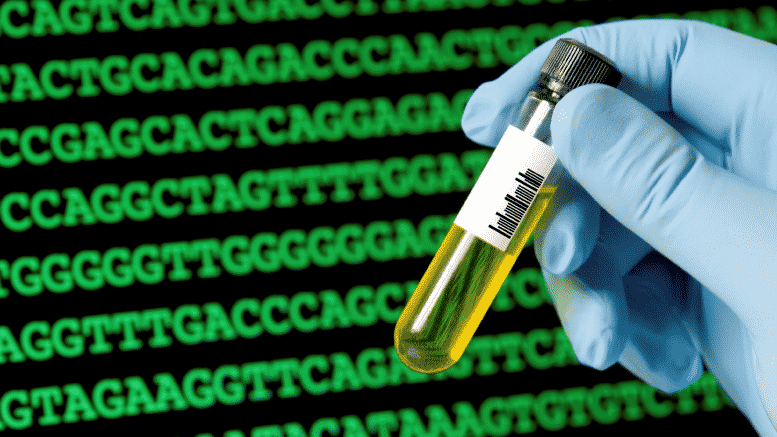
Scientists are expanding the genetic code of life, using man-made DNA to create a semi-synthetic strain of bacteria — and new research shows those altered microbes actually worked to produce proteins unlike those found in nature.
It’s a step toward designer drug development.
One of the first lessons in high school biology: All life is made up of four DNA building blocks known by the letters A, T, C and G. Paired together, they form DNA’s ladder-like rungs. Now there’s a new rung on that ladder.
A team at The Scripps Research Institute in La Jolla, California, expanded the genetic alphabet, creating two artificial DNA “letters” called X and Y. A few years ago, the researchers brewed up a type of E. coli bacteria commonly used for lab research that contained both natural DNA and this new artificial base pair — storing extra genetic information inside cells.
The next challenge: Normal DNA contains the coding for cells to form proteins that do the work of life. Could cells carrying this weird genomic hybrid work the same way?
Sure enough, the altered cells glowed green as they produced a fluorescent protein containing unnatural amino acids, researchers reported Wednesday in the journal Nature.
“We can make proteins that are built of more things than they normally are,” explained Scripps chemist Floyd Romesberg, who leads the project.
While programming the green germs offered evidence that the approach can work, eventually “we would like to get proteins that do new things,” he said.
That’s an ultimate goal in the field of synthetic biology — designing organisms that work differently from the way nature intended so scientists can harness them to create designer drugs, biofuels or a range of other products. Scripps’ technology has been licensed by a biotech company Romesberg co-founded, Synthorx Inc., that aims to make novel protein-based drugs.
 
Source:  technocracy.news


Tuesday, June 27, 2017

Scientists Use CRISPR To Modify Viruses That Kill Antibiotic-Resistant Bacteria

Using GMO viruses to kill bacteria? This is a Pandora’s box that may never shut. Scientists have already warned of the sloppy and unintended consequences of using CRISPR to modify DNA, but now genetically engineering viruses to cause death-switches completely ignores such warnings.⁃ TN Editor
Earlier this month, the annual CRISPR 2017 conference was held at Montana State University. Attendees were the first to hear about successes companies have had using CRISPR to engineer viruses to kill bacteria. One of the most exciting potential application for these viruses, called bacteriophages, would be killing bacteria that have become resistant to antibiotics. At least two of the companies aim to start clinical trials of these engineered viruses within 18 to 24 months.
The use of bacteriophages isn’t new. In the past, they have been isolated in the wild and purified for use. Although bacteriophages are regarded as being safe and effective for use in humans, because they are found in the wild, research on them has been sluggish. New discoveries can’t be patented, and furthermore, these discoveries can also be transient, because bacteria can, and often do, rapidly evolve.
However, using CRISPR to engineer them is definitely innovative. It renders viruses uniquely lethal to the most dangerous bacteria in the world, and initial tests saved the lives of mice who were infected with antibiotic-resistant infections that would have ultimately killed them, explained conference speaker Rodolphe Barrangou, chief scientific officer of Locus Biosciences.
This ability has lead researchers from at least two companies to use CRISPR in an attempt to turn the tables on antibiotic-resistant bacteria. Both companies cite treating bacterial infections linked to serious diseases as their primary goal. Eventually, they intend to engineer viruses that would allow them to do much more by taking a precision approach to the human microbiome as a whole. The idea would be to selectively remove any bacteria that occur naturally and have been associated with various health conditions. This could be anything from autism to obesity — and possibly even some forms of cancer.

Self-Destruct Switches

One company, Locus, is using CRISPR to send DNA that will create modified guide RNAs to find pieces of the antibiotic-resistance gene. After the virus infects the bacterium and the guide RNA connects with the resistance gene, the bacterium produces a phage-killing enzyme called Cas3. This is the bacterium’s usual response, only in this instance, it destroys its own antibiotic-resisting genetic sequence. Over time Cas3 destroys all of the DNA, and the bacterium dies.
Another company, Eligo Bioscience, is taking a slightly different approach. The team chose to insert the DNA that creates guide RNAs (this time with the bacterial enzyme Cas9), which removes all genetic replication instructions. Cas9 then severs the DNA of the bacterium at a specific place, and that cut triggers the self-destruct mechanism in the bacterium.
The third approach, by Synthetic Genomics, involves creating “supercharged” phages that contain dozens of enzymes. Each enzyme offers its own unique set of benefits, including the ability to camouflage the phages from the human immune system by breaking down proteins or biofilms.
Despite these promising results thus far, there will be challenges to bringing successful engineered phages to market. For example, there is a risk that phages could actually spread genes for antibiotic-resistance to non-resistant bacteria. Another potential issue is that it might take a very large number of phages to treat an infection, which in turn could trigger immune reactions that would sabotage the treatment.
 
Source:  technocracy.News


Thursday, April 30, 2015

Meghan May appears on 'CBS 13' for research into reusable shopping bag bacteria

April 28, 2015
Meghan May
Meghan May

Following the recent ordinance in Portland discouraging consumers from using disposable plastic and paper bags, May investigated the amount of bacteria found inside reusable bags.
After collecting several old and new grocery bags used by local consumers, May swabbed them for viruses and tested them in the Microbiology and Infectious Disease lab at UNE. Her results showed that each bag carried bacteria, with some harboring E. coli and Bacillus Cereus, a disease that can cause severe symptoms such as vomiting and diarrhea.
These findings were consistent with prior research conducted in a 2010 public health study that discovered large numbers of bacteria contaminating reusable shopping bags.
Watch the clip on WGME 13
Read the Bangor Daily News Story