Posted By: Dan Titus via iAgenda21
April 26, 2024
How did all this garbage – pure Sustainable Development, aka Technocracy
– show up in our cities and states? Answer: a full-court barrage of UN
agents. I dare you to search for your city and the words “climate action
plan” on Google. You will be shocked! I estimate that seventy percent
of all cities already have a formal plan, and another twenty percent are
working on it.
Video
Listen to the video (2017) featuring Patrick Wood and the late Rose Koire. You were warned!
Patrick Wood Interviews ChatGPT on Climate Action Plan
Patrick Wood: My city does not have a formal “climate action plan”, ala the United Nations 2030 Agenda? Should we create one?
ChatGPT:
That’s a great idea! Creating a climate action plan for your city can
have a positive impact on the environment and the community. It can help
set goals, strategies, and actions to reduce greenhouse gas emissions,
promote sustainability, and address climate change. If you’re interested
in pursuing this, I can help provide resources and guidance on how to
get started. Let’s work together to make a difference!
Patrick Wood: Please define “sustainably” in the above context.
ChatCPT:
Sustainability” in the context of a climate action plan refers to
meeting the needs of the present without compromising the ability of
future generations to meet their own needs. It involves implementing
practices and policies that promote environmental protection, social
equity, and economic prosperity in a way that ensures long-term
viability and resilience. By incorporating sustainable practices into a
climate action plan, cities can work towards a more environmentally
friendly and equitable future for all.
Patrick Wood: What does “equitable” mean for my city?
ChatGPT: “Equitable” in
the context of your city means ensuring fairness and justice for all
residents, regardless of their background, income level, or social
status. It involves creating policies and initiatives that address
disparities and provide equal access to resources, opportunities, and
services. In the context of a climate action plan, promoting equity
means considering the needs and concerns of all community members,
especially those who may be disproportionately impacted by environmental
challenges. By prioritizing equity, your city can work towards creating
a more inclusive and sustainable future for everyone.
Patrick Wood: Will having a Climate Action Plan increase energy prices for residents?
ChatGPT:
Implementing a Climate Action Plan does not necessarily mean that
energy prices will increase for residents. In fact, a well-designed plan
can actually help reduce energy costs in the long run by promoting
energy efficiency, renewable energy sources, and sustainable practices.
By investing in clean energy technologies, improving building
efficiency, and promoting conservation measures, cities can help
residents save money on their energy bills while also reducing
greenhouse gas emissions.
Additionally,
many climate action initiatives offer programs and incentives to help
residents transition to cleaner and more affordable energy options. It’s
important to carefully consider the potential impacts on energy prices
when developing a Climate Action Plan and to explore strategies that
balance environmental goals with economic considerations to ensure a
sustainable and equitable transition for all residents.
Patrick Wood: What about the studies that prove that alternative energy is more expensive that traditional energy?
ChatGPT:
While it is true that some studies may suggest that alternative energy
sources can be more expensive than traditional fossil fuels in certain
contexts, it’s important to consider the broader picture. The costs of
renewable energy technologies, such as solar and wind power, have been
steadily decreasing in recent years due to advancements in technology,
economies of scale, and government incentives.
When
evaluating the cost of energy sources, it’s also essential to consider
the long-term benefits and externalities associated with each option.
Renewable energy sources offer numerous advantages, including reduced
greenhouse gas emissions, improved air quality, and decreased reliance
on finite resources. These benefits can lead to long-term cost savings,
improved public health, and environmental protection, which may outweigh
the initial investment in alternative energy infrastructure.
Furthermore,
investing in renewable energy can create jobs, stimulate economic
growth, and enhance energy security, contributing to a more sustainable
and resilient energy system in the long run. By carefully analyzing the
costs and benefits of different energy sources, cities can make informed
decisions that support their climate action goals while ensuring
affordability and accessibility for residents.
Gee. This reads like an propaganda brochure from the United Nations.
⁃ TN Editor
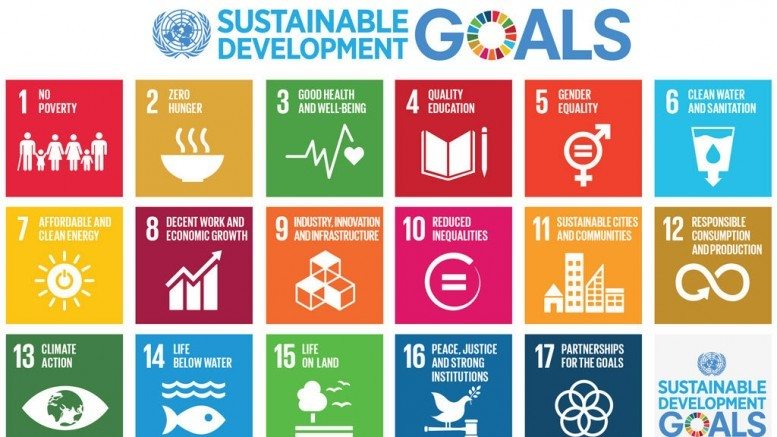
On September 20, 2023, the Biden administration met at the Sustainable Development Summit in New York with the goal of recommitting to the [United Nations] 2030 Agenda for Sustainable Development and the Sustainable Development Goals—SDGs. A White House fact sheet stated,
“The United States is committed to the full implementation of 2030
Agenda and the SDGs, at home and abroad… At their core, the SDGs seek
to:
- Expand economic opportunity –
This means public-private partnerships, which is crony capitalism. In
this scheme there are winners and losers, where profits are privatized
and losses are socialized on the backs of middle-class Americans.
- Advance social justice – This means placating and advancing people based on their skin color. At its core it is discriminatory.
- Promote good governance –
This skirts our elected form of government and injects unelected
special interest initiatives into our lives, where no one gets to vote.
- Ensure no one is left behind –
This means catering to protected classes and minorities in order to
create “capacity building” for initiatives and redistributive wealth
schemes. Under Diversity and Inclusion (DEI), these classes are awarded “equity” and “inclusion” based on their skin color.
In
a Ping-Pong game of executive orders, President Obama put the federal
agencies into the SDGs; President Trump got SDGs out; President Biden
put them back in during the first week of his administration. Congress
has done nothing to reel them in.
It
is antithetical to the United States Constitution; therefore, it is
unconstitutional. Even though it’s voluntary, that does not stop its
implementation by the government.
Biden sent an envoy to California to study what the state has
Biden sent an envoy to California to study what the state has done
with its radical climate bills in order to put the ideas to work in the
$1.2 trillion dollar Infrastructure Bill and the $720 billion dollar
Inflation Reduction Act. In order to “incentivize” states, the
federal government offers grants for voluntary, nonbinding, United
Nations SDGs. In other words, states don’t have to do this; however,
they sell out for the money.
In order to take advantage of bribe
money called grants, States have inserted themselves into
California-style climate action plans to reduce arbitrary greenhouse gas
emissions (GHGs). People can no longer say, “It’s just happening in
California.” You are California…
According to the EPA, “States submitted climate action plans under
President Biden’s Inflation Reduction Act. In 2023, under the first
phase of the $5 billion program, EPA made a total of $250 million in
grants available to states, the District of Columbia, Puerto Rico, 80
MSAs, four territories, and over 200 Tribes and Tribal consortia to
develop ambitious climate action plans that address greenhouse gas
emissions. 45 states are now covered by a climate action plan. 5
states: Florida, Iowa, Kentucky, South Dakota and Wyoming decided not to
participate.”
Sustainability is collectivism: It’s a worldview
where free individuals must give up their rights and private property
for the collective good; where everyone is equal—equally poor. It is
antithetical to the United States Constitution; therefore, it is
unconstitutional. Even though it’s voluntary, that does not stop its
implementation by the government.
It is using less of everything: Less food, less energy, less choice, less water, less mobility and less freedom.
Sustainability
can be defined as artificial scarcity under the guise of conservation.
Its goal is transformation through control of society by behavior
modification and social engineering. It is using less of everything:
Less food, less energy, less choice, less water, less mobility and less
freedom. At its core, its rationing, all contrived by unelected
agencies, boards, bodies, commissions, nonprofit corporations,
international non-governmental organizations (NGOs) and Indian tribes.
This ‘governance’ is designed to replace our representative form of
‘government’ by turning elected public officials into to rubber stamps,
installing prepackaged solutions, for problems that don’t exist.
Once
climate actions plans become law or have ordinances attached to them,
property owners will have a difficult time unwinding them. Ordinances
are now being drafted in the city of Rancho Cucamonga, California.
Rancho Cucamonga, California: A Climate Action Plan (CAP) Case Study
CAPs
are being accomplished at the state and local level. For example, the
city of Rancho Cucamonga, California has added a CAP to its
comprehensive General Plan Update as a “companion”. Now, the city is
drafting administrative ordinances to it. See the article titled, Climate Change: Rancho Cucamonga Proposing Questionable “Mandatory” Tax & Fees on Residential and Commercial Property, which was predicated on a letter sent to the city (see link below) council contesting ordinances for the CAP.
How to push back: Steps to review and critique a CAP
- Download the city CAP.
- Download the letter to the city council denoting page references to the CAP for comparison.
- Find your “EPA” State CAP and/or
city/county CAP, download it and start your critique using the example
above. Your city/county CAP will be at their website. Google your
city/county name and the words, “Climate Action Plan”.
- Send or
deliver your CAP critique to your local state representative and demand
to know how it got into the state and tell them to get rid of it because
it surrenders everyone’s property rights, protected by the
Constitution, to the United Nations. If you email, be sure to confirm
that the recipient received the message. Type at the top of the page
“please confirm receipt of this email and distribution.”
As you do your review, consider these questions:
- Are Climate Action Plans (CAPs) mandatory?
- Are Green House Reductions (GHG) mandatory?
- Are ordinances in CAPs mandatory?
Answers: NO, NO and NO…
Read full story here…
Source: technocracy.news
Blogger's note: The big lie "Climate Change" is an excuse to control, eradicate mankind and to enslave the remnants of what is left.