NATO's Parliamentary Assembly has recommended that member governments provide Ukraine with intermediate-range missiles (IRBM). Apparently the Parliamentary Assembly is either insane or suicidal.
These are ballistic missiles with a range of 1,000 to 5,500 kilometers, including Tomahawk Cruise Missiles which are capable of "striking at the strategic depth of the enemy."
The Assembly's decision is advisory, but it opens the way.
Apparently, NATO is flatly ignoring the entire basis for the Russia-Ukraine war: The Expansion of NATO.
Former NATO General Secretary Jens Stoltenberg admitted this on TV, when he said "Putin went to war over NATO Expansion:"
NATO's Stoltenberg Admits that Expansion Led to Russian Invasion of Ukraine
Ukraine
is mainly flat farmland and has been used by Napoleon, Imperial
Germany, and Nazi Germany to stage attacks under Moscow’s soft
underbelly
Sep 25, 2023
NOTE TO READERS: The following is our weekly Economic Update — Market Overview found in this week’s issue of The Trends Journal. Consider subscribing here for in-depth, independent geopolitical and socioeconomic trends and trend forecasts that you won’t find anywhere else.
Jens
Stoltenberg, the NATO secretary-general, gave some of the history that
led up to Russia’s decision to invade Ukraine—notably his alliance’s
decision to continue its march eastward.
Stoltenberg, who has
emerged as a top war hawk from the West, addressed EU Parliament
officials earlier this month and recalled the autumn of 2021, when
Russian President Vladimir Putin submitted a draft treaty asking the
alliance to stop its enlargement. Putin’s hope was that NATO leadership
would sign the agreement.
For decades, Russia has seen the expansion of NATO as a threat and Ukraine’s membership its ultimate red line.
William Burns, the current CIA
director, once served as ambassador to Russia. In 2008, he called
Ukraine’s entry into NATO “the brightest of all redlines for the Russian
elite (not just Putin). In more than two
and a half years of conversations with key Russian players, from
knuckle-draggers in the dark recesses of the Kremlin to Putin’s sharpest
liberal critics, I have yet to find anyone who views Ukraine in NATO as
anything other than a direct challenge to Russian interests… I can
conceive of no grand package that would allow the Russians to swallow
this pill quietly.”
Stoltenberg called the draft treaty a “precondition” from Russia that promised it would not invade Ukraine if signed.
Stoltenberg
seemed to take something of a victory lap and said Putin’s decision to
invade Ukraine, led to even more NATO enlargement.
“So
he [Putin] went to war to prevent NATO, more NATO, close to his
borders,” he said. “He has got the exact opposite. He has got more NATO
presence in the eastern part of the alliance and he has also seen that
Finland has already joined the alliance and Sweden will soon be a full
member.” (Sweden’s membership has been held up by Hungary and Turkey.) ‘
The
AntiWar article noted that Stotlenberg’s analysis is a complete
contradiction to the U.S.’s claim that Russia’s invasion was
“unprovoked.”
TRENDPOST: John
Mearsheimer, a distinguished professor in political science at the
University of Chicago, and Sebastian Rosato, the professor of political
science at Notre Dame, penned a column last week titled, “The Russian
Invasion Was a Rational Act.”
They noted how—in
the early days of the invasion—Putin was described as a madman. They
quoted Nina Khruschcheva, a Russia expert, who said, “with his
unprovoked assault, Mr. Putin joins a long line of irrational tyrants.”
Part
of the reason that many in the West considered Putin irrational, was
the thought that he would be unable to emerge victorious from the
conflict. But the two scholars note that rationality “is not about
outcomes. Rational actors often fail to achieve their goals, not because
of foolish thinking but because of factors they can neither anticipate
nor control.”
But they wrote that Putin’s concerns about Ukraine is not a “lone wolf” theory.
It
is shared in Russia—and understood by some in the West, like William
Burns, the current CIA director who once served as ambassador to Russia.
In 2008, he called Ukraine’s entry into NATO the “the brightest of all
redlines for the Russian elite (not just Putin). In more than two and a
half years of conversations with key Russian players, from
knuckle-draggers in the dark recesses of the Kremlin to Putin’s sharpest
liberal critics, I have yet to find anyone who views Ukraine in NATO as
anything other than a direct challenge to Russian interests… I can
conceive of no grand package that would allow the Russians to swallow
this pill quietly.”
Ukraine is mainly flat farmland and
has been used by Napoleon, Imperial Germany, and Nazi Germany to stage
attacks under Moscow’s soft underbelly.
Thomas Friedman,
The New York Times columnist, wrote an article back in May 1998—the year
Poland became a member of the alliance—that included a quote from
George Kennan, a diplomat credited for his strategy of U.S. Cold War
containment:
“I think this is the beginning of a new
Cold War. I think the Russians will gradually react quite adversely and
it will affect their policies. I think it is a tragic mistake. There was
no reason for this whatsoever. No one was threatening anybody else. Of
course, there’s going to be a bad reaction from Russia and then [NATO
expanders] will say that we always told you that is how the Russians
are—but that is just wrong.”
He wrote that Russia, in
turn, will turn to countries like Iran and China to counter the
development. Kennan wrote in his diary that NATO expansion was the
“greatest mistake of the entire post-Cold War period” and called it a
“colossal blunder.”
His warning did not stop Warsaw, the
Czech Republic, and Hungary from being added to the Alliance in 1999 and
then countries like Estonia, Latvia, Lithuania, Slovakia, Slovenia, and
Romania in 2004.
TRENDPOST: Former
Russian President Mikhail Gorbachev was promised back in 1989 that NATO
would not reach farther east than the German border, but that has
proven to be a lie and there are now NATO missiles 100 miles from the
Russian border in Poland.
Chris Hedges, the
independent journalist, wrote that there was a brief time of hope that
the world could spend money on social projects instead of the massive
military complex, but that proved to be wishful thinking.
The
war industry acted fast to urge countries like Poland, Hungary, and
Latvia to join the alliance to reap the benefits of having to militarize
these countries to meet NATO’s standards. Hedges wrote that many of
these smaller countries took out monster loans in their efforts.
He
said NATO’s expansion was swift, Russia became the enemy again, and now
there is a NATO missile system in a base in Poland 100 miles from the
Russian border.
“War, after all, it’s a business, a very
lucrative one. It is why we spent two decades in Afghanistan although
there was universal consensus after a few years of fruitless fighting
that we had waded into the quagmire we could never win,” he wrote.
He
also pointed to the Clinton administration’s promise in 1997 to Moscow
that no combat troops would be stationed in Eastern Europe, but he wrote
that the promise turned out to be a lie.
TRENDPOST: Long
forgotten was the U.S. and NATO’S pledge not to expand into Eastern
Europe following the deal made during the 1990 negotiations between the
West and the Soviet Union over German unification.
Therefore, in the view of Russia, it is taking self-defense actions to protect itself from NATO’s eastward march.
As detailed in The Los Angeles Times
back in May of 2016, while the U.S. and NATO deny that no such
agreement was struck, “…hundreds of memos, meeting minutes and
transcripts from U.S. archives indicate otherwise.” The article states:
“According
to transcripts of meetings in Moscow on Feb. 9, then-Secretary of State
James Baker suggested that in exchange for cooperation with Germany,
the U.S. could make ‘iron-clad guarantees’ that NATO would not expand
‘one inch eastward.’ Less than a week later, Soviet President Mikhail
Gorbachev agreed to begin reunification talks.
“No formal
deal was struck, but from all the evidence, the quid pro quo was clear:
Gorbachev acceded to Germany’s western alignment and the U.S. would
limit NATO’s expansion.”
Subscribe to Trends Journal
By Gerald Celente · Launched 2 years ago
This is the supplement for The Trends Journal magazine. We provide trend forecasts and insights into current events.
Friday, June 26, 2020
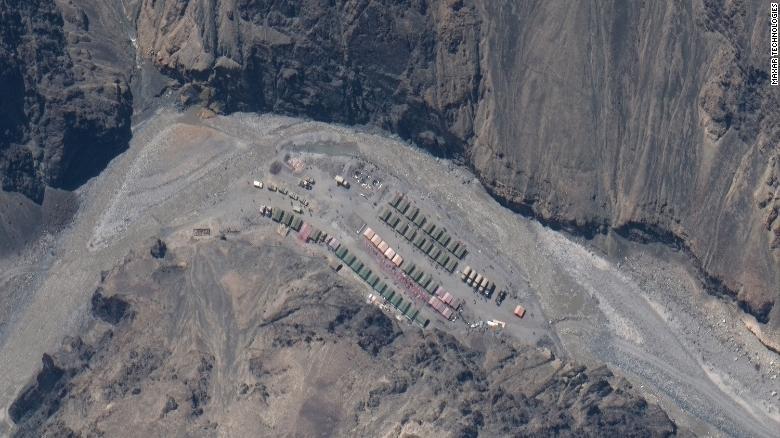
Satellite Images Show Huge 'Permanent' Chinese Troop Expansion At Site Of India Border Clash
Even
though by the start of this week India and China announced a cooling of
tensions along the disputed Galwan Valley Line of Actual Control (LAC)
border area, new satellite images have revealed a major military build-up especially by the Chinese side.
What was previously but a small, remote Chinese People's Liberation
Army (PLA) outpost has grown huge in size after the June 15 nighttime
clash which left 20 Indian soldiers said, many of them having fallen to their deaths during hand-to-hand combat from a precarious ridge line. Maxar Technologies/CNNRead more
Blogger's note:
subterrnews.blogspot.com does not send cookies, or collect any information on
those using the blog. However, the blogspot is on google, and google may
collect information, and send cookies. Many of the links that we
connect to do not send out cookies or collect information, but some do.
You are keying in to this blog, and you have agreed to this.
The views expressed in the articles
do not necessarily represent the opinions of this blog.They are the views, and opinions of the
author(s) of the article.
It also outlines “gradual synchronisation and mutual adaptation” between different member states’ individual defense strategies.
“The EU wants its own Empire as former Commission President Jose Manuel Barroso made clear when he was in charge,” UKIP’s defence spokesman Mike Hookem said. “This global strategy by the EU is yet another reason why last Thursday’s result was a lucky escape for the UK.”
The Executive Summary of the document reads:
It is in the interests of our citizens to invest in the resilience of states and societies to the east stretching into Central Asia, and to the south down to Central Africa. Under the current EU enlargement policy, a credible accession process grounded in strict and fair conditionality is vital to enhance the resilience of countries in the Western Balkans and of Turkey. Under the European Neighbourhood Policy (ENP), many people wish to build closer relations with the Union: our enduring power of attraction can spur transformation in these countries.
The documents speaks of transforming the current EU system and commits to the deliverance of a global governing body.
EU Foreign Policy Cheif Federica Mogherini writes in the Foreword:
We will invest in regional orders, and in cooperation among and within regions. And we will promote reformed global governance, one that can meet the challenges of this 21st century. We will engage in a practical and principled way, sharing global responsibilities with our partners and contributing to their strengths. We have learnt the lesson: my neighbour’s and my partner’s weaknesses are my own weaknesses. So we will invest in win-win solutions, and move beyond the illusion that international politics can be a zero-sum game.
The latest plan outlines how the EU wants autonomy in defense and security matters.
“European security and defence efforts should enable the EU to act autonomously while also contributing to and undertaking action in co-operation with NATO,” the Brussels document reads.
Member States need the technological and industrial means to acquire and sustain those capabilities which underpin their ability to act autonomously.
It goes on to read, “Gradual synchronisation and mutual adaption of national defence planning cycles and capability development practice can enhance strategic convergence between Member States.”
When asked if he believed the document showed Brussels was positioning itself as a rival to NATO, UKIP’s Mike Hookem said: “I’m not sure whether in reality it will be a threat to NATO.”
“Although I am sure it would like to be, because NATO are competent,” says Hookem.
The fear of a European army was at the core of the Brexit campaign as Armed Forces Minister Penny Mordaunt warned that if Britain were to stay in the EU, it would be forced to join the EU’s army.
According to reports from Brussels, the Global Strategy document was kept secret as the UK was preparing to hold a referendum on its EU membership out of fears that it could affect the outcome by boosting the “Leave” campaign’s popularity.
Several European politicians have recently voiced support for the creation of an EU army.
Meanwhile, EU officials repeatedly voiced the idea of forming the Union’s own armed forces. On June 26, the head of the European Parliament Committee on Foreign Affairs, Elmar Brok, said that the EU needs a common military headquarters that could pave the way for a united EU armed force, which would make the block’s policy much more effective and strengthen its role in the world.
In 2015, EU Commission President Jean-Claude Juncker called for the creation of a united European army, which he said would be aimed at “deterring” Russia and strengthening the alliance.
Joseph Jankowski is a contributor for Planet Free Will.com. His works have been published by recognizable alternative news sites like GlobalResearch.ca, ActivistPost.com, Mintpressnews.com and ZeroHedge.com.
Today we are witnessing the continuation of a soft coup against not only President Trump, but of our Republic. The Democrats must be highly compromised, i.e. lots of skeletons in their closets. This was the most blatantly biased investigation of Democrats looking for a crime. Yet not that some Republicans are not compromised. Donald Trump did not erase 33,000 e-mail, did not accept 145,000,000 from a Russian Bank, did not hammer his Blackberries, did not bleach bit his computers, did not threaten Ukraine with withholding $1 Billion dollars from Ukraine unless they stopped the investigation of his drug addicted son Hunter, did not sell out the United States of America like Obama, Biden, Pelosi, Schiff, Nadler, and the compromised Democrats have. If the impeachment does not work this time they will try again, and again any means necessary to end the Presidency of Donald Trump, for they do not want their swamp drained.
Gun Safety, ala Governor Murphy
The NWO puppet that is the currently selected Governor of New Jersey constantly calls for "common sense gun control" should step back, and look at what "common sense gun control did for a group of Mormons in Mexico. In Mexico it is illegal to own a gun. Hey Murphy, what criminal obeys the law? He is in reality working for the disarmament of the American people and their subsequent enslavement.
Coup d'etat
Halloween a day when the demons come back to haunt us. It is the day of the devil. Nancy Pelosi, and Adam Schiff are perfect examples of the personification of evil. Nancy is an extremely devious person, and Adam continues to bite the apple over and over again. He tries to cover his loins just a Adam did as described in the Book of Genesis. The Star Chamber events that only the corrupt and compromised Democrats can call witnesses, and the accused has no right to confront his detractors. Only what lying little Adam Schiff see what will help his narrative gets out.
So now they will bring the charade out in the open, but with Nancy and liddle Schiff's caveats. Republican can only call witnesses if liddle Schiff approves them.
This is a Deep State operation in high gear. If the treasonous Democrats succeed in this impeachment it will be the END OF AMERICA as we know it.
Damn the Democrats, and I am a registered Democrat. I will vote in 2020 for President Trump!
Bought and Paid For
Jerry Nadler claims that there is NO evidence that Google censors conservatives. Either he is a liar, a fool or both. Well he pocketed $26, 000 from Google. It does not take much to buy this clown. My own blog went from 3000 hits-per day to between 50 to 100. It happened from one day to the next. It is called shadow banning. When I googled a story that was a rare story my blog DID NOT appear.
What else does the Deep State have on Nadler? Could it be pedophilia?
Death of Bush a Distraction
Hey did they pull the plug on daddy Bush to delay the Trump's release of classified information? This was to be the week of revelation about Hillary, Bill and the Deep State. Monday the Whistle blower on the Uranium One deal was to speak, but instead we have receive lies about a very evil man. The FBI raided the home of the whistle blower instead. Folks if you cannot see the current war that is going on inside our borders they you are either blind of dumber than a box of rocks. WTFU!!!
With the consummate liar, Netanyahu, claiming that there is a secret nuclear program in Iran is beyond hypocrisy. This criminal lives in a glass house, and should not throw stones. If Israel has the right to nuclear weapons so does Iran. What I would be looking for is Israel pulling a false flag on the US Navy.
Stein Hillary's Shill 120216
On Wednesday I listened to "Democracy Now", and later the Tucker Carlson Show. Each host was interviewing Jill Sellout Stein, but neither asked the key question. The key question for me would have been the following: "Jill, a hand recount of the votes in Wisconsin, Michigan, and Pennsylvania would probably not be completed by the December 19th deadline for the electoral votes. That would deny Trump the necessary votes to be elected President. That seems to be the Hillary strategy to steal the election, so why would the Green Party candidate shill for Hillary's election. Has Hillary, Bill, the Clinton Campaign, the DNC or others that are connected to the Clinton's approached you, and what were you offered?"
That would have been my question, but then again that is why I only operate in the "Fake News" section of journalism.
Egg Timer 06/14/16
The shooting at the Pulse night club in Orlando, which is just another false flag to promote a not so hidden agenda if failing to convince America that the gun did it. At the gym last night no body believed the government's story.
Just think of the 2.5 to 3 million UNCOUNTED votes in California. Had to get that off the front page. Just think that yesterday Trump was going to give a speech on the crimes of the Clintons. Well that had to be postponed. Cui bono? Hillary of course, and the Indonesian male prostitute that resides in the White House, and vacations around the world. He is determined to disarm law abiding Americans before he leaves the White House.
Iowa Caucus
How about Hillary's luck with her winning 6 coin tosses? Maybe she should play the horses, blackjack, etc. as they all can be fixed too. In six coin tosses you would have a 1 in 64 chance of winning all six. What that tells me is that the Iowa democrats have more allegiance to The Wicked Witch of the West than they do to their own country.
How about Sen. Cruz? He was not natural born, and there is doubt that his mother was born in the US. He is ineligible to run for President, but hey Obama did it why not him?
As for Rubio he was born in the US, but not of US citizens, so he too is not eligible to run for President. He has quite a few skeletons in his closet, and that is why they like him.
So much for representative government. It is a joke, but it is not funny.
Pearl Harbor
Today one should remember a day of "infamay". Yes today December 7th, 1941 the Japanese attacked Pearl Harbor, as Roosevelt hoped that they would. He made sure that the aircraft carriers were out to sea, and the dinosaur battleships were in port.
He needed an attack, where the US would lose military personnel, so that he could take the side of Churchill against Hitler. You see there were many like the Bush family that backed Hitler. So this necessitated the sacrifice of Americans to further Roosevelt's agenda.
And the beat goes on. We are still expendable to further hidden agendas.
December 7th, 2015
Halloween brings people in strange costumes, and strange people without costumes. So to does it sometimes bring strange events, in costumes. A Russian jet crashes in the Sinai. Well who was, and still is looking for their candy? Who would be willing and able to inflict such damage to the Russians? Looks to me that it would be Israel, the US, with the most means to do it. With ISIS a distant third.
Who does the security at the airport that the plane took off from?
Listening to the House Hearings on Benghazi was maddening.
The question not asked of the Wicked Witch of the West was "Why were we in Libya, and under what Congressional authorization justified it?"
What Hillary said at one point was that "We had to stop Quadafi from oppressing his people." Well he could ride standing up in an open top car without armed protection, and hear the "oppressed" cheer him. Quadafi had turned his country around, and he ran it for the benefit of the people.
The "oppressed" that the Witch referred to were the hired mercenaries out of Benghazi that Quadafi was fighting, and fighting successfully.
The Democrats were not interested in a thorough investigation of what happened, and why, but only in "Lets cover Hillary's ass mode." They accused the Republicans of turning it into a political circus. Well Hillary and Barry (aka Barack) immediately turned in into a political fairy tale while the dead Americans bodies were still warm. Obama thinking of 2012 election and Hillary thinking about 2016.
What Stevens was in on was the knowledge that Hillary and Obama were shipping weapons such as Stinger Missiles to the enemy. The enemy was fighting a US, Israeli, Saudi proxy war to overthrow Assad. My fellow Americans that is TREASON.
Was Hillary using here State Department Office to enhance the Clinton Foundation with money from people and countries that made generous "contributions" to it? In essence these were bribes to pay for her 2016 Presidential run
Hello all,
The technical support that I signed up for in 5 minutes has resolved the problem. So we will be back up and flying soon.
Obama will hate that fact.
October 3, 2015
The problem is back.
October 2, 2015
Finally, the problem has been fixed. Will be posting again soon, but first I have to take care of personal business.
October 2, 2015
Campus was a gun free zone, and vet with concealed carry was prevented to stop the carnage.
Also the World's most notorious killer, Barack Obama, referred to himself 28 times in his feigned attempt to turn the still warm victims as sacrificial lambs in his desire to disarm all Americans. This is a sick man that the rest of the World suffers from him NPD. Did you notice his pursed lips during his reading of his "sympathy" speech? That is a true sign of NPD. He knows NO empathy whatsoever.
Every Tuesday this asshole sits down with a kill list, and picks out who to execute with drones. Many men, women and children dies as collateral damage with the actions of this beast.
October 1, 2015
Still cannot post.
Will keep trying to right the situation.
September 30, 2015
Could not get into the blog today, and now that that has been addressed, we now cannot post.
Bear with us as we try and right the situation.
I guess that we must have annoyed someone.
Stock Trading 07/08/15
Stock trading has been suspended!!!
Christie Waddles for the Presidency
Just this past week the big fat bully governor of New Jersey announced that he was running for the Republican nomination for the Presidency. We here in New Jersey knew that he was waddling for the job ever since he was elected governor.
He has been a disaster for New Jersey, and he would be worse for the US.
JUST A COINCIDENCE
This past Friday I received a survey from "Everytown for Gun Safety", and of course it was about gun control. Or should I say the disarming of the citizens of America before their total enslavement and death.
It was also just a coincidence that the DHS ran an "active shooter" drill at the time of the Charleston shooting.
DISTRACTION
April 30, 2015
They have been trying to divide and conquer for quite some time, and Baltimore is just another attempt. Do not fall for it. Yes the murder of Freddie Gray was terrible, but it does not justify violence. Beware of agent provocateurs.
Yes there were peaceful protests, but looking at MSM you would not know it. What are they hiding while the Baltimore Riots takes front page, while a Treaty disguised as an agreement is being thrust upon our Nation. Discussed in secret, and with transnational corporate input. No Congressional input. They cannot even discuss what they have been told with their constituents.
Fast Track began with the Nixon administration for tariff rate, and only tariff rates. Treaties required 2/3 of the Senate to pass. Along comes The Great Communicator, the straight man for a chimp, and he declares treaties nothing more than agreements. So Ronnie only needed a simple majority of both houses.
Then came coke snorting, womanizing, money laundering Bill Clinton to get Fast Track on NAFTA, GATT, etc.
The TPP will grant sovereignty to corporations, and subject the citizens to their greedy whims and fancies. The poverty in this country and in others will explode, and violence will begin. That is why you are being subjected to another drill for Martial Law in Baltimore.
Just wait for Jade Helm, and again a psyops to get the masses used to Martial Law.
My friends any one who pushes the TPP is a TRAITOR.
FORCLOSURES
April 17, 2015
In the local paper every Friday has what appears in the classified section is a listing of Sherrif's Sales. Every Friday the list was 3, 4 or 5 pages. Today while we are in "recovery" the pages number 7, and the Republican Congress is pushing the TPP, which will destroy not only the soveringty of the US and any other signatories, but it will further bring down the middle class (what is left of it). Do not worry though, the vultures will peck at the bones of the national, state, county, and local government's assets, and they will get them for pennies on the dollar. The bastards of banking will devour the houses, and turn them into rentals.
WTFU America.
January 20, 2015
Just listenedd to Obama's Chief of Staff say that Obama with his State of the Union will continue his struggle for the middle class. "Continue his struggle for the middle class...", is that sarcasm. Obama, if that is his real name, has been attacking the middle class, and in so doing is destroying the United States of America.
His speech will be nothing more than rhetoric. He is going to demand increased taxes on the rich. Well how will that happen with a GOP House and Senate? It cannot happen and he knows it. It is all for show, and he continues his life in lies.
January 12, 2015
There is outrage on the outcome of the Dallas Cowboys versus the Green Bay Packers. Why is their outrage on this total distraction? Fans here belong to one of two tribes that support the circus of the "bread and circus".
It has become a game of less and less interest as commercials, reviews, more reviews, pregame shows of several well paid ex-jocks to tell us what must be done by each team to win. Then after the game the same go over and over the game and why one team won and one lost. The media has more covering a meaningless event than the do covering all of Africa.
It is done to take you mind off the reality of the day. It is the blue pill to keep you from seeing that you are accepting a police state as you are groped and searched when you enter the stadium.
Then there is more money to be made in the betting on the game than in the TV and commercials. So would it be any surprise to you that the games might be fixed? It isn't to me. Have you ever seen the pro football game where one team plays and the other merely shows up? Maybe the team that only showed up knew who the winner would be.
There is also a globalist plan to destroy national sports such as US football, and replace it with soccer. Could this be a step in that direction?
I remember the day well. A Customer Service Representative was promoted to Outside Sales, and he left just before lunch. His new job was to begin on the following Monday. He came back in at about an hour or two later. His face was white as a ghosts. He took a deep breath and said "President Kennedy has been killed."
It was a quiet at the bus stop in Newark that night, and the bus was dead silent. Just like today people are silent on the coup d'etat that happened that day in Dallas. It angers me that people can forget that at that day and time on the 11th month and the 22nd day our country was changed forever, and not for the better.
Many still believe that it is us versus them, and Democrat versus Republican when there is not a dime's worth of difference. The US and the world are run by a SSG (Secret Shadow Government).
Here is the audio of President Kennedy speaking about the danger to American in Secret Societies.
When will they ever learn, when will they ever learn? It takes more than flying a flag and closing your eyes to the senseless slaughterr of men, women, and children to be patriotic. The "Great Satan" has struck again, and killed children in Ahrar Ash-Sham, Syria. It is to stop our own creation ISIS, or so they say. It is really to wage war against the Syrian government, and his majesty want Congress to expand his war making powers. So get off of your patriotic ass and call your Congressman and Senator and say, "I am mad as hell and I am not going to take it anymore. End the wars, stop the bombing."
November 5, 2014
Today is the day after, and many of us know what a day after can be like. We promise never to do it again when we recover, but we forget about it and do it again. Well we did it again. We traded one bunch of traitors for another. It is like getting drunk on a different beverage. What will change? Nothing much will change. It will be the continued destruction of the United States, and the impoverishment of millions more. When will we ever learn, when will we ever learn?
May 28, 2008. MEDICARE PREMIUMS HAVE DOUBLED SINCE 2000? I did not know that. Can you help get the ad on the air? May 26, 2008: Vet Burials Nonstop At National Cemeteries Average Of 1,800 Veterans Die Each Day
RITTMAN, Ohio -- The cracking of rifle fire silenced the twittering blue jays, blackbirds and killdeer. (read entire article)
May 8, 2008: Hey, at least the OIL surge is working! This is happening on such a regular basis, it's not even shocking anymore, but that (to me) is the outrage! May 5, 2008: Another Taser incident. Just the facts: Number of Google hits for "Taser 20007" = 3,650,000. Number of hits for "Taser 2008" = 4,260,000. And it's only the beginning of May. May 1, 2008: CBS-2 HDTV reports that House members are leasing expensive cars on taxpayers' money. LINK April 30, 2008: Don't let anyone tell you that the U.S. "liberated' the women of Afghanistan. Shine the light on stories like this. April 29, 2008:I know, technically this qualifies as an "Outrage of the Last 7 Years," but it could also be an ACTION ITEM (read to the end of the column). Thank you, Ted Rall. April 28, 2008: Preventing Voter Fraud by Burdening the Poor and Elderly? Only in Bush World April 27, 2008: Doctors to kill transplant patient for using medical pot